Results by title
20 books match the query 'Siblings'
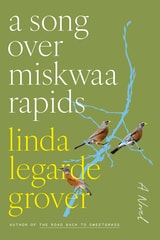
A Song over Miskwaa Rapids
A NovelLinda LeGarde Grover
University of Minnesota Press, 2023
A fifty-year-old mystery converges with a present-day struggle over family, land, and history—now available in paperback
When a rock is dislodged from its slope by mischievous ancestors, the past rises to meet the present, and Half-Dime Hill gives up a gruesome secret it has kept for half a century. Some people of Mozhay Point have theories about what happened; others know—and the discovery stirs memories long buried, reviving a terrible story yet to be told.
Returning to the fictional Ojibwe reservation in northern Minnesota she has so deftly mapped in her award-winning books, Linda LeGarde Grover reveals traumas old and new as Margie Robineau, in the midst of a fight to keep her family’s long-held allotment land, uncovers events connected to a long-ago escape plan across the Canadian border, and the burial—at once figurative and painfully real—of not one crime but two. While Margie is piecing the facts together, Dale Ann is confronted by her own long-held secrets and the truth that the long ago and the now, the vital and the departed are all indelibly linked, no matter how much we try to forget.
As the past returns to haunt those involved, Margie prepares her statement for the tribal government, defending her family’s land from a casino development and sorting the truths of Half-Dime Hill from the facts that remain there. Throughout the narrative, a chorus of spirit women gather in lawn chairs with coffee and cookies to reminisce, reflect, and speculate, spinning the threads of family, myth, history, and humor—much as Grover spins another tale of Mozhay Point, weaving together an intimate and complex novel of a place and its people.
Retail e-book files for this title are screen-reader friendly.

Driscoe
Greg Mulcahy
University of Alabama Press, 2026
A stark, hypnotic exploration of memory, identity, and the fractured stories we inherit, and invent, to survive
Driscoe is a stylistically daring novel that plunges deep into the unstable terrain of memory, identity, and the stories we tell to endure collapse. Hypnotic and recursive, it moves through contradiction as both method and meaning, tracing how belief hardens, fractures, and reforms under pressure. The prose hums with unease, balancing precision and disorientation as certainty dissolves into overlapping versions of the same events.
At its center is Jouska, a man suspended between narratives of success and failure, loyalty and betrayal, progress and ruin. He is pursued by obsessive memories of his ex-wife, his brother, and the elusive figure of Driscoe, by turns entrepreneur, fraud, chemist, builder, trickster. Everyone claims a story about Driscoe. None align, yet all insist on their authority. Entangled in familial conflict and his own faltering recollections, Jouska can neither trust nor abandon any version of the truth.
When Jouska receives an email announcing the death of his superior, the already fragile architecture of his life splinters further. What follows is a journey through a bureaucratic labyrinth where death is both confirmed and denied, and where greed, doubt, presence, and absence pulse relentlessly. Driscoe emerges as a narrative dirge for a collapsing American middle class and the myths that sustained it, tracing the impossibility of aligning personal loss with cultural unraveling. This novel will resonate with readers drawn to literary fiction that is intellectually demanding, formally inventive, and attuned to the psychic costs of living amid social and economic decay.

Empowering Exporters
Reciprocity, Delegation, and Collective Action in American Trade PolicyMichael J. Gilligan
University of Michigan Press, 1997
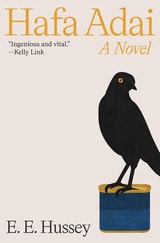
Hafa Adai
A NovelE. E. Hussey
Northwestern University Press, 2027
A tale of two sisters braving the current of global tremors, mysterious beings, and their own past
Amihan is a respected and talented wildlife researcher on a small Pacific island in the US Commonwealth of the Northern Mariana Islands, where the land has undergone centuries of occupation. Offshore military testing, shifting climates, and tourists threaten the local ecosystem, making Amihan’s job harder than ever. As she braves knotty forests and watery caves in search of the elusive rufous fantail, her expedition takes her to the suicide cliffs . . . and over them. Amihan plummets into another realm, a purgatory of colonial violence and Filipino folklore.
Ligaya, Amihan’s sister, is back in Osaka and in between research positions when she is called to the island to search for her itinerant and reclusive sister. But when her search uncovers a stowaway, Ligaya's path takes an unexpected turn. Traveling along with her is a ghost with an omikuji tongue—a ghost that delights in spitting fortunes and mining memories. As Ligaya searches and Amihan wanders, it becomes clear that there is more to confront between these sisters than their whereabouts. On an island shuddering under the weight of global crises, can Ligaya make it to Amihan, or has her sister wandered too far?
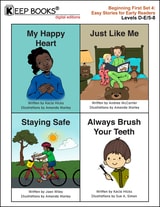
KEEP BOOKS Digital Editions Beginning First Set 4
Easy Stories for Early ReadersKecia Hicks
Keep Books, 2022
Stories include: My Happy Heart; Just Like Me; Staying Safe; and Always Brush Your Teeth.
Age Level: 5-6
Grade Level: Beginning First
Reading level: D-E/5-8
KEEP BOOKS digital editions include text features and design elements that give beginning readers what they need to start reading on their own with high interest titles that they can easily manage.
Measure for Measure
William Shakespeare
Arizona Center for Medieval and Renaissance Studies, 2023
One of Shakespeare’s most difficult plays, Measure for Measure has long challenged performers and audiences alike. In reworking the play in her translation, Aditi Brennan Kapil honors the structure, rhythms, and themes of Shakespeare’s original. Kapil’s updated language makes this cautionary fable about frailty, power, and the perils of legislating morality accessible for today’s audiences.
This translation of Measure for Measure was written as part of the Oregon Shakespeare Festival’s Play On! project, which commissioned new translations of thirty-nine Shakespeare plays. These translations present the work of “The Bard” in language accessible to modern audiences while never losing the beauty of Shakespeare’s verse. Enlisting the talents of a diverse group of contemporary playwrights, screenwriters, and dramaturges from diverse backgrounds, this project reenvisions Shakespeare for the twenty-first century. These volumes make these works available for the first time in print—a new First Folio for a new era.
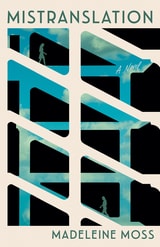
Mistranslation
Moss, Madeleine
University of Iowa Press, 2026
A Debutiful “Most Anticipated Debut Book of 2026”
In upstate New York in 2001, nine-year-old twins Sabina and Camilla spend the summer weathering the moods of their erratic mother while finding themselves pulled toward diverging interests: Sabina into the mystery of their absent French father and Camilla into burgeoning popularity. But their lives are shaken up by the arrival of an Arab French family across the street. Thrilled by what she sees as a link to the country of her origins, Sabina attempts to befriend the family’s son, Khalil, and is rebuffed for reasons she doesn’t understand.
Yet as the twins and Khalil come of age, they are drawn into a tense and ever-shifting triangular dynamic. As Sabina strives to find her father and make sense of her mother, as Camilla confronts whether the power she held in youth translates to adulthood, and as Khalil reckons with the psychological fallout of a family tragedy, their paths converge in ways both surprising and inevitable. Bookended by events with global resonance, Mistranslation is a continent-spanning chronicle of family, inheritance, and the reverberations of the choices we do—or don’t—make.
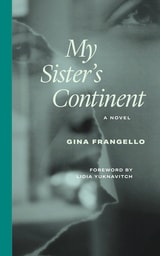
My Sister's Continent
A NovelGina Frangello, Lidia Yuknavitch
Northwestern University Press, 2026
Kirby is a young woman attempting to come to terms with a failed bout of therapy and the truth about her identical twin, Kendra. Since girlhood, Kirby both idolized and envied Kendra, a fearless and charismatic ballet dancer who commanded the attention of everyone in their orbit. In the aftermath of tragedy, Kirby is sent a case study by a former psychiatrist intent on publishing a distorted version of her family’s secrets. She responds by using Kendra’s private and revealing journals to reconstruct their final months together, as well as her own “disastrous” time in therapy, to voice her own truth.
Freud’s “Dora,” a young woman whose mysterious symptoms he contentiously chalked up to “hysteria,” appears at turns in the faces of each twin as they navigate a world of sexuality, familial dysfunction, and possibly-psychosomatic ailments. Reissued with a new foreword by Lidia Yuknavitch, Frangello’s groundbreaking early novel brings “Dora” into a new era.
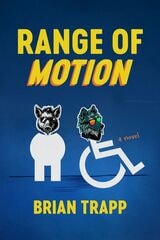
Range of Motion
A NovelBrian Trapp
Acre Books, 2025
Twin A and Twin B. That’s what Michael and Sal’s neuroscientist father irreverently calls them. The boys are born moments apart, but baby Sal’s brain scan shows a bleed. He has severe cerebral palsy and intellectual disabilities.
Told through multiple perspectives—Gabe, the boys’ father; Hannah, their mother; and Michael—this debut novel follows the Mitchell family from the boys’ infancy to the cusp of adulthood as they all try to interpret what Sal, who speaks only eight words, is thinking and feeling. The twins’ upbringing in suburban Ohio is familiar and unfamiliar, ordinary and extraordinary, as this middle-class family navigates the challenges and rewards of nurturing a special-needs human with a killer dimple who is utterly and winningly himself: sweet, stubborn, mischievous, impenetrable, and above all, very funny.
Michael feels that he alone understands Sal and devotes himself to giving his brother a voice in the “normal” world until he grows up and can’t “hear” his twin anymore—his worst fear. Their mother, a teacher who has given up her career for caregiving, and their father, who is determined to succeed in his research, also struggle with the balance of sacrifice and duty and love, especially as Sal’s health deteriorates. Before Michael leaves for college, the twins spend a final week together at a summer camp for people with disabilities, and Sal does something that changes their lives forever.
Transforming perceptions of disability and interdependence through tender attention to detail, Range of Motion is wrenching, beautiful, and sharply comic.
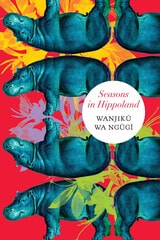
Seasons in Hippoland
Wanjiku Wa Ngugi
Seagull Books, 2021
Victoriana is a country ruled by an Emperor-for-Life who is dying from an illness not officially acknowledged in a land where truth and facts are decided by the Emperor. The elite goes along with the charade. Their children are conditioned to conform. It is a land of truthful lies, where reality has uncertain meaning.
Mumbi, a rebellious child from the capital of Westville, and her brother are sent to live in rural Hippoland. But what was meant to be a punishment turns out to be a glorious discovery of the magic of the land, best captured in the stories their eccentric aunt Sara tells them. Most captivating to the children is the tale of a porcelain bowl supposed to possess healing powers. Returning to Westville as an adult, Mumbi spreads the story throughout the city and to the entire country. Exhausted by years of endless bleak lies, the people are fascinated by the mystery of the porcelain bowl. When word of its healing powers reaches the Emperor himself, he commands Mumbi to find it for him—with dramatic consequences for everyone in Victoriana.
Captivating and enchanting, Seasons in Hippoland plays with the tradition of magic realism. Every image in this novel is a story, and every story is a call for resistance to anyone who tries to confine our imagination or corrupt our humanity.
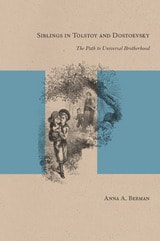
Siblings in Tolstoy and Dostoevsky
The Path to Universal BrotherhoodAnna A. Berman
Northwestern University Press, 2015
Anna A. Berman’s book brings to light the significance of sibling relationships in the writings of Tolstoy and Dostoevsky. Relationships in their works have typically been studied through the lens of erotic love in the former, and intergenerational conflict in the latter.
In close readings of their major novels, Berman shows how both writers portray sibling relationships as a stabilizing force that counters the unpredictable, often destructive elements of romantic entanglements and the hierarchical structure of generations. Power and interconnectedness are cast in a new light. Berman persuasively argues that both authors gradually come to consider siblinghood a model of all human relations, discerning a career arc in each that moves from the dynamics within families to a much broader vision of universal brotherhood.
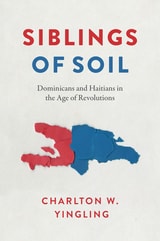
Siblings of Soil
Dominicans and Haitians in the Age of RevolutionsCharlton W. Yingling
University of Texas Press, 2022
2023 Honorable Mention, Isis Duarte Book Prize, Haiti/ Dominican Republic section (LASA)
After revolutionary cooperation between Dominican and Haitian majorities produced independence across Hispaniola, Dominican elites crafted negative myths about this era that contributed to anti-Haitianism.
Despite the island’s long-simmering tensions, Dominicans and Haitians once unified Hispaniola. Based on research from over two dozen archives in multiple countries, Siblings of Soil presents the overlooked history of their shared imperial endings and national beginnings from the 1780s to 1822. Haitian revolutionaries both inspired and aided Dominican antislavery and anti-imperial movements. Ultimately, Santo Domingo's independence from Spain came in 1822 through unification with Haiti, as Dominicans embraced citizenship and emancipation. Their collaboration resulted in one of the most unique and inclusive forms of independence in the Americas.
Elite reactions to this era formed anti-Haitian narratives. Racial ideas permeated the revolution, Vodou, Catholicism, secularism, and even Deism. Some Dominicans reinforced Hispanic and Catholic traditions and cast Haitians as violent heretics who had invaded Dominican society, undermining the innovative, multicultural state. Two centuries later, distortions of their shared past of kinship have enabled generations of anti-Haitian policies, assumptions of irreconcilable differences, and human rights abuses.
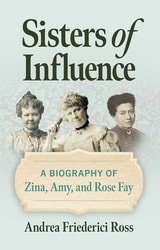
Sisters of Influence
A Biography of Zina, Amy, and Rose FayAndrea Friederici Ross
Southern Illinois University Press, 2025
WINNER, Certificate of Excellence in “Scholarly Publications” from the Illinois State Historical Society’s 2026 Best of Illinois History Awards!
Three sisters who forged intertwined paths to empowerment
A real-life Little Women, Sisters of Influence is the untold story of three extraordinary sisters who defied Victorian-era expectations to leave their marks on history. Andrea Friederici Ross breathes new life into the fascinating stories of Zina, Amy, and Rose Fay, intertwining their narratives into a captivating family biography.
Born into modest circumstances as daughters of an Episcopal rector and a poet, the seven Fay siblings’ upbringing in small-town Vermont was shaped by financial struggles, rare educational opportunities, and the early loss of their mother. While their sisters pursued traditional paths and their brother Norman helped them all, Zina, Amy, and Rose boldly charted their own courses, becoming trailblazers in music, writing, and women’s advocacy.
Zina Fay Peirce envisioned a life of intellectual partnership with her husband, philosopher Charles Sanders Peirce, only to find her dreams frustrated by domestic expectations. Undeterred, she became a writer and a conservative feminist, championing improved education for women and pioneering cooperative housekeeping initiatives. Despite challenges, Zina’s vision for women’s empowerment laid a foundation for future reform.
Amy Fay, a gifted pianist, pursued music studies abroad, including under the tutelage of Franz Liszt. Her letters home, filled with vivid accounts of her experiences in Europe, were edited into a memoir by Zina and published to critical acclaim. As a concert pianist, music teacher, and advocate for women in music, Amy inspired generations of women to follow their artistic passions.
Rose Fay Thomas, initially a quiet supporter of her sisters, emerged as a formidable force in her own right, becoming a founder of the Anti-Cruelty Society. Her leadership in Chicago’s Amateur Musical Club and the National Federation of Music Clubs helped shape the American classical music scene. As the wife of conductor Theodore Thomas, Rose played a pivotal role in establishing the Chicago Symphony Orchestra. Her later writings on gardening and her husband’s life further solidified her legacy.
Through her exploration of the Fay sisters’ lives, Ross illuminates the shifting roles of women during a transformative era. From advocating for women’s education to advancing the arts and social reform, Zina, Amy, and Rose exemplify the resilience and determination that bridged the restrictive norms of the Victorian age and the activism of the Progressive Era. Their remarkable journeys will inspire readers to reimagine the possibilities of women’s contributions to history and culture.
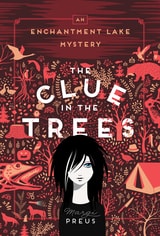
The Clue in the Trees
An Enchantment Lake MysteryMargi Preus
University of Minnesota Press, 2019
Francie returns to Enchantment Lake looking for answers, only to get dragged into a murder mystery she might not survive
Francie’s brother Theo has secrets—secrets Francie thinks she wants to know. But what if one of those secrets is that Theo is a murderer? To avoid considering that possibility, Francie plunges into her senior year at a small-town high school near Enchantment Lake in northern Minnesota. It’s a radical change from her private school in New York, but she hopes to keep an eye on her great aunts and maybe finally learn more about the mother she never knew. A small silver box seems to hold the answers, and she is determined to get her hands on it.
But when her long-lost brother turns up, so does a dead body, and once again Francie is drawn into a mystery. A long list of suspects, with Theo at the top, keeps her head spinning. When Francie herself becomes a suspect she starts to feel like she is walking on thin ice, but it isn’t until she is literally walking on thin ice that the pieces start to come together—and by then it may be too late.
In her previous adventure Enchantment Lake, Francie was thrown into northern Minnesota lake living: fishing, berry picking, lost kayaks and scary boat rides, poisoned hotdishes, exploding bulldozers, a forest fire . . . and murder. But if she thinks things have settled down, she’s in for a surprise. A new school with new friends (and a few enemies), a lead role in a play, an encounter with a giant muskie, archaeological twists, secret tunnels, thin ice, and a strangely sticky murder are all coming her way in The Clue in the Trees.
The Development of Linguistic Skill in Twins, Singletons with Siblings, and Only Children from Age Five to Ten Years
Edith Davis
University of Minnesota Press, 1937
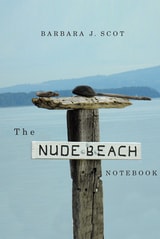
The Nude Beach Notebook
Barbara J. Scot
Oregon State University Press, 2014
Scot uses long, meditative walks on the “clothing optional” beach of the idyllic Sauvie Island near Portland, Oregon, to explore family responsibility, time’s passage, and faith. She weaves entries from her notebook—a record of the island’s wildlife, descriptions of the “Odd Ones” she encounters on the beach, and stories about the native people who once lived on the river—with the main narrative, tracing her search for her brother, her close friendship with a fellow writer, and daily life on the houseboat moorage where she lives.
The Nude Beach Notebook highlights the importance of place as a means for exploring and interpreting one’s own story. In the end, Scot’s walks on Sauvie Island lead to her own redemptive journey. She considers the uses of fiction and non-fiction in memory and in writing, the brevity and beauty of human existence, and the inscrutable, enduring mystery of death.

The Significance of Sibling Relationships in Literature
Joanna Stephens Mink
University of Wisconsin Press, 1993
The essays bring together studies in the fields of social and family therapy, psychological research, and literary criticism.

The Ski Jumpers
A NovelPeter Geye
University of Minnesota Press, 2022
Now in paperback: a writer and former ski jumper facing a terminal diagnosis takes one more leap—into a past of soaring flights and broken family bonds
A brilliant ski jumper has to be fearless—Jon Bargaard remembers this well. His memories of daring leaps and risks might be the key to the book he’s always wanted to write: a novel about his family, beginning with Pops, once a champion ski jumper himself, who also took Jon and his younger brother Anton to the heights. But Jon has never been able to get past the next, ruinous episode of their history, and now that he has received a terrible diagnosis, he’s afraid he never will.
In a bravura performance, Peter Geye follows Jon deep into the past he tried so hard to leave behind, telling the story he spent his life escaping. It begins with a flourish, his father and his hard-won sweetheart fleeing Chicago, and a notoriously ruthless gangster, to land in North Minneapolis. That, at least, was the tale Jon heard, one that becomes more and more suspect as he revisits the events that eventually tore the family in two, sending his father to prison, his mother to the state hospital, and placing himself, a teenager, in charge of thirteen-year-old Anton. Traveling back and forth in time, Jon tells his family’s story—perhaps his last chance to share it—to his beloved wife Ingrid, circling ever closer to the truth about those events and his own part in them, and revealing the perhaps unforgivable violence done to the brothers’ bond.
The dream of ski jumping haunts Jon as his tale unfolds, daring time to stop just long enough to stick the landing. As thrilling as those soaring flights, as precarious as the Bargaard family’s complicated love, as tender as Jon’s backward gaze while disease takes him inexorably forward, Peter Geye’s gorgeous prose brings the brothers to the precipice of their relationship, where they have to choose: each other, or the secrets they’ve held so tightly for so long.
Cover alt text: Lightly gradiented periwinkle sky background with white cloud in upper right corner and snow in lower left. At top, a cutout black-and-white image of a ski jumper appears and is cut off at the neck. Foreground: Book title in all-caps red, with author name beneath in all-caps white and “A Novel” beneath in all-cap dark grey. All text reads at a motion slant.
Two Stories of Prague
King Bohush The SiblingsRainer Maria Rilke
Brandeis University Press, 1996
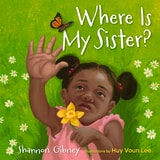
Where Is My Sister?
Shannon Gibney
University of Minnesota Press, 2026
A poignant resource for helping children and families through the loss of a sibling
Salome was going to be a big sister. Her brother, Gerald, told her so. They watched Mama’s tummy grow rounder and rounder, and their excitement grew, too. But then Mama went to the hospital, and she came home without a baby. The smiles stopped, and the house grew quiet except for Mama’s tears.
“Where is my sister?” Salome asks. Mama gathers her and Gerald onto her lap and tells them that baby Toni is in the cemetery, but she’ll always be their sister. Gerald says that she’s in the spirit world. Salome looks for her all over. Is Toni’s spirit in Mama’s tears? Is she in the family’s stories about her? Is she between Salome and her brother at the dinner table, or beside Salome’s favorite tree in the backyard? As her family begins to find peace, Salome understands something important: “My sister is everywhere.”
In Where Is My Sister? Shannon Gibney’s poetic voice captures the heartbreak of losing an infant and the love that joins family members together. Huy Voun Lee’s tender illustrations guide readers with quiet grace, honoring all those who passed from this world too soon. A resource for children and the parents, teachers, and community members who care for them, this book offers a powerful reflection for those who often feel alone during the painful and transformative experience of infant and sibling loss.