Results by title
4 books match the query 'Siena'
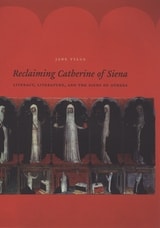
Reclaiming Catherine of Siena
Literacy, Literature, and the Signs of OthersJane Tylus
University of Chicago Press, 2009
Catherine of Siena (1347–1380) wrote almost four hundred epistles in her lifetime, effectively insinuating herself into the literary, political, and theological debates of her day. At the same time, as the daughter of a Sienese dyer, Catherine had no formal education, and her accomplishments were considered miracles rather than the work of her own hand. As a result, she has been largely excluded from accounts of the development of European humanism and the language and literature of Italy. Reclaiming Catherine ofSiena makes the case for considering Catherine alongside literary giants such as Dante and Petrarch, as it underscores Catherine's commitment to using the vernacular to manifest Christ's message—and her own.
Jane Tylus charts here the contested struggles of scholars over the centuries to situate Catherine in the history of Italian culture in early modernity. But she mainly focuses on Catherine’s works, calling attention to the interplay between orality and textuality in the letters and demonstrating why it was so important for Catherine to envision herself as a writer. Tylus argues for a reevalution of Catherine as not just a medieval saint, but one of the major figures at the birth of the Italian literary canon.
Jane Tylus charts here the contested struggles of scholars over the centuries to situate Catherine in the history of Italian culture in early modernity. But she mainly focuses on Catherine’s works, calling attention to the interplay between orality and textuality in the letters and demonstrating why it was so important for Catherine to envision herself as a writer. Tylus argues for a reevalution of Catherine as not just a medieval saint, but one of the major figures at the birth of the Italian literary canon.
[more]
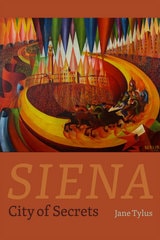
Siena
City of SecretsJane Tylus
University of Chicago Press, 2015
Jane Tylus’s Siena is a compelling and intimate portrait of this most secretive of cities, often overlooked by travelers to Italy. Cultural history, intellectual memoir, travelogue, and guidebook, it takes the reader on a quest of discovery through the well- and not-so-well-traveled roads and alleys of a town both medieval and modern.
As Tylus leads us through the city, she shares her passion for Siena in novelistic prose, while never losing sight of the historical complexities that have made Siena one of the most fascinating and beautiful towns in Europe. Today, Siena can appear on the surface standoffish and old-fashioned, especially when compared to its larger, flashier cousins Rome and Florence. But first impressions wear away as we learn from Tylus that Siena was an innovator among the cities of Italy: the first to legislate the building and maintenance of its streets, the first to publicly fund its university, the first to institute a municipal bank, and even the first to ban automobile traffic from its city center.
We learn about Siena’s great artistic and architectural past, hidden behind centuries of painting and rebuilding, and about the distinctive characters of its different neighborhoods, exemplified in the Palio, the highly competitive horserace that takes place twice a year in the city’s main piazza and that serves as both a dividing and a uniting force for the Sienese. Throughout we are guided by the assured voice of a seasoned scholar with a gift for spinning a good story and an eye for the telling detail, whether we are traveling Siena’s modern highways, exploring its underground tunnels, tracking the city’s financial history, or celebrating giants of painting like Simone Martini or giants of the arena, Siena’s former Serie A soccer team.
A practical and engaging guide for tourists and armchair travelers alike, Siena is a testament to the powers of community and resilience in a place that is not quite as timeless and serene as it may at first appear.
[more]
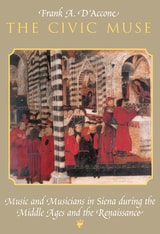
The Civic Muse
Music and Musicians in Siena during the Middle Ages and the RenaissanceFrank A. D'Accone
University of Chicago Press, 1997
Siena, blessed with neither the aristocratic nor the ecclesiastical patronage enjoyed by music in other northern Italian centers like Florence, nevertheless attracted first-rate composers and performers from all over Europe. As Frank A. D'Accone shows in this scrupulously documented study, policies developed by the town to favor the common good formed the basis of Siena's ambitious musical programs.
Based on decades of research in the town's archives, D'Accone's The Civic Muse brilliantly illuminates both the sacred and the secular aspects of more than three centuries of music and music-making in Siena. After detailing the history of music and liturgy at Siena's famous cathedral and of civic music at the Palazzo Pubblico, D'Accone describes the crucial role that music played in the daily life of the town, from public festivities for foreign dignitaries to private musical instruction. Putting Siena squarely on the Renaissance musical map, D'Accone's monumental study will interest both musicologists and historians of the Italian Renaissance.
Based on decades of research in the town's archives, D'Accone's The Civic Muse brilliantly illuminates both the sacred and the secular aspects of more than three centuries of music and music-making in Siena. After detailing the history of music and liturgy at Siena's famous cathedral and of civic music at the Palazzo Pubblico, D'Accone describes the crucial role that music played in the daily life of the town, from public festivities for foreign dignitaries to private musical instruction. Putting Siena squarely on the Renaissance musical map, D'Accone's monumental study will interest both musicologists and historians of the Italian Renaissance.
[more]
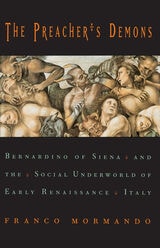
The Preacher's Demons
Bernardino of Siena and the Social Underworld of Early Renaissance ItalyFranco Mormando
University of Chicago Press, 1999
"When the city was filled with these bonfires, he then combed the city, and whenever he received notice of some public sodomite, he had him immediately seized and thrown into the nearest bonfire at hand and had him burned immediately." This story, of an anonymous individual who sought to cleanse medieval Paris, was part of a sermon delivered in Siena, Italy, in 1427. The speaker, the friar Bernardino (1380-1444), was one of the most important public figures of the time, and he spent forty years combing the towns of Italy, instructing, admonishing, and entertaining the crowds that gathered in prodigious numbers to hear his sermons.
His story of the Parisian vigilante was a recommendation. Sexual deviants were the objects of relentless, unconditional persecution in Bernardino's sermons. Other targets of the preacher's venom were witches, Jews, and heretics. Mormando takes us into the social underworld of early Renaissance Italy to discover how one enormously influential figure helped to dramatically increase fear, hatred, and intolerance for those on society's margins.
This book is the first on Bernardino to appear in thirty-five years, and the first ever to consider the preacher's inflammatory role in Renaissance social issues.
[more]