Results by title
10 books match the query 'Sight'

A Store Almost in Sight
The Economic Transformation of Missouri from the Lousiana Purchase to the Civil WarJeff Bremer
University of Iowa Press, 2014
Most Missourians welcomed the opportunity to take part in commercial markets. Farmwomen sold eggs or butter to peddlers and in nearby towns, while men took surplus corn or pork to stores for credit. Immigrants searched for the most fertile land closest to waterways, to ensure they would have large harvests and an easy way to ship them to market. Families floated farm goods downriver until steamboats transformed rural life by drastically reducing the cost of transportation and boosting farm production and consumption. Traders also trekked west across the plains to trade at the inland entrepôt of Santa Fe. The waves of migrants headed for Oregon and California in the 1840s and 1850s further encouraged commercial development. However, most white settlers lacked the necessary financial means to be capitalists in a technical sense, seeking instead a “competency,” or comfortable independence.
This fresh reinterpretation of the American frontier will interest anyone who wants to understand the economic and social significance of westward migration in U.S. history. It gives the reader a gritty, grassroots sense of how ordinary people made their livings and built communities in the lands newly opened to American settlement.
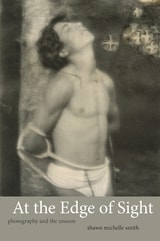
At the Edge of Sight
Photography and the UnseenShawn Michelle Smith
Duke University Press, 2013

Ends in Sight
Marx/Fukuyama/Hobsbawm/AndersonGregory Elliott
Pluto Press, 2008
Gregory Elliott argues that Marx is central to all three accounts and that, along with the Manifesto, they form a quartet of analyses of the results and prospects of capitalism and socialism, which are of enduring significance for the Left.
Senses of an Ending provides a readable survey of key historical and political thinkers that will appeal to anyone interested in modern political thought.

Eyes like Mine
A Memoir between Blindness and SightTalea Anderson
Temple University Press, 2027
Talea Anderson is a person with low vision. Although she passes as sighted, she feels she has a “blind identity.” Eyes like Mine is her candid and revealing memoir detailing her experience grappling with partial vision and the isolation and loneliness that this often brings. Anderson expresses a longing for connection and community, especially with those who live in the space between sight and blindness.
Eyes like Mine examines ideas of disability as Anderson understands the nature of her blindness and sight and how that has evolved over her life. She relates her experiences to historical figures with low or partial vision, including painter Claude Monet, disability advocate Helen Keller, and musician and composer Maria Theresia von Paradis, among others.
Writing eloquently about her surgeries, and others’ efforts to “fix her,” Anderson captures her experience with disability with confidence and self-reflexive humor. Eyes like Mine does not speak for all blind people or others with partial vision. Instead, Anderson investigates how disabled people think about their relationship with disability and how they identify.
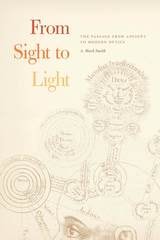
From Sight to Light
The Passage from Ancient to Modern OpticsA. Mark Smith
University of Chicago Press, 2014
Breaking from previous scholarship that sees Johannes Kepler as the culmination of a long-evolving optical tradition that traced back to Greek antiquity via the Muslim Middle Ages, Smith presents Kepler instead as marking a rupture with this tradition, arguing that his theory of retinal imaging, which was published in 1604, was instrumental in prompting the turn from sight to light. Kepler’s new theory of sight, Smith reveals, thus takes on true historical significance: by treating the eye as a mere light-focusing device rather than an image-producing instrument—as traditionally understood—Kepler’s account of retinal imaging helped spur the shift in analytic focus that eventually led to modern optics.
A sweeping survey, From Sight to Light is poised to become the standard reference for historians of optics as well as those interested more broadly in the history of science, the history of art, and cultural and intellectual history.

Line Of Sight
American Avant-Garde Film Since 1965Paul Arthur
University of Minnesota Press, 2005
For three decades, Paul Arthur has been a leading observer and critic as well as a direct participant in America’s avant-garde cinema. In A Line of Sight, he provides a sweeping new account of the extravagant energies of American experimental cinema since 1965.
Balancing close analysis of both major and lesser-known films with detailed examinations of their production, distribution, and exhibition, Arthur addresses the avant-garde’s cultural significance while offering a timely reconsideration of accepted critical categories and artistic options. Rather than treating American avant-garde cinema as a series of successive artistic breakthroughs, A Line of Sight emphasizes the importance of social and institutional networks, material exchanges, and historical disruptions and continuities. Throughout, Arthur pays close attention to themes and visual practices neglected or underrepresented in previous studies, scrutinizing portraiture as a vehicle for projecting dissident identities, highlighting the essay film and the contemporary city symphony, and assessing the contributions of regional and African American filmmaking to the avant-garde. He also explores thematic and formal questions that have been central to the avant-garde achievement: experimental film's relationship with mainstream narrative cinema and postwar American painting as well as the legacy of sixties’s counterculture; the uses and theoretical implications of found footage and the allegorizing of technology; and the schism between a poetic, expressive cinema and the antisubjective, rationalist bias of structural filmmaking.
Amid the current resurgence of experimental filmmakers and the emergence of a new audience for their work, A Line of Sight reaffirms the extraordinary breadth and diversity of the avant-garde tradition in America.
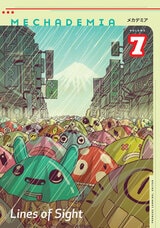
Mechademia 7
Lines of SightFrenchy Lunning
University of Minnesota Press, 2012
Lines of Sight—the seventh volume in the Mechademia series, an annual forum devoted to Japanese anime and manga—explores the various ways in which anime, manga, digital media, fan culture, and Japanese art—from scroll paintings to superflat—challenge, undermine, or disregard the concept of Cartesian (or one-point) perspective, the dominant mode of visual culture in the West since the seventeenth century. More than just a visual mode or geometric system, Cartesianism has shaped nearly every aspect of modern rational thought, from mathematics and science to philosophy and history.
Framed by Thomas Lamarre’s introduction, “Radical Perspectivalism,” the essays here approach Japanese popular culture as a visual mode that employs non-Cartesian formations, which by extension make possible new configurations of perception and knowledge. Whether by shattering the illusion of visual or narrative seamlessness through the use of multiple layers or irregular layouts, blurring the divide between viewer and creator, providing diverse perspectives within a single work of art, or rejecting dualism, causality, and other hallmarks of Cartesianism, anime and manga offer in their radicalization of perspective the potential for aesthetic and even political transformation.
Contributors: David Beynon, Deakin U; Fujimoto Yukari, Meiji U; Yuriko Furuhata, McGill U; Craig Jackson, Ohio Wesleyan U; Reginald Jackson, U of Chicago; Thomas Lamarre, McGill U; Jinying Li; Waiyee Loh; Livia Monnet, U of Montreal; Sharalyn Orbaugh, U of British Columbia; Stefan Riekeles; Atsuko Sakaki, U of Toronto; Miryam Sas, U of California, Berkeley; Timon Screech, U of London; Emily Somers; Marc Steinberg, Concordia U.
Nothing in Sight
Jens Rehn
University of Chicago Press, 2005
In a terse, almost clinically exact style, Nothing in Sight distills the brutal essence of what it is to die alone. Much more than a story of war, this short novel presents the memories, dreams, and hallucinations of two soldiers as they drift toward death. With nothing in sight on the horizon, Jens Rehn directs our view inward, into the minds of both men as they question the meaning of life, the existence of God, and the possibility of enduring human relationships. As the drama unfolds, each man recalls fragments of his past through the delirium of thirst and pain. The American soldier, his arm severed, dies first of gangrene. The German dies in agony a week later. Their life raft sinks into the vastness of the ocean.
Reissued two years ago in Germany, Nothing in Sight was hailed by critics there as a singular achievement. The work is presented here in a crystalline English translation for the first time, given new life for generations of readers to come.
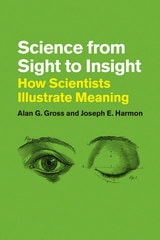
Science from Sight to Insight
How Scientists Illustrate MeaningAlan G. Gross and Joseph E. Harmon
University of Chicago Press, 2013
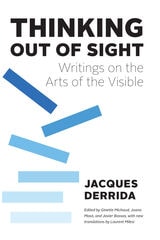
Thinking Out of Sight
Writings on the Arts of the VisibleJacques Derrida
University of Chicago Press, 2021
The book is divided into three sections. The first demonstrates Derrida’s preoccupation with visibility, image, and space. The second contains interviews and collaborations with artists on topics ranging from the politics of color to the components of painting. Finally, the book delves into Derrida’s writings on photography, video, cinema, and theater, ending with a text published just before his death about his complex relationship to his own image. With many texts appearing for the first time in English, Thinking out of Sight helps us better understand the critique of representation and visibility throughout Derrida’s work, and, most importantly, to assess the significance of his insights about art and its commentary.