Results by title

17 books match the query 'Silver mines and mining'

cover of Aspen: The History of a Silver Mining Town, 1879 - 1893

Aspen

The History of a Silver Mining Town, 1879 - 1893

Malcolm J. Rohrbough

University Press of Colorado, 2000
[more]
cover of Before THE BIG BONANZA: Dan De Quille's Early Comstock Accounts

Before THE BIG BONANZA

Dan De Quille's Early Comstock Accounts

Edited by Donnelyn Curtis and Lawrence I. Berkove

University of Missouri Press, 2015
The discovery and mining of the Comstock Lode in Nevada forever changed the mining culture of the American West. Using the pen name Dan De Quille, in 1876 William Wright published The Big Bonanza, the best-known contemporary account of the Comstock Lode mines. Previously, however, in nearly fifty newspaper accounts from 1860 to 1863, De Quille had documented the development of the early Comstock with a frankness, abundance of detail, sense of immediacy, and excitement largely absent from his book. Donnelyn Curtis and Lawrence I. Berkove have gathered those accounts together in Before The Big Bonanza.


De Quille describes the amazing transformation of the Comstock in less than four years from miscellaneous tent camps and primitive mining sites to an incredible complex of underground shafts and tunnels beneath a group of wealth-producing cities, with modern buildings, state-of-the-art mills, orderly streets, and traffic jams. He captures the vitality of the inhabitants' resolution and resourcefulness as they survive destructive storms and being cut off from supplies and entertainment, and he chronicles the events that kept Nevada and California in the Union. While reporting the prevailing violence of brawling and dueling and anti-Indian prejudice, De Quille at the same time conveys his thoughtful observations on the significance to democracy and civilization of the existence of such license.


This trove of columns, collected from a variety of newspapers, is history in the making and additionally casts new light on the life and rapidly developing art of De Quille, the biographer of the Comstock and one of the most versatile and accomplished authors of the Old West.
[more]
cover of Eben Smith: The Dean of Western Mining

Eben Smith

The Dean of Western Mining

David Forsyth

University Press of Colorado, 2021

David Forsyth recounts the life of Eben Smith, an integral but little-known figure in Colorado mining history. Smith was one of the many fortune seekers who traveled to California during the gold rush and one of the few who found what he sought. He moved to Colorado in 1860 with business partner Jerome Chaffee and over the next forty-six years was involved in mining in nearly every major camp in the state, from Central City to Cripple Creek, and in the development of mines such as the Bobtail, Little Jonny, and Victor. He was eulogized by the Denver Post and Denver Times as the “dean of mining in Colorado.”
 
The mining teams Smith formed with Chaffee and with industrialist David Moffat were among the most successful and respected in Colorado, and many in the state held Smith in high regard. Yet despite the credit he received during his lifetime for establishing Colorado’s mining industry, Smith has not received much attention from historians, perhaps because he was content to leave public-facing duties to his partners while he concerned himself with managing mine operations.
 
From Smith’s early years and his labor in the mines to his rise to prominence as an investor and developer, Forsyth shows how Smith used the mining and milling knowledge he acquired in California to become a leader in technological innovation in Colorado’s mining industry.
 
[more]
cover of Historical Archaeology in the Cortez Mining District: Under the Nevada Giant

Historical Archaeology in the Cortez Mining District

Under the Nevada Giant

Erich Obermayr

University of Nevada Press, 2025

The Cortez Hills Expansion Project archaeological excavations uncovered a wealth of information about the Cortez Mining District, from its beginning in 1863 to the government-mandated end to the mining of precious metals in the district during World War II. Obermayr and McQueen use archaeological data as a foundation to tell the story of life in one of Nevada’s most intriguing, long-lived mining districts. Archaeologists excavate and analyze many thousands of artifacts, uncovering the homes and workplaces—and even trash dumps—of prospectors and miners, mill workers, charcoal burners, brickmakers, blacksmiths, teamsters, and families. They present an archaeological view of everyday life: how Cortez was populated by a variety of ethnic groups, how they lived, what products they bought or consumed, what their social status was, and how, even in this remote location, they created their own version of lives exemplifying the era’s Victorian ideals.
 
Readers interested in the archaeology of the West, mining history, and the history of Nevada will find this book fascinating.
 
[more]
cover of John Mackay: Silver King in the Gilded Age

John Mackay

Silver King in the Gilded Age

Michael J. Makley

University of Nevada Press, 2015

From the early 1870s until his death in 1902, John Mackay was among the richest men in the world and was without a doubt the wealthiest man to emerge from Nevada’s fabulous Comstock Lode. Author Michael J. Makley explores how, from his beginnings as a poor Irish immigrant, John Mackay developed a strong work ethic that distinguished him for the rest of his life. He came west to seek his fortune in the California Gold Rush and then moved on to Virginia City, Nevada, where he dealt in mining stocks and operated silver mines. After making a fortune in mining, he transferred his energies to banking and communications.
 
John Mackay offers new insight into the life and achievements of this remarkable man. It also places Mackay in the broader context of his time, an era of robber barons and rampant corruption, rapidly advancing technology, national and international capitalism, and flagrant displays of newfound wealth. Even in this context, he stood out, not only for his contributions to Nevada and mining history, but also for his reputation as an important business leader fighting the consolidation and venality of corporate power in the Gilded Age. His actions freed the Comstock from a financial monopoly, resulting in moderated rates for the milling, timber, shipping, transportation, and water that made mining possible and precipitated the discovery and development of the ore field known as the “Big Bonanza.”

Makley’s book recounts the life and career of one of the most successful men of his age, a capitalist of immense wealth who generously helped those around him and worked diligently in the public interest. This engaging biography will appeal to readers interested in the Comstock Lode and mining in the West during the latter part of the nineteenth century as well as general western history enthusiasts.
[more]
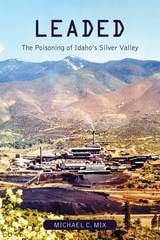
cover of Leaded: The Poisoning of Idaho's Silver Valley

Leaded

The Poisoning of Idaho's Silver Valley

Michael C. Mix

Oregon State University Press, 2016

Leaded: The Poisoning of Idaho’s Silver Valley examines the origin, evolution, and causes of harmful environmental and human health effects caused by mining operations in Idaho’s Coeur d'Alene Mining District, the “Silver Valley,” from 1885-1981. During that period, district mines produced over $4 billion worth of lead, silver, and zinc. The Bunker Hill Company dominated business and community activities through ownership of its rich mine, lead smelter, and zinc plant.
 
During the first half of the 20th century, industrial mining operations caused severe environmental damage to area waterways and lands from releases of lead and other toxic metals, and sulfur gases. Despite the obvious devastation, no effective federal laws regulating mining and smelting operations were passed until the 1970s, due to the influence of the mine and lead industry in state and federal politics, and scientific uncertainties about pollution effects. Harmful human health effects were evident soon after the smelter opened in 1917, when Bunker Hill workers suffered from lead poisoning, but no federal laws regulating workplace lead were passed until the 1970s.
 
In 1974, lead smelter emissions from Bunker Hill caused the largest epidemic of childhood lead poisoning in U.S. history. That landmark event ultimately led to the EPA mandating federal air lead standards in 1978 and, at the same time, NIOSH passed national standards reducing occupational lead exposures. Bunker Hill could not meet the new standards; consequently, the company closed in 1981, leaving behind a contaminated geographic area that was classified as the largest Superfund site in the United States in 1983.
 
Leaded is a deeply researched account of one of the greatest environmental disasters in our history. It belongs on the bookshelf of every student of environmental history, western history, mining history, environmental ethics, and environmental law.
 
[more]
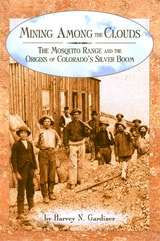
cover of Mining among the Clouds: The Mosquito Range and the Origins of Colorado's Silver Boom

Mining among the Clouds

The Mosquito Range and the Origins of Colorado's Silver Boom

Harvey N. Gardiner

University Press of Colorado, 2002
In Mining Among the Clouds, Harvey N. Gardiner examines what one reporter dubbed "aerial" mining - silver mining at such high altitudes that the miners were literally working among the clouds. In the summer of 1871, two prospectors ventured high up Mount Bross in Colorado's Mosquito Range. There they discovered an outcropping of silver ore in blue limestone. An unprecedented find, it set off strike after strike in Park County. Thus began the silver boom that gave rise to Leadville, laying the foundation for Colorado's Silver Decade.
[more]
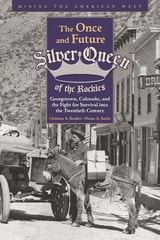
cover of Once and Future Silver Queen of the Rockies: Georgetown, Colorado, and the Fight for Survival into the Twentieth Century

Once and Future Silver Queen of the Rockies

Georgetown, Colorado, and the Fight for Survival into the Twentieth Century

Christine Bradley

University Press of Colorado, 2018

There are many studies of local communities during their heydays, but the life of a community in decline is rarely studied. The Once and Future Silver Queen of the Rockies delves into the life of Georgetown, Colorado, after the turn of the twentieth century as mining in Clear Creek County steadily declined and ultimately collapsed.

One of the earliest mining communities in the state, Georgetown began to struggle for survival as the nineteenth century drew to a close. The price of silver dropped precipitously while other mining camps were still opening around the region. The new, bright future once envisioned for the “Silver Queen of the Rockies” began to fade. Yet the community managed to survive and re-create itself in the new world of the twentieth century. Tourism, skiing, and historic preservation replaced mineral extraction as the basis of the regional economy. Today, Georgetown maintains the aesthetic feel of a nineteenth-century mining town and stands as an example of community-supported historic preservation.

This richly illustrated sequel to The Rise of the Silver Queen tells the compelling story of Georgetown’s survival, and ultimate flourishing, after the loss of its principal industry. It is an interesting and engaging addition to the history of Colorado and the West.

[more]
cover of Rise Of The Silver Queen

Rise Of The Silver Queen

Liston E. Leyendecke

University Press of Colorado, 2005
[more]
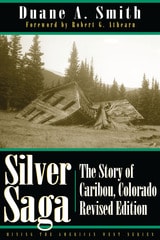
cover of Silver Saga: The Story of Caribou, Colorado, Revised Edition

Silver Saga

The Story of Caribou, Colorado, Revised Edition

Duane A. Smith

University Press of Colorado, 2002

Revised and updated, Duane A. Smith's classic study of this important silver mining town is back in print.
[more]
cover of The Arizona Diary of Lily Frémont, 1878–1881

The Arizona Diary of Lily Frémont, 1878–1881

Elizabeth Benton Frémont

University of Arizona Press, 1997

Well traveled and gently reared, Elizabeth (Lily) Benton Frémont found herself heading for the rough-and-tumble West when her father, John C. Frémont, was named governor of Arizona Territory. In his shadow and that of her grandfather, U.S. Senator Thomas Hart Benton, her life on the frontier would have gone largely unremarked but for one thing: Lily kept a diary.

Here, in rich detail, her day-by-day narrative and the editor's annotations bring to life Arizona's territorial capital of Prescott more than one hundred years ago. Lily gives us firsthand accounts of the operation of territorial government; of pressure from Anglo settlers to dispossess Pima Indians from their land; and of efforts by the governor and the army to deal with Indian scares. Here also, underlying her words, are insights into the dynamics of a close-knit Victorian family, shaping the life of an intelligent, educated single woman. As unofficial secretary for her father, Lily was well placed to observe and record an almost constant stream of visitors to the governor's home and office. Observe and record, she did. Her diary is filled with unvarnished images of personalities such as the Goldwaters, General O. B. Willcox, Moses Sherman, Judge Charles Silent, and a host of lesser citizens, politicians, and army officers.

Lily's anecdotes vividly re-create the periodic personality clashes that polarized society (and one full-fledged scandal), the ever-present danger of fire, religious practices (particularly a burial service conducted in Hebrew), and attitudes toward Native Americans and Chinese. On a more personal level, the reader will find intimate accounts of John Frémont's obsession with mining promotion, his complicated business dealings with Judge Silent, and his attempts to recoup his family's sagging fortune. Here especially, Lily outlines a telling profile of her father, a man roundly castigated then and now as a carpetbagger less interested in promoting Arizona's interests than his own.

For students of western history, Lily Frémont's diary provides a wealth of fresh information on frontier politics, mining, army life, social customs, and ethnicity. For all readers, her words from a century ago offer new perspectives on the winning of the West as well as fascinating glimpses of a world that once was and is no more.
[more]
cover of The Bewitchment of Silver: The Social Economy of Mining in Nineteenth-Century Peru

The Bewitchment of Silver

The Social Economy of Mining in Nineteenth-Century Peru

Jose R. Deustua

Ohio University Press, 1999

Mining was crucial for the development of nineteenth-century Peru. Silver mining in particular was a key to both the export sector and the creation of an internal market and national development. The Bewitchment of Silver is an inquiry into the impact of that mineral on a national economy in a country at the periphery of nineteenth-century capitalism.

José Deustua argues that developing countries must be understood in terms of achieving domestic development as well as in their role in generating foreign exchange and in linking themselves to the world economy. Focusing on various sectors of Peru’s mining production, the mines, owners and mine workers, the transportation networks and the use of muleteers, this study is also concerned with market-building and domestic development in nineteenth-century Latin America.
[more]
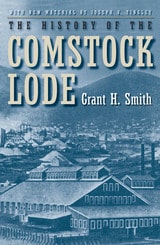
cover of The History Of The Comstock Lode

The History Of The Comstock Lode

Grant H. Smith

University of Nevada Press, 1998
No aspect of Nevada's history has captured so much attention as the heady boomtown days of the Comstock Lode strike in the mid-nineteenth century. The History of the Comstock Lode, first published in 1943, provided mining investors, engineers, and western historians with the first comprehensive, chronological history of mining operations on the Comstock from 1850 to 1997. Grant H. Smith labored on this project for over a decade to produce a volume that has become a classic in its field and a mainstay in all mining history collections. Of particular note is Smith's progressive record of the ways the mines were developed, the failures encountered, the bonanzas discovered, and the production of the mines. New edition co-published with the Nevada Bureau of Mines and Geology.
[more]
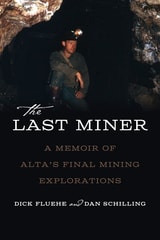
cover of The Last Miner: A Memoir of Alta's Final Mining Expeditions

The Last Miner

A Memoir of Alta's Final Mining Expeditions

Dick Fluehe with Dan Schilling

University of Utah Press, 2025

Explore Utah’s legendary lost and hidden silver mines with the last miner

The Last Miner is a captivating memoir chronicling the final days of mining exploration in Utah’s legendary Little Cottonwood Canyon during the 1950s. Through the eyes of Dick Fluehe, the last living miner to traverse these haunted, silver-laden tunnels, readers are immersed in a forgotten world beneath the internationally renowned Alta and Snowbird ski areas. With a knowledge as deep as the mines themselves, Dick recounts tales of collapsed shafts, gloriously jeweled stopes, and colorful personalities, such as “Swingin’ Door,” “Slick,” and “The Bull,” who lived and died pursuing ore.

Edited by New York Times bestselling author Dan Schilling, The Last Miner offers a unique, firsthand account of the treacherous, adventurous, and humorous lives of mid-century miners. Both thrilling and insightful, this memoir is the mining equivalent of a float down the Mississippi with Mark Twain and an unprecedented insight into the history of American West mining.
[more]
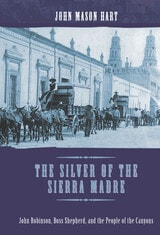
cover of The Silver of the Sierra Madre: John Robinson, Boss Shepherd, and the People of the Canyons

The Silver of the Sierra Madre

John Robinson, Boss Shepherd, and the People of the Canyons

John Mason Hart

University of Arizona Press, 2008
In the great barranca known today as Copper Canyon, the small mining town of Batopilas once experienced a silver bonanza among the largest ever known. American investors, believing that Mexico offered an unexploited cornucopia, began purchasing mines in the Sierra Madre, seeking to expand their hold on natural resources outside U.S. borders. From 1861 until the Revolution of 1910, the men of the Batopilas Mining Company ruled the region using their wealth, armed might, and extensive connections. The technology, industrialism, and politics their interests brought to this remote community tied the Tarahumara, Yaqui, Mayo, and other peoples of the barrancas directly to the economies of the United States and China. Local society was revolutionized, and a dramatic tapestry of human interactions was created. Based on many volumes of mining company records, The Silver of the Sierra Madre exposes the mentality and methods of mine owners John Robinson and Alexander “Boss” Shepherd, vividly detailing their exploitation of the people and the natural resources of Chihuahua. Hart aptly demonstrates the human and financial losses resulting from President Porfirio Díaz’s development programs, which relied on foreign investors, foreign managers, and foreign technology. This unprecedented work also provides a highly interesting ethnographic and social description of one of the least-known areas of Mexico. It is a tale of power and desperation, respect and arrogance, adventure and tragedy, and, ultimately, triumph and survival.
[more]
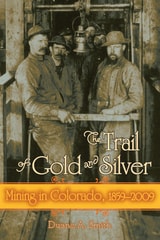
cover of Trail Of Gold & Silver

Trail Of Gold & Silver

D Smith

University Press of Colorado, 2009
[more]
cover of Treasure Hill: Portrait Of A Silver Mining Camp

Treasure Hill

Portrait Of A Silver Mining Camp

W. Turrentine Jackson

University of Nevada Press, 2000

In 1868, the discovery of an exceptionally rich silver ore on Treasure Hill in eastern Nevada led to an intense but short-lived boom. The White Pine Mining District was quickly organized, and in time a new Nevada county was created with that name. The boom lasted only two seasons, but dogged investors, mostly British, spent more than twenty years pursuing the dream of making White Pine a prosperous mining district before they withdrew and left behind only disappointment and ghost towns. W. Turrentine Jackson’s study of Treasure Hill, first published in 1963, has endured as a classic case study of a typical mining district in the western United States. Much more than events at the Comstock Lode in Virginia City, the rush to White Pine, its brief season of glory and excitement followed by sudden decline, typifies the pattern of development in the majority of mining districts in the West. Far more than a tale of sudden wealth and lawlessness—although both were abundant—Treasure Hill encompasses the impact of growing international capitalism and labor movements on the mining West, the bitter politics surrounding the creation of towns and counties, and the human costs of boom and bust. Available again in a new paperback edition, with a foreword by mining historian Joseph V. Tingley,Treasure Hill offers readers a lively, thoroughly researched account of one of Nevada’s richest and briefest mining booms.
[more]