Results by title
2 books match the query 'Silverman, Sydel'
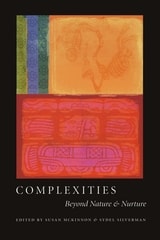
Complexities
Beyond Nature and NurtureEdited by Susan McKinnon and Sydel Silverman
University of Chicago Press, 2005
Recent years have seen a growing impetus to explain social life almost exclusively in biological and mechanistic terms, and to dismiss cultural meaning and difference. Daily we read assertions that everything from disease to morality—not to mention the presumed characteristics of race, gender, and sexuality—can be explained by reference primarily to genetics and our evolutionary past.
Complexities mobilizes experts from several fields of anthropology—cultural , archaeological, linguistic, and biological—to offer a compelling challenge to the resurgence of reductive theories of human biological and social life. This book presents evidence to contest such theories and to provide a multifaceted account of the complexity and variability of the human condition. Charting a course that moves beyond any simple opposition between nature and nurture, Complexities argues that a nonreductive perspective has important implications for how we understand and develop human potential.
Complexities mobilizes experts from several fields of anthropology—cultural , archaeological, linguistic, and biological—to offer a compelling challenge to the resurgence of reductive theories of human biological and social life. This book presents evidence to contest such theories and to provide a multifaceted account of the complexity and variability of the human condition. Charting a course that moves beyond any simple opposition between nature and nurture, Complexities argues that a nonreductive perspective has important implications for how we understand and develop human potential.
[more]

One Discipline, Four Ways
British, German, French, and American AnthropologyFredrik Barth, Robert Parkin, Andre Gingrich, and Sydel Silverman
University of Chicago Press, 2005
One Discipline, Four Ways offers the first book-length introduction to the history of each of the four major traditions in anthropology—British, German, French, and American. The result of lectures given by distinguished anthropologists Fredrik Barth, Andre Gingrich, Robert Parkin, and Sydel Silverman to mark the foundation of the Max Planck Institute for Social Anthropology, this volume not only traces the development of each tradition but considers their impact on one another and assesses their future potentials.
Moving from E. B. Taylor all the way through the development of modern fieldwork, Barth reveals the repressive tendencies that prevented Britain from developing a variety of anthropological practices until the late 1960s. Gingrich, meanwhile, articulates the development of German anthropology, paying particular attention to the Nazi period, of which surprisingly little analysis has been offered until now. Parkin then assesses the French tradition and, in particular, its separation of theory and ethnographic practice. Finally, Silverman traces the formative influence of Franz Boas, the expansion of the discipline after World War II, and the "fault lines" and promises of contemporary anthropology in the United States.
Moving from E. B. Taylor all the way through the development of modern fieldwork, Barth reveals the repressive tendencies that prevented Britain from developing a variety of anthropological practices until the late 1960s. Gingrich, meanwhile, articulates the development of German anthropology, paying particular attention to the Nazi period, of which surprisingly little analysis has been offered until now. Parkin then assesses the French tradition and, in particular, its separation of theory and ethnographic practice. Finally, Silverman traces the formative influence of Franz Boas, the expansion of the discipline after World War II, and the "fault lines" and promises of contemporary anthropology in the United States.
[more]