Results by title
2 books match the query 'Sin in literature'
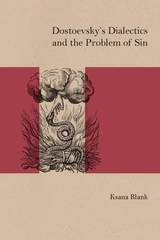
Dostoevsky's Dialectics and the Problem of Sin
Ksana Blank
Northwestern University Press, 2019
In Dostoevsky’s Dialectics and the Problem of Sin, Ksana Blank borrows from ancient Greek, Chinese, and Christian dialectical traditions to formulate a dynamic image of Dostoevsky’s dialectics—distinct from Hegelian dialectics—as a philosophy of “compatible contradictions.” Expanding on the classical triad of Goodness, Beauty, and Truth, Blank guides us through Dostoevsky’s most difficult paradoxes: goodness that begets evil, beautiful personalities that bring about grief, and criminality that brings about salvation.
Dostoevsky’s philosophy of contradictions, this book demonstrates, contributes to the development of antinomian thought in the writings of early twentieth-century Russian religious thinkers and to the development of Bakhtin’s dialogism. Dostoevsky’s Dialectics and the Problem of Sin marks an important and original intervention into the enduring debate over Dostoevsky’s spiritual philosophy.

Sin and Salvation in Early Modern France
Three Women’s StoriesMarguerite d'Auge, Renée Burlamacchi, and Jeanne du Laurens
Iter Press, 2017
The texts available here in English for the first time open a window into the lives of three early modern Frenchwomen as they explore the common themes of family, memory, sin, and salvation. The Regrets of Marguerite d’Auge (1600), the Memoirs of Renée Burlamacchi (1623), and the Genealogy of Jeanne du Laurens (1631), taken from different genres of historical writings, raise important questions: Why and how did female authorship find its way into the historical record? How did these voices escape the censorship and prejudice against female publication? In a time of extreme religious conflict, how did these women convey their views on controversial issues such as primacy of grace, indulgences, and salvation without disrupting the gender expectations of the era?