Results by title
2 books match the query 'Singer, Beverly R.'
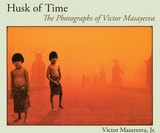
Husk of Time
The Photographs of Victor MasayesvaVictor Masayesva, Jr.; Introduction by Beverly R. Singer
University of Arizona Press, 2006
Photographer and filmmaker Victor Masayesva, Jr., was raised in the Hopi village of Hotevilla and was educated at the Horace Mann School in New York, Princeton University, and the University of Arizona. His immersion in photographic experimentation embraces a projection of stories and symbols, natural objects, and locations both at Hopi and worldwide. His work has been exhibited internationally, and he is perhaps best known for his feature-length film Imagining Indians. For Masayesva, photography is a discipline that he approaches in a manner similar to the way that he was taught about himself and his clan identity. As he navigates his personal associations with Hopi subject matter in varied investigations of biology, ecology, humanity, history, planetary energy, places remembered, and musings on things broken and whole, he has created an extraordinary visual cosmography. In this compilation of his photographic journey, Masayesva presents some of the most important and vibrant images of that visual quest and reflects on them in provocative essays.
[more]
Wiping the War Paint off the Lens
Native American Film and VideoBeverly R. Singer
University of Minnesota Press, 2001
Native Americans have thrown themselves into filmmaking since the mid-1970s, producing hundreds of films and videos, and their body of work has had great impact on Native cultures and filmmaking itself. With their cameras, they capture the lives of Native people, celebrating community, ancestral lifeways, and identity. Not only artistic statements, the films are archives that document rich and complex Native communities and counter mainstream media portrayals. Wiping the War Paint off the Lens traces the history of Native experiences as subjects, actors, and creators, and develops a critical framework for approaching Native work. Singer positions Native media as part of a larger struggle for "cultural sovereignty"-the right to maintain and protect cultures and traditions. Taking it out of a European-American context, she reframes the discourse of filmmaking, exploring oral histories and ancient lifeways inform Native filmmaking and how it seeks to heal the devastation of the past. Singer’s approach is both cultural and personal, provides both historical views and close textual readings, and may well set the terms of the critical debate on Native filmmaking.
[more]