Results by title
5 books match the query 'Sixteenth'
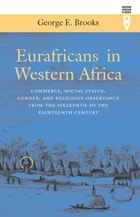
Eurafricans in Western Africa
Commerce, Social Status, Gender, and Religious Observance from the Sixteenth to the Eighteenth CenturyGeorge E. Brooks
Ohio University Press, 2003
Eurafricans in Western Africa traces the rich social and commercial history of western Africa. The most comprehensive study to date, it begins prior to the sixteenth century when huge profits made by middlemen on trade in North African slaves, salt, gold, pepper, and numerous other commodities prompted Portuguese reconnaissance voyages along the coast of western Africa. From Senegal to Sierra Leone, Portuguese, including “New Christians” who reverted to Judaism while living in western Africa, thrived where riverine and caravan networks linked many African groups.
Portuguese and their Luso-African descendants contended with French, Dutch, and English rivals for trade in gold, ivory, slaves, cotton textiles, iron bars, cowhides, and other African products. As the Atlantic slave trade increased, French and Franco-Africans and English and Anglo-Africans supplanted Portuguese and Luso-Africans in many African places of trade.
Eurafricans in Western Africa follows the changes that took root in the eighteenth century when French and British colonial officials introduced European legal codes, and concludes with the onset of the French Revolution and Napoleonic Wars, when suppression of the slave trade and expanding commerce in forest and agricultural commodities again transformed circumstances in western Africa.
Professor George E. Brooks’s outstanding history of these vital aspects of western Africa is enriched by his discussion of the roles of the women who married or cohabited with European traders. Through accounts of incidents and personal histories, which are integrated into the narrative, the lives of these women and their children are accorded a prominent place in Professor Brooks’s fascinating discussion of this dynamic region of Africa.
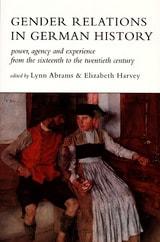
Gender Relations in German History
Power, Agency, and Experience from the Sixteenth to the Twentieth CenturyLynn Abrams and Elizabeth Harvey, eds.
Duke University Press, 1997
Topics include childbirth, abortion, and the female body in early modern Germany; the roots of German feminism; gender, class, and medicine during World War I and during the Weimar republic; female homosexuality during the Nazi period; East and West German reconstruction following World War II and the formation of a gendered consumer culture.
This book will stimulate readers to think more deeply about the importance of gender in German history, and prove to be an invaluable resource for those interested in women’s studies and in German and European history.
Contributors. Lynn Abrams, Elizabeth Harvey, Dagmar Herzog, Kate Lacey, Katherine Pence, Ulinka Rublack, Claudia Schoppman, Regina Schulte, Cornelie Usborne, Heide Wunder
Reformation Movements in the Sixteenth and Seventeenth Centuries
Charlotte Methuen
SBL Press, 2025
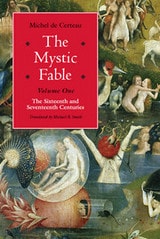
The Mystic Fable, Volume One
The Sixteenth and Seventeenth CenturiesMichel de Certeau
University of Chicago Press, 1992
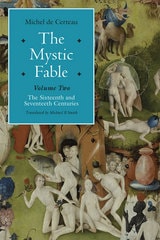
The Mystic Fable, Volume Two
The Sixteenth And Seventeenth CenturiesMichel de Certeau
University of Chicago Press, 2015
Though the second volume remained in fragments at the time of his death, Michel de Certeau had the foresight to leave his literary executor detailed instructions for its completion, which formed the basis for the present work. Together, both volumes solidify Certeau’s place as a touchstone of twentieth-century literature and philosophy, and continue his exploration of the paradoxes of historiography; the construction of social reality through practice, testimony, and belief; the theorization of speech in angelology and glossolalia; and the interplay of prose and poetry in discourses of the ineffable. This book will be of vital interest to scholars in religious studies, theology, philosophy, history, and literature.