Results by title
5 books match the query 'Skis and skiing'

Secrets of the Greatest Snow on Earth, Second Edition
Weather, Climate Change, and Finding Deep Powder in Utah's Wasatch Mountains and Around the WorldJim Steenburgh
Utah State University Press, 2023
Utah has long claimed to have the greatest snow on Earth—the state itself has even trademarked the phrase. In Secrets of the Greatest Snow on Earth, Jim Steenburgh investigates Wasatch weather, exposing the myths, explaining the reality, and revealing how and why Utah’s powder lives up to its reputation. Steenburgh also examines ski and snowboard regions beyond Utah, providing a meteorological guide to mountain weather and snow climates around the world.
Chapters explore mountain weather, avalanches and snow safety, historical accounts of weather events and snow conditions, and the basics of climate and weather forecasting. In this second edition, Steenburgh explains what creates the best snow for skiing and snowboarding using accurate and accessible language and 150 color photographs and illustrations, making Secrets of the Greatest Snow on Earth a helpful tool for planning vacations and staying safe during mountain adventures.
This edition is updated with two new chapters covering microclimates and climate change in greater depth. Steenburgh addresses the declining snowpack and the future of snow across the western United States, as well as the declining snow and ice in several regions of the world—the European Alps in particular. Snowriders, weather enthusiasts, meteorologists, students of snow science, and anyone who dreams of deep powder and bluebird skies will want to get their gloves on this new edition of Secrets of the Greatest Snow on Earth.
Praise for the first edition:
“Everything you always wanted to know about how snow forms and how to follow forecasts so you see
how much an”d where is in the book. It’s a must-have for any fan of snow, sure to get you excited about
winter, and give you a bevy of conversation topics for the chairlift ride.”
—Utah Adventure Journal
“For backcountry enthusiasts that find themselves infatuated with weather patterns, snow-water
equivalents, microclimates, and Utah, this book is a dream come true.”
—The Backcountry Skiing Blog
“Steenburgh shares a career’s worth of knowledge in this book. His love of both snow science and skiing
is obvious, and he adds humor and personality to the scientific discussion.”
—First Tracks!! Online Skiing Magazine
“When it comes to snow, the details—both small- and large-scale—do matter. If we all observed our
surroundings with as much curiosity and enthusiasm as Steenburgh, the world could be a much better-
tended place.”
—American Scientist
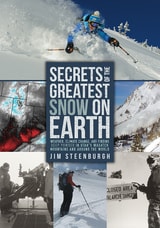
Secrets of the Greatest Snow on Earth
Weather, Climate Change, and Finding Deep Powder in Utah's Wasatch Mountains and around the WorldJim Steenburgh
Utah State University Press, 2014
Chapters explore mountain weather, avalanches and snow safety, historical accounts of weather events and snow conditions, and the basics of climate and weather forecasting. Steenburgh explains what creates the best snow for skiing and snowboarding in accurate and accessible language and illustrates his points with 150 color photographs, making Secrets of the Greatest Snow on Earth a helpful tool for planning vacations and staying safe during mountain adventures. Snowriders, weather enthusiasts, meteorologists, students of snow science, and anyone who dreams of deep powder and bluebird skies will want to get their gloves on Secrets of the Greatest Snow on Earth.
Watch Book Trailer!(Special thanks to Ski Utah)
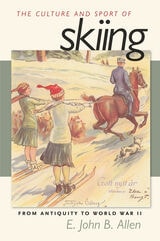
The Culture and Sport of Skiing
From Antiquity to World War llE. John B. Allen
University of Massachusetts Press, 2007
Of all the individuals who contributed to the modernization of skiing before World War II, Allen identifies three who were especially influential: Fridtjof Nansen of Norway, whose explorations on skis paradoxically inspired the idea of skiing as sport; Arnold Lunn of England, whose invention of downhill skiing and the slalom were foundations of the sport's globalization; and Hannes Schneider, whose teachings introduced both speed and safety into the sport.
Underscoring the extent to which ancient ways persisted despite modernization, the book ends with the Russo-Finnish War, a conflict in which the Finns, using equipment that would have been familiar a thousand years before, were able to maneuver in snow that had brought the mechanized Soviet army to a halt.
More than fifty images not only illustrate this rich history but provide further opportunity for analysis of its cultural significance.

The Story of Modern Skiing
John Fry
University Press of New England, 2010
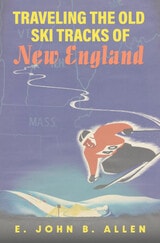
Traveling the Old Ski Tracks of New England
E. John B. Allen
University of Massachusetts Press, 2022
For over a century New Englanders have taken to the slopes in search of ways to enjoy the coldest months, and skiing has deep roots in the region. In the late nineteenth century Scandinavian immigrants worked to educate snowbound locals on how to ski, make equipment, and prepare trails. Soon thereafter, colleges across the Northeast built world-class ski programs, massive jumps were constructed in Brattleboro and Berlin, and dozens of ski areas—big and small—cropped up from the 1930s through the 1960s.
Traveling the Old Ski Tracks of New England offers a fascinating history of downhill, cross-country, and backcountry skiing across the region and its leading personalities. Moving from popular destinations like Stowe, Cannon, Bromley, and Mount Washington to the less intimidating hills surrounding Boston, Rhode Island, and Connecticut, E. John B. Allen also recovers the forgotten stories of ski areas that have been abandoned in the face of changing tastes and a warming climate.