Results by title
11 books match the query 'Slave'
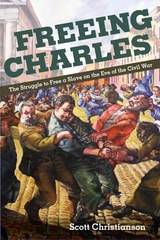
Freeing Charles
The Struggle to Free a Slave on the Eve of the Civil WarScott Christianson
University of Illinois Press, 2010
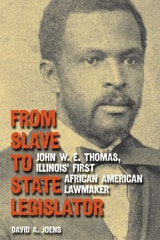
From Slave to State Legislator
John W. E. Thomas, Illinois' First African American LawmakerDavid A. Joens
Southern Illinois University Press, 2012
As the first African American elected to the Illinois General Assembly, John W. E. Thomas was the recognized leader of the state’s African American community for nearly twenty years and laid the groundwork for the success of future Black leaders in Chicago politics. Despite his key role in the passage of Illinois’ first civil rights act and his commitment to improving his community against steep personal and political barriers, Thomas’s life and career have been long forgotten by historians and the public alike. This fascinating full-length biography—the first to address the full influence of Thomas or any Black politician from Illinois during the Reconstruction Era—is also a pioneering effort to explain the dynamics of African American politics and divisions within the Black community in post–Civil War Chicago.
In From Slave to State Legislator, David A. Joens traces Thomas’s trajectory from a slave owned by a doctor’s family in Alabama to a prominent attorney believed to be the wealthiest African American man in Chicago at the time of his death in 1899. Providing one of the few comprehensive looks at African Americans in Chicago during this period, Joens reveals how Thomas’s career represents both the opportunities available to African Americans in the postwar period and the limits still placed on them. When Thomas moved to Chicago in 1869, he started a grocery store, invested in real estate, and founded the first private school for African Americans before becoming involved in politics.
From Slave to State Legislator provides detailed coverage of Thomas’s three terms in the legislature during the 1870s and 1880s, his multiple failures to be nominated for reelection, and his loyalty to the Republican Party at great political cost, calling attention to the political differences within a Black community often considered small and homogenous. Even after achieving his legislative legacy—the passage of the first state civil rights law—Thomas was plagued by patronage issues and an increasingly bitter split with the African American community frustrated with slow progress toward true equality. Drawing on newspapers and an array of government documents, Joens provides the most thorough review to date of the first civil rights legislation and the two controversial “colored conventions” chaired by Thomas.
Joens cements Thomas’s legacy as a committed and conscientious lawmaker amid political and personal struggles. In revealing the complicated rivalries and competing ambitions that shaped Black northern politics during the Reconstruction Era, Joens shows the long-term impact of Thomas’s friendship with other burgeoning African American political stars and his work to get more black representatives elected. The volume is enhanced by short biographies of other key Chicago African American politicians of the era.
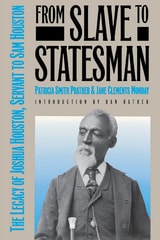
From Slave to Statesman
The Legacy of Joshua Houston, Servant to Sam HoustonPatricia Smith Prather
University of North Texas Press, 1993
How to Make a Slave and Other Essays
Jerald Walker
The Ohio State University Press, 2020
Winner, 2021 Massachusetts Book Award, Nonfiction Category
A Book of the Year pick from Kirkus, BuzzFeed, and Literary Hub
“The essays in this collection are restless, brilliant and short. . . . The brevity suits not just Walker’s style but his worldview, too.…Keeping things quick gives him the freedom to move; he can alight on a truth without pinning it into place.” —Jennifer Szalai, the New York Times
For the black community, Jerald Walker asserts in How to Make a Slave, “anger is often a prelude to a joke, as there is broad understanding that the triumph over this destructive emotion lay in finding its punchline.” It is on the knife’s edge between fury and farce that the essays in this exquisite collection balance. Whether confronting the medical profession’s racial biases, considering the complicated legacy of Michael Jackson, paying homage to his writing mentor James Alan McPherson, or attempting to break free of personal and societal stereotypes, Walker elegantly blends personal revelation and cultural critique. The result is a bracing and often humorous examination by one of America’s most acclaimed essayists of what it is to grow, parent, write, and exist as a black American male. Walker refuses to lull his readers; instead his missives urge them to do better as they consider, through his eyes, how to be a good citizen, how to be a good father, how to live, and how to love.
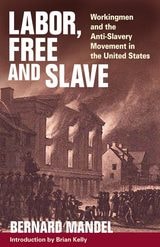
Labor, Free and Slave
Workingmen and the Anti-Slavery Movement in the United StatesBernard Mandel.Introduction by Brian Kelly
University of Illinois Press, 2006
Bernard Mandel's classic study provides a concise overview of the relationship between organized abolitionism and the fledgling labor movement in the period before the Civil War. Mandel argues that slavery reinforced the powerlessness of white workers North and South, and the racial divisions that it upheld rendered effective labor solidarity impossible. Deep distrust between abolitionists and the working classes, however, compelled Northern workers to find their own way into the antislavery ranks.
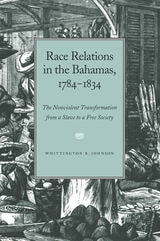
Race Relations in the Bahamas, 1784-1834
The Nonviolent Transformation from a Slave to a Free SocietyWhittington Johnson
University of Arkansas Press, 2000
This deeply researched, clearly written book is a history of black society and its relations with whites in the Bahamas from the close of the American Revolution to emancipation. Whittington B. Johnson examines the communities developed by free, bonded, and mixed-race blacks on the islands as British colonists and American loyalists unsuccessfully tried to establish a plantation economy. The author explores how relations between the races developed civilly in this region, contrasting it with the harsher and more violent experiences of other Caribbean islands and the American South.
Interpreting church documents and Colonial Office papers in a new light, Johnson presents a more favorable conclusion than previously advanced about the conditions endured by victims of the African Diaspora and by Creoles in the Bahama Islands. He makes use of an impressive and important body of archival and secondary research. Race Relations in the Bahamas will be a book of great interest to southern historians, historians of slave societies and black communities, scholars of race relations, and general readers.

Slave of Allah
Zacarias Moussaoui Vs the USAKatherine C. Donahue
Pluto Press, 2007
The book begins with his arrest and moves to the courtroom, telling the tale of Moussaoui's struggle with his defense lawyers and raising questions about his ability to be "represented" given his national and personal identity. Donahue explores his background in France as the son of Moroccan immigrants and follows him to London, Afghanistan, and Malaysia as he joins the growing fraternity of an Islam without borders. He acquires an extra-national identity in which his loyalty is no longer constituted by his national identity, but by his allegiance to fundamental Islam.
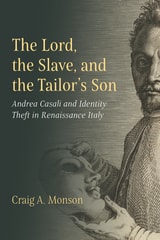
The Lord, the Slave, and the Tailor’s Son
Andrea Casali and Identity Theft in Renaissance ItalyCraig A. Monson
University of Michigan Press, 2027
Andrea Casali might well have been forgotten. A handsome, young Bolognese nobleman, heir to fabulous wealth, palaces, and artistic treasures, known as a poet and artist, in 1604 he was reported killed at age nineteen during the epic Siege of Ostend. Thirty years later, however, a grizzled, former galley slave appeared in Rome, claiming to be the dead Casali and demanding his inheritance. Was he a noble survivor of captivity under the Ottoman Turks or a cunning impostor, masquerading under an illustrious name?
His claim ignited scandal, vehement public argument, even physical assaults and rioting in the streets. A three-year trial ended with judges convicting him of impersonation but declining to rule on who he really was. Across seventeenth-century Italy and even beyond, writers offered claims and counterclaims as to his identity. The Lord, the Slave, and the Tailor’s Son offers the first comprehensive reconstruction of the Casali affair, drawing upon extensive documentary evidence, much of it newly discovered: trial records, suppressed witness testimony, autograph letters of both Casali and the alleged impostor, wills, and inventories, as well as poetry and polemical tracts. The book reveals an extraordinary, true story of stolen identity, fake news, elite collusion, and manipulation of popular belief in Renaissance Italy, a story that feels strikingly modern today.
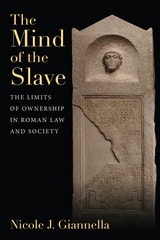
The Mind of the Slave
The Limits of Ownership in Roman Law and SocietyNicole J. Giannella
University of Michigan Press, 2026
In order to place Roman jurists in conversation with both technical and literary sources, Giannella grounds this study in philology and argues that conceptions of the mind of the slave were at the heart of legal and cultural debates about the nature of slavery and ownership. It also contributes to a wider debate about selfhood and autonomy, since philosophers often used the figure of the slave as a representation of humanity as its limits.
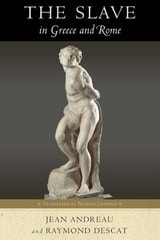
The Slave in Greece and Rome
Jean Andreau and Raymond Descat, translated by Marion Leopold
University of Wisconsin Press, 2012
Jean Andreau and Raymond Descat break new ground in this comparative history of slavery in Greece and Rome. Focusing on slaves’ economic role in society, their crucial contributions to Greek and Roman culture, and their daily and family lives, the authors examine the different ways in which slavery evolved in the two cultures. Accessible to both scholars and students, this book provides a detailed overview of the ancient evidence and the modern debates surrounding the vast and largely invisible populations of enslaved peoples in the classical world.
To Be A Slave in Brazil
1550-1888Mattoso, Katia M de Queiros
Rutgers University Press, 1986