Results by title
4 books match the query 'Small groups'

A Place on the Corner
Elijah Anderson
University of Chicago Press, 1978
"Anderson's mix of the language of sociology and the more colorful street idiom makes a complex social phenomenon accessible to a broad audience. . . . An important work."—Gerald Lee Dillingham, Contemporary Sociology
[more]
A Place on the Corner, Second Edition
Elijah Anderson
University of Chicago Press, 2004
This paperback edition of A Place on the Corner marks the twenty-fifth anniversary of Elijah Anderson's sociological classic, a study of street corner life at a local barroom/liquor store located in the ghetto on Chicago's South Side. Anderson returned night after night, month after month, to gain a deeper understanding of the people he met, vividly depicting how they created—and recreated—their local stratification system. In addition, Anderson introduces key sociological concepts, including "the extended primary group" and "being down." The new preface and appendix in this edition expand on Anderson's original work, telling the intriguing story of how he went about his field work among the men who frequented Jelly's corner.
[more]
Helping Groups Heal
Leading Groups in the Process of TransformationJan Paul Hook
Templeton Press, 2017
Life with others is messy. The bonds we form are often the source that drives us to helping professionals like therapists and pastors in the first place. And yet, it is from these relationships that our greatest moments of healing spring. Recognizing the value of relationships, pastors and therapists have been leading small therapeutic groups for years. Yet few leaders have a specific, easy-to-follow, and researched framework to structure their groups.
Helping Groups Heal presents “The Healing Cycle,” a grace-based model that facilitates healing and growth in groups. It has been tested with a variety of settings, and can be adapted to nearly any small group, from sex addiction therapy to marriage therapy to Bible studies.
The basic components of “The Healing Cycle” are grace, safety, vulnerability, truth, ownership, and confession. Helping Groups Heal guides the reader through these elements, offering case studies and practical advice from the voices of researchers and practitioners. Each chapter shows how “The Healing Cycle” moves its members to share their truth, own it, and make positive change in their lives. Each step of the process allows participants to move past surface issues and find depth in their understanding of their pain.
Whether you have been leading small groups for years or are about to lead your first session, Helping Groups Heal is an accessible, easy-to-follow guide through “The Healing Cycle” that will give each group member what’s needed to grow, relate, and heal.
[more]
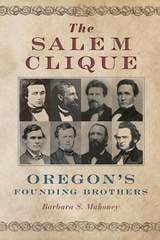
The Salem Clique
Oregon's Founding BrothersBarbara S. Mahoney
Oregon State University Press, 2017
During the decade of the 1850s, the Oregon Territory progressed toward statehood in an atmosphere of intense political passion and conflict. Editors of rival newspapers blamed a group of young men whom they named the “Salem Clique,” along with the Oregon Statesman newspaper that they controlled, for the bitter party struggles of the time. They accused the so-called Clique of dictatorship and corruption. They charged it with the intention of imposing slavery on the Territory. The Clique, they maintained, even conspired to establish a government separate from the United States, conceivably a “bigamous Mormon republic.”
While not in agreement with some of the more extreme contemporary accusations against the Clique, many historians have concluded that its members were vicious men who were able, because of their command of the Democratic party, to impose their hegemony on the Oregon Territory’s inhabitants. Other scholars have seen them as merely another instance of the contentious politics of the period.
Although the Salem Clique has been given considerable prominence in nearly every account of Oregon’s Territorial period, there has not been a detailed study of its role until now. What sort of people were these men? What was their impact on the issues, events, and movements of the period? What role did they play in the years after Oregon became a state? In The Salem Clique, Historian Barbara Mahoney sets out to answer these and many other questions in this comprehensive and deeply researched history.
[more]