Results by title
6 books match the query 'Smith, Andrew'
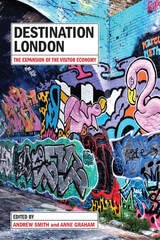
Destination London
The Expansion of the Visitor EconomyAndrew Smith and Anne Graham
University of Westminster Press, 2019
“A welcome addition to the field of urban tourism research... its content could prove useful not only to students and academic, but also to policymakers interested in better understanding the implications of tourism development and the expansion of the visitor economy in large cities.” - https://www.sciencedirect.com/science/article/abs/pii/S0261517719301785
London is one of the world’s most popular destinations and visitors contribute approximately £14.9 billion of expenditure to the city every year. Its tourism and events sectors are growing and over the last few years London has received more visitors than ever before. However, detailed accounts of the city’s visitor economy are conspicuously absent.
This book analyses how the capital is developing as a destination through the expansion of tourism and events into new urban spaces. The book outlines how parts of London not previously regarded as tourist territory are now subject to the visitor gaze with tourism spreading beyond established central zones into peripheral, suburban and residential areas – in part propelled by a big rise in peer to peer accommodation use. Simultaneously, London’s airports and sports stadiums and their surrounds are becoming destinations in their own right. New vantage points have been created, allowing tourists to explore the city: from above, at night-time or through tours given by the homeless; via the opening up of the River Thames; or through the transformation of local parks into eventscapes.
The book explores these trends and shows how urban destinations expand. In doing so, it enhances our understanding of London and highlights the growing significance of tourism and events in global cities.
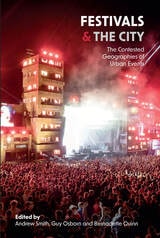
Festivals and the City
The Contested Geographies of Urban EventsAndrew Smith, Guy Osborn, Bernadette Quinn, Andrew Smith, Guy Osborn and Bernadette Quinn
University of Westminster Press, 2022
This book explores how festivals and events affect urban places and public spaces, with a particular focus on their role in fostering inclusion. The ‘festivalisation’ of culture, politics and space in cities is often regarded as problematic, but this book examines the positive and negative ways that festivals affect cities by examining festive spaces as contested spaces. The book focuses on Western European cities, a particularly interesting context given the social and cultural pressures associated with high levels of in-migration and concerns over the commercialisation and privatisation of public spaces.
The key themes of this book are the quest for more inclusive urban spaces and the contested geographies of festival spaces and places. Festivals are often used by municipal authorities to break down symbolic barriers that restrict who uses public spaces and what those spaces are used for. However, the rise of commercial festivals and ticketed events means that they are also responsible for imposing physical and financial obstacles that reduce the accessibility of city parks, streets and squares.
Alongside addressing the contested effects of urban festivals on the character and inclusivity of public spaces, the book addresses more general themes including the role of festivals in culture-led regeneration. Several chapters analyse festivals and events as economic development tools, and the book also covers contested representations of festival cities and the ways related images and stories are used in place marketing.
A range of cases from Western Europe are used to explore these issues, including chapters on some of the world’s most significant and contested festival cities: Venice, Edinburgh, London and Barcelona. The book covers a wide range of festivals, including those dedicated to music and the arts, but also events celebrating particular histories, identities and pastimes. A series of fascinating cases are discussed - from the Venice Biennale and Dublin Festival of History, to Rotterdam’s music festivals and craft beer festivals in Manchester. The diverse and innovative qualities of the book are also evident in the range of urban spaces covered: obvious examples of public spaces – such as parks, streets, squares and piazzas – are addressed, but the book includes chapters on enclosed public spaces (e.g., libraries) and urban blue spaces (waterways) too. This reflects the interpretation of public spaces as socio-material entities: they are produced informally through their use (including for festivals and events), as well as through their formal design and management.
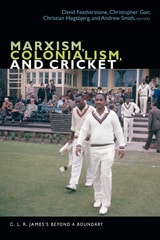
Marxism, Colonialism, and Cricket
C. L. R. James's Beyond a BoundaryDavid Featherstone, Christopher Gair, Christian Høgsbjerg and Andrew Smith, editors
Duke University Press, 2018
Contributors. Anima Adjepong, David Austin, Hilary McD. Beckles, Michael Brearley, Selwyn R. Cudjoe, David Featherstone, Christopher Gair, Paget Henry, Christian Høgsbjerg, C. L. R. James, Selma James, Roy McCree, Minkah Makalani, Clem Seecharan, Andrew Smith, Neil Washbourne, Claire Westall
PLOTINUS
Ennead I.6: On Beauty: Translation, with an Introduction and CommentaryAndrew Smith
Parmenides Publishing, 2016
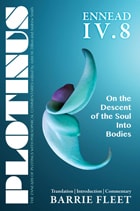
Plotinus ENNEAD IV.8
On the Descent of the Soul into Bodies: Translation, with an Introduction, and CommentaryBarrie Fleet
Parmenides Publishing, 2012
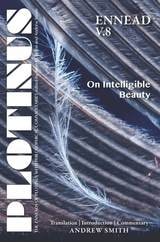
Plotinus Ennead V.8
On Intelligible Beauty: Translation with an Introduction and CommentaryAndrew Smith
Parmenides Publishing, 2017