Results by title
4 books match the query 'Social Body'
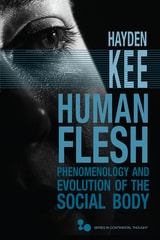
Human Flesh
Phenomenology and Evolution of the Social BodyHayden Kee
Ohio University Press, 0
Much recent research on human evolution emphasizes that social behavior and cognition are at the heart of everything that is distinctively human. This body of research generally understands sociality in terms of social reasoning and the brain that supports it. Human Flesh shifts the focus. What if human sociality is not primarily or exclusively located in the brain but rather is distributed throughout the body? What if the foundation of the human way of life lies in intercorporeity: the ways in which our affective, sensorimotor social bodies—our eyes, hands, voices, ears, and desires—open our bodies and minds up to one another?
Human Flesh develops a framework for exploring these questions based on Merleau-Ponty’s unfinished work on human evolution, combining it with contemporary research in phenomenology, embodied cognitive science, evolutionary anthropology, and primatology. It applies that framework to explore how the different senses and sensory organs take on their distinctively human variations to facilitate the intercorporeal, social human form of life. Along the way, the book interprets familiar facts about the human body in a new light and develops novel hypotheses concerning human evolution. In contrast to the widely discussed social brain hypothesis, its guiding premise is the social body hypothesis: the proposition that the human body has evolved in response to the challenges posed by the distinctively human social form of life.
Based on these concrete investigations into the human body, Human Flesh proposes a new way of thinking about familiar topics in the evolution of cognition literature, such as the emergence of higher orders of social cognition and the development of human symbolic and linguistic capacities. Ultimately, the book arrives at a new determination of human nature and the human form of life: To be human is to be Homo invisibilis, an animal obsessed with, adapted for, and dependent upon the invisible minds of other humans and the symbolic-cultural worlds opened up by their unique social bodies.
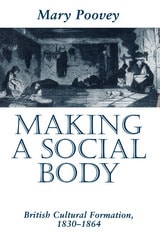
Making a Social Body
British Cultural Formation, 1830-1864Mary Poovey
University of Chicago Press, 1995
Poovey illuminates the ways literary genres, such as the novel, and innovations in social thought, such as statistical thinking and anatomical realism, helped separate social concerns from the political and economic domains. She then discusses the influence of the social body concept on Victorian ideas about the role of the state, examining writings by James Phillips Kay, Thomas Chalmers, and Edwin Chadwick on regulating the poor. Analyzing the conflict between Kay's idea of the social body and Babbage's image of the social machine, she considers the implications of both models for the place of Victorian women. Poovey's provocative readings of Disraeli's Coningsby, Gaskell's Mary Barton, and Dickens's Our Mutual Friend show that the novel as a genre exposed the role gender played in contemporary discussions of poverty and wealth.
Making a Social Body argues that gender, race, and class should be considered in the context of broader concerns such as how social authority is distributed, how institutions formalize knowledge, and how truth is defined.
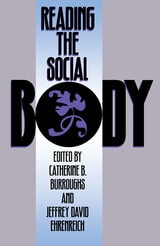
Reading The Social Body
Catherine B. Burroughs
University of Iowa Press, 1993
The overarching argument of Reading the Social Body is that the body is cultural rather than “natural.” Some of the essays treat the social construction of bodies that have actually existed in human history; others discuss the representation of bodies in artistic contexts; all recognize that everything visible to the human body—from posture and costume to the width of an eyebrow or a smile—is determined by and shaped in response to a particular culture.

Writing AIDS
(Re)Conceptualizing the Individual and Social Body in Spanish American LiteratureJodie Parys
The Ohio State University Press, 2012