Results by title
5 books match the query 'Social case work'
Looking Back to See Ahead
Helen Harris Perlman
University of Chicago Press, 1989
Looking Back to See Ahead offers pieces chosen for their centrality to Perlman's thinking on some of the major problems of social work practice and education. To each essay she has added her current, informal comments. Refreshingly original is the section "After Hours," in which she captures, in sketches and verse, the humor and heartache that are inevitable in any profession that deals with hurt and troubled people.
Miss Cutler and the Case of the Resurrected Horse
Social Work and the Story of Poverty in America, Australia, and BritainMark Peel
University of Chicago Press, 2011
Social workers produced thousands of case files about the poor during the interwar years. Analyzing almost two thousand such case files and traveling from Boston, Minneapolis, and Portland to London and Melbourne, Miss Cutler and the Case of the Resurrected Horse is a pioneering comparative study that examines how these stories of poverty were narrated and reshaped by ethnic diversity, economic crisis, and war.
Relationship
The Heart of Helping PeopleHelen Harris Perlman
University of Chicago Press, 1979

Tales of Wayward Girls and Immoral Women
Case Records and the Professionalization of Social WorkKaren W. Tice
University of Illinois Press, 1998
"An original and important study, this is the first major work I know of to carry out a contextual analysis of case records and to discuss the role case records have played in the development of social work." -- Leslie Leighninger, author of Social Work, Social Welfare, and American Society
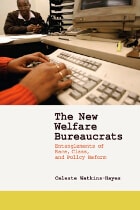
The New Welfare Bureaucrats
Entanglements of Race, Class, and Policy ReformCeleste Watkins-Hayes
University of Chicago Press, 2009
As the recession worsens, more and more Americans must turn to welfare to make ends meet. Once inside the agency, the newly jobless will face a bureaucracy that has undergone massive change since the advent of welfare reform in 1996. A behind-the-scenes look at bureaucracy’s human face, The New Welfare Bureaucrats is a compelling study of welfare officers and how they navigate the increasingly tangled political and emotional terrain of their jobs.
Celeste Watkins-Hayes here reveals how welfare reform engendered a shift in focus for caseworkers from simply providing monetary aid to the much more complex process of helping recipients find work. Now both more intimately involved in their clients’ lives and wielding greater power over their well-being, welfare officers’ racial, class, and professional identities have become increasingly important factors in their work. Based on the author’s extensive fieldwork in two very different communities in the northeast, The New Welfare Bureaucrats is a boon to anyone looking to understand the impact of the institutional and policy changes wrought by welfare reform as well as the subtle social dynamics that shape the way welfare is meted out at the individual level.