Results by title
14 books match the query 'Social conflict in literature'
Aesthetics and Revolution
Nicaraguan Poetry 1979-1990Greg Dawes
University of Minnesota Press, 1993
In Aesthetics and Revolution, Dawes demonstrates that there is an objective grounding for cultural studies found in the aesthetic means of production. By analyzing the relations and forces of production in this realm we inevitably cross over into the economic means of production as well as the struggle for political representation. Ultimately, aesthetics is at the intersection of class and gender interests and their struggle for hegemony.
In Aesthetics and Revolution, Dawes has chosen a group of writers of different theoretical sympathies, class, gender, and social positions to reveal the conflictual interests of the social classes and genders as a whole. Through close readings of their work, Dawes examines the thematic nodes that are expressed in positions as diverse as Ernesto Cardenal’s liberation theology, Pablo Antonio Cuadra’s populism, the campesino’s oral tradition, and Gioconda Belli’s erotic verses in relation to the changes taking place in revolutionary Nicaragua.
Broken Masculinities
Solitude, Alienation, and Frustration in Turkish Literature after 1970Cimen Günay-Erkol
Central European University Press, 2016
Broken Masculinities portrays the post-dictatorial novel of the 1970s in all its complexity, and introduces the reader to a 1968-era Turkey, a period which challenges Turkey’s now reinforced Islamic image by portraying the quest for sexual liberation and critical student uprisings. Günay-Erkol argues that the literature written after the 1971 coup in Turkey constitutes a coherent sub-genre and needs to be considered together. These novels share a common ground which is rich in images of men and women craving for power: general isolation, sexual-emotional frustration, and a traumatic sense of solitude and alienation.
This book is an original and significant contribution to two major fields of study: (1) gender and sexuality with respect to formation of subjectivity through literature, and (2) modern literature and history through the study of Turkish literature. The chief concern in this book is not only literature’s response to a particular period in Turkey, but also the role of literature in bearing witness to trauma and drastic political acts of violence—and coming to terms with them.B
Continuous Pasts
Frictions of Memory in Postcolonial AfricaSakiru Adebayo
University of Michigan Press, 2023
Finalist: Memory Studies Association 2025 First Book Award Shortlist | April 7, 2025
In Continuous Pasts, author Sakiru Adebayo claims that the post-conflict fiction of memory in Africa depicts the intricate ways in which the past is etched on bodies and topographies, resonant in silences and memorials, and continuous even in experiences as well as structures of migration. Adebayo argues that the post-conflict fiction of memory in Africa invites critical deliberations on the continuity of the past within the realm of positionality and the domain of subjectivity—that is to say, the past is not merely present; instead, it survives, lives on, and is mediated through the subject positions of victims, perpetrators, as well as secondary and transgenerational witnesses. The book also argues that post-conflict fiction of memory in Africa shows the unfinished business of the past produces fragile regimes of peace and asynchronous temporalities that challenge progressive historicism. It contends that, in most cases in Africa, the post-conflict present is beset with a tight political economy wherein the scramble for survival trumps the ability to imagine a just future among survivors—and that it is precisely this despairing disposition toward the future that some writers of post-conflict fiction attempt to confront in their works. On the whole, Continuous Pasts shows how post-conflict fictions of memory in Africa recalibrate discourses of futurity, solidarity, responsibility, justice, survival, and reconciliation. It also contends that post-conflict fictions of memory in Africa provide the tools for imagining and theorizing a collective African memory. Each text analyzed in the book provides, in very interesting ways, an imaginative possibility and template for how post-independence African countries can ‘remember together’ using what the author describes as an African transnational memory framework.
Dialectical Imaginaries
Materialist Approaches to U.S. Latino/a Literature in the Age of NeoliberalismMarcial González and Carlos Gallego, editors
University of Michigan Press, 2018

Dreaming Revolution
Transgression in the Development of American RomanceScott Bradfield
University of Iowa Press, 1993
Dreaming Revolution usefully employs current critical theory to address how the European novel of class revolt was transformed into the American novel of imperial expansion. Bradfield shows that early American romantic fiction—including works by William Godwin, Charles Brockden Brown, James Fenimore Cooper, and Edgar Allan Poe—can and should be considered as part of a genre too often limited to the nineteenth-century European novel. In a spirited discussion of the works from these four authors, Bradfield argues that Americans take the class dynamics of the European psychological novel and apply them to the American landscape, reimagining psychological spaces as geographical ones.
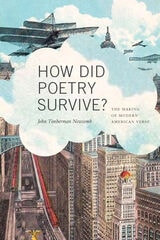
How Did Poetry Survive?
The Making of Modern American VerseJohn Timberman Newcomb
University of Illinois Press, 2013
This book traces the emergence of modern American poetry at the turn of the nineteenth century. With a particular focus on four "little magazines"--Poetry, The Masses, Others, and The Seven Arts--John Timberman Newcomb shows how each advanced ambitious agendas combining urban subjects, stylistic experimentation, and progressive social ideals. While subsequent literary history has favored the poets whose work made them distinct--individuals singled out usually on the basis of a novel technique--Newcomb provides a denser, richer view of the history that hundreds of poets made.
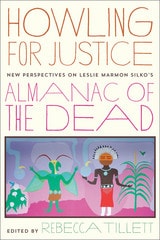
Howling for Justice
New Perspectives on Leslie Marmon Silko’s Almanac of the DeadEdited by Rebecca Tillett
University of Arizona Press, 2014
Howling for Justice actively engages with both the literary achievements and the politics of Silko’s text. It brings together essays by international scholars reacting to the novel while keeping in mind its larger concern with issues of social justice, both local and transnational. Aiming both to refocus critical attention and open the book to a broader array of readers, this collection offers fresh perspectives on its transnational vision, on its sociocultural, historical, and political ambitions, and on its continued relevance in the twenty-first century. The essays examine and explain some of the key points that readers and critics have identified as confusing, problematic, and divisive. Together, they offer new ways to approach and appreciate the text.
The book concludes with a new, never-before-published interview in which Silko reflects on the twenty years since the novel’s publication and relates the concerns of Almanac to her current work.
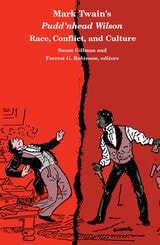
Mark Twain's Pudd'nhead Wilson
Race, Conflict and CultureSusan Gillman and Forrest Robinson, eds.
Duke University Press, 1990
In a variety of ways the essays build arguments out of, not in spite of, the anomalies, inconsistencies, and dead ends in the text itself. Such wrinkles and gaps, the authors find, are the symptoms of an inconclusive, even evasive, but culturally illuminating struggle to confront and resolve difficult questions bearing on race and sex. Such fresh, intellectually enriching perspectives on the novel arise directly from the broad-based interdisciplinary foundations provided by the participating scholars. Drawing on a wide variety of critical methodologies, the essays place the novel in ways that illuminate the world in which it was produced and that further promise to stimulate further study.
Contributors. Michael Cowan, James M. Cox, Susan Gillman, Myra Jehlen, Wilson Carey McWilliams, George E. Marcus, Carolyn Porter, Forrest Robinson, Michael Rogin, John Carlos Rowe, John Schaar, Eric Sundquist
Rape Of Clarissa
Writing, Sexuality, and Class Struggle in Samuel RichardsonTerry Eagleton
University of Minnesota Press, 1982
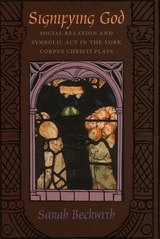
Signifying God
Social Relation and Symbolic Act in the York Corpus Christi PlaysSarah Beckwith
University of Chicago Press, 2001
Introducing a radical new understanding of these plays as "sacramental theater," Beckwith shows how organizing the plays served as a political mechanism for regulating labor, and how theater and sacrament combined in them to do important theological work. She argues, for instance, that the theology of Corpus Christi in the resurrection plays can only be understood as a theatrical exploration of eucharistic absence and presence. Beckwith frames her study with discussions of twentieth-century manifestations of sacramental theater in Barry Unsworth's novel Morality Play and Denys Arcand's film Jesus of Montreal, and the connections between contemporary revivals of the York Corpus Christi plays and England's heritage culture.
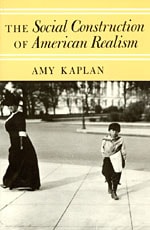
The Social Construction of American Realism
Amy Kaplan
University of Chicago Press, 1988
"[Kaplan] offers some enthralling readings of major novels by Howells, Wharton, and Dreiser. It is a book which should be read by anyone interested in the American novel."—Tony Tanner, Modern Language Review
"Kaplan has made an important contribution to our understanding of American realism. This is a book that deserves wide attention."—June Howard, American Literature
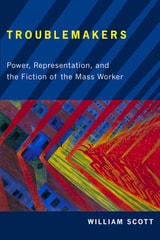
Troublemakers
Power, Representation, and the Fiction of the Mass WorkerScott, William
Rutgers University Press, 2012
William Scott’s Troublemakers explores how a major change in the nature and forms of working-class power affected novels about U.S. industrial workers in the first half of the twentieth century. With the rise of mechanization and assembly-line labor from the 1890s to the 1930s, these laborers found that they had been transformed into a class of “mass” workers who, since that time, have been seen alternately as powerless, degraded victims or heroic, empowered icons who could rise above their oppression only through the help of representative organizations located outside the workplace.
Analyzing portrayals of workers in such novels as Upton Sinclair’s The Jungle, Ruth McKenney's Industrial Valley, and Jack London’s The Iron Heel, William Scott moves beyond narrow depictions of these laborers to show their ability to resist exploitation through their direct actions—sit-down strikes, sabotage, and other spontaneous acts of rank-and-file “troublemaking” on the job—often carried out independently of union leadership. The novel of the mass industrial worker invites us to rethink our understanding of modern forms of representation through its attempts to imagine and depict workers’ agency in an environment where it appears to be completely suppressed.
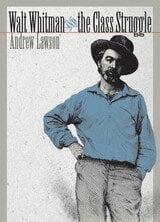
Walt Whitman and the Class Struggle
Andrew Lawson
University of Iowa Press, 2006
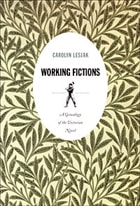
Working Fictions
A Genealogy of the Victorian NovelCarolyn Lesjak
Duke University Press, 2006
Lesjak demonstrates how the ideological work of the literature of the Victorian era, the “golden age of the novel,” revolved around separating the domains of labor and pleasure and emphasizing the latter as the proper realm of literary representation. She reveals how the utopian works of Morris and Wilde grapple with this divide and attempt to imagine new relationships between work and pleasure, relationships that might enable a future in which work is not the antithesis of pleasure. In Working Fictions, Lesjak argues for the contemporary relevance of the “labor novel,” suggesting that within its pages lie resources with which to confront the gulf between work and pleasure that continues to characterize our world today.