Results by title
27 books match the query 'Social integration'
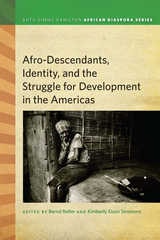
Afrodescendants, Identity, and the Struggle for Development in the Americas
Bernd Reiter
Michigan State University Press, 2012
Indigenous people and African descendants in Latin America and the Caribbean have long been affected by a social hierarchy established by elites, through which some groups were racialized and others were normalized. Far from being “racial paradises” populated by an amalgamated “cosmic race” of mulattos and mestizos, Latin America and the Caribbean have long been sites of shifting exploitative strategies and ideologies, ranging from scientific racism and eugenics to the more sophisticated official denial of racism and ethnic difference. This book, among the first to focus on African descendants in the region, brings together diverse reflections from scholars, activists, and funding agency representatives working to end racism and promote human rights in the Americas. By focusing on the ways racism inhibits agency among African descendants and the ways African-descendant groups position themselves in order to overcome obstacles, this interdisciplinary book provides a multi-faceted analysis of one of the gravest contemporary problems in the Americas.
After Prison
Navigating Adulthood in the Shadow of the Justice SystemDavid J. Harding
Russell Sage Foundation, 2020
The transition to young adulthood typically includes school completion, full-time employment, leaving the childhood home, marriage, and childbearing, events that are disrupted by incarceration. While one quarter of the young men who participated in the study successfully transitioned into adulthood—achieving employment and residential independence and avoiding arrest and incarceration—the same number of young men remained deeply involved with the criminal justice system, spending on average four out of the seven years after their initial release re-incarcerated. Not surprisingly, whites are more likely to experience success after prison. The authors attribute this racial disparity to the increased stigma of criminal records for blacks, racial discrimination, and differing levels of social network support that connect whites to higher quality jobs. Black men earn less than white men, are more concentrated in industries characterized by low wages and job insecurity, and are less likely to remain employed once they have a job.
The authors demonstrate that families, social networks, neighborhoods, and labor market, educational, and criminal justice institutions can have a profound impact on young people’s lives. Their research indicates that residential stability is key to the transition to adulthood. Harding and Harris make the case for helping families, municipalities, and non-profit organizations provide formerly incarcerated young people access to long-term supportive housing and public housing. A remarkably large number of men in this study eventually enrolled in college, reflecting the growing recognition of college as a gateway to living wage work. But the young men in the study spent only brief spells in college, and the majority failed to earn degrees. They were most likely to enroll in community colleges, trade schools, and for-profit institutions, suggesting that interventions focused on these kinds of schools are more likely to be effective. The authors suggest that, in addition to helping students find employment, educational institutions can aid reentry efforts for the formerly incarcerated by providing supports like childcare and paid apprenticeships.
After Prison offers a set of targeted policy interventions to improve these young people’s chances: lifting restrictions on federal financial aid for education, encouraging criminal record sealing and expungement, and reducing the use of incarceration in response to technical parole violations. This book will be an important contribution to the fields of scholarly work on the criminal justice system and disconnected youth.

As French as Everyone Else?
A Survey of French Citizens of Maghrebin, African, and Turkish OriginAuthored by Sylvain Brouard and Vincent Tiberj
Temple University Press, 2011
France is often depicted as the model of assimilationist or republican integration in the international literature on immigration. However, rarely have surveys drilled down to provide individual responses from a double representative sample. In As French as Everyone Else?, Sylvain Brouard and Vincent Tiberj provide a comprehensive assessment of the state of integration in France and challenge the usual crisis of integration by systematically comparing the "new French" immigrants, as well as their children and grandchildren born in France, with a sample of the French general population.
The authors' survey considers a wide range of topics, including religious affiliation and religiosity, political attitudes and political efficacy, value systems (including gender roles, work ethics, and anti-Semitism), patterns of integration, multiple identities and national belongings, and affirmative action. As the authors show, despite existing differences, immigrants of Maghrebin, African, and Turkish origin share a wide scope of commonality with other French citizens.
Barriers to Reentry?
The Labor Market for Released Prisoners in Post-Industrial AmericaShawn D. Bushway
Russell Sage Foundation, 2007
Belonging and Identity in STEM Higher Education
Edited by Camille Kandiko Howson and Martyn Kingsbury
University College London, 2024
In Belonging and Identity in STEM Higher Education, Camille Kandiko Howson and Martyn Kingsbury examine the role of science, technology, engineering, and mathematics (STEM) pedagogies in facilitating belonging, variable impacts across student characteristics, and the experiences of STEM students in higher education. Through case study contributions, the book analyzes the unique educational environments for STEM staff and students throughout Europe and Asia, challenging the assumptions that STEM fields are inherently unemotional and impersonal disciplines.

Community In-Between / Urur Dhex Dhexad Ah
Portraits of Somali-Americans in ColumbusQorsho Hassan and Ruth M. Smith
The Ohio State University Press, 2017
A combination of storytelling and research connect each narrative to another, creating a strong framework for capturing the roles of young Somali Americans in community building through innovative initiatives such as designing a mixer bottle, beginning charitable programs, and educating the Somali community on voter rights. Two community artists help to capture the participants in their natural spaces, and their journey, aided by their empowering mentor, Riya Jama, bridges the gap of Somali females and their access to photography.
The portraits, stories, and artifacts throughout the book create a modicum of belonging. This new generation resiliently overcomes challenges such as racism, xenophobia, and Islamophobia while still maintaining their hope in the future. Community In-Between captures their spirit and unwavering faith.
The portraits, stories, and artifacts throughout the book create a modicum of belonging. This new generation resiliently overcomes challenges such as racism, xenophobia, and Islamophobia while still maintaining their hope in the future. Community In-Between captures their spirit and unwavering faith.

Conceptualising "Home"
The Question of Belonging among Turkish Families in GermanyEsin Bozkurt
Campus Verlag, 2009

Friends Disappear
The Battle for Racial Equality in EvanstonMary Barr
University of Chicago Press, 2014
In Friends Disappear Barr goes back to her old neighborhood and pieces together a history of Evanston with a particular emphasis on its neighborhoods, its schools, and its work life. She finds that there is a detrimental myth of integration surrounding Evanston despite bountiful evidence of actual segregation, both in the archives and from the life stories of her subjects. Curiously, the city’s own desegregation plan is partly to blame. The initiative called for the redistribution of students from an all-black elementary school to institutions situated in white neighborhoods. That, however, required busing, and between the tensions it generated and obvious markers of class difference, the racial divide, far from being closed, was widened. Friends Disappear highlights how racial divides limited the life chances of blacks while providing opportunities for whites, and offers an insider’s perspective on the social practices that doled out benefits and penalties based on race—despite attempts to integrate.
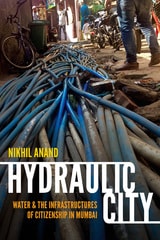
Hydraulic City
Water and the Infrastructures of Citizenship in MumbaiNikhil Anand
Duke University Press, 2017
Identity and the Second Generation
How Children of Immigrants Find Their SpaceFaith G. Nibbs
Vanderbilt University Press, 2015
This book explores the social worlds of the children of immigrants. Based on rich ethnographic research, the contributors illustrate how these young people, the so-called second generation, construct and negotiate their lives. Ultimately, the driving question is profoundly important on a universal level: How do these young people construct an identity and a sense of belonging for themselves, and how do they deal with processes of inclusion and exclusion?

Imagined Homes
Soviet German Immigrants in Two CitiesHans Werner
University of Manitoba Press, 2007

In the Aftermath of Genocide
Armenians and Jews in Twentieth-Century FranceMaud S. Mandel
Duke University Press, 2003
In the Aftermath of Genocide reveals that Armenian and Jewish survivors rarely sought to shed the obvious symbols of their ethnic and religious identities. Mandel shows that following the 1915 genocide and the Holocaust, these communities, if anything, seemed increasingly willing to mobilize in their own self-defense and thereby call attention to their distinctiveness. Most Armenian and Jewish survivors were neither prepared to give up their minority status nor willing to migrate to their national homelands of Armenia and Israel. In the Aftermath of Genocide suggests that the consolidation of the nation-state system in twentieth-century Europe led survivors of genocide to fashion identities for themselves as ethnic minorities despite the dangers implicit in that status.
Integrating the Inner City
The Promise and Perils of Mixed-Income Public Housing TransformationRobert J. Chaskin and Mark L. Joseph
University of Chicago Press, 2015
In the most thorough examination of mixed-income public housing redevelopment to date, Robert J. Chaskin and Mark L. Joseph draw on five years of field research, in-depth interviews, and volumes of data to demonstrate that while considerable progress has been made in transforming the complexes physically, the integrationist goals of the policy have not been met. They provide a highly textured investigation into what it takes to design, finance, build, and populate a mixed-income development, and they illuminate the many challenges and limitations of the policy as a solution to urban poverty. Timely and relevant, Chaskin and Joseph’s findings raise concerns about the increased privatization of housing for the poor while providing a wide range of recommendations for a better way forward.

Learning from the High Priestess
Affect, Femme Care, and Somatic PracticeAnn Cvetkovich
Duke University Press, 2026
Managing Ethnic Diversity after 9/11
Integration, Security, and Civil Liberties in Transatlantic PerspectiveChebel d'Appollonia, Ariane
Rutgers University Press, 2010
Managing Ethnic Diversity after 9/11 compares these two strategies and considers that both may have engendered greater radicalization--and a greater chance of home-grown terrorism. Essays address how transatlantic countries, including the United Kingdom, the United States, France, Germany, Spain, Italy, and the Netherlands have integrated ethnic minorities, especially Arabs and Muslims, since 9/11. Discussing the "securitization of integration," contributors argue that the neglect of civil integration has challenged the rights of these minorities and has made greater security more remote.
Managing Madness in the Community
The Challenge of Contemporary Mental Health CareKerry Michael Dobransky
Rutgers University Press, 0
In the wake of movies like One Flew Over the Cuckoo’s Nest and Shutter Island, most people picture the severely or chronically mentally ill being treated in cold, remote, and forbidding facilities. But the reality is very different. Today the majority of deeply troubled mental patients get treatment in nonprofit community organizations. And it is to two such organizations in the Midwest that this study looks for answers. Drawing upon a wealth of unique evidence—fifteen months of ethnographic observations, 91 interviews with clients and workers, and a range of documents—Managing Madness in the Community lays bare the sometimes disturbing nature and effects of our overly complex and disconnected mental health system.
Kerry Michael Dobransky examines the practical strategies organizations and their clients use to manage the often-conflicting demands of a host of constituencies, laws, and regulations. Bringing to light the challenges confronting patients and staff of the community-based institutions that bear the brunt of caring for the mentally ill, his book provides a useful broad framework that will help researchers and policymakers understand the key forces influencing the mental health services system today.
Marcha
Latino Chicago and the Immigrant Rights MovementEdited by Amalia Pallares and Nilda Flores-Gonzalez
University of Illinois Press, 2010
Marcha is a multidisciplinary survey of the individuals, organizations, and institutions that have given shape and power to the contemporary immigrant rights movement in Chicago. A city with longstanding historic ties to immigrant activism, Chicago has been the scene of a precedent-setting immigrant rights mobilization in 2006 and subsequent mobilizations in 2007 and 2008.
Positing Chicago as a microcosm of the immigrant rights movement on national level, these essays plumb an extraordinarily rich set of data regarding recent immigrant rights activities, defining the cause as not just a local quest for citizenship rights, but a panethnic, transnational movement. The result is a timely volume likely to provoke debate and advance the national conversation about immigration in innovative ways.

Mestizo in America
Generations of Mexican Ethnicity in the Suburban SouthwestThomas Macias
University of Arizona Press, 2006
Nuevo South
Latinas/os, Asians, and the Remaking of PlaceBy Perla M. Guerrero
University of Texas Press, 2017
Latinas/os and Asians are rewriting the meaning and history of race in the American South by complicating the black/white binary that has frequently defined the region since before the Civil War. Arriving in southern communities as migrants or refugees, Latinas/os and Asians have experienced both begrudging acceptance and prejudice as their presence confronts and troubles local understandings of race and difference—understandings that have deep roots in each community’s particular racial history, as well as in national fears and anxieties about race.
Nuevo South offers the first comparative study showing how Latinas/os and Asians are transforming race and place in the contemporary South. Integrating political, economic, and social analysis, Perla M. Guerrero examines the reception of Vietnamese, Cubans, and Mexicans in northwestern Arkansas communities that were almost completely white until the mid-1970s. She shows how reactions to these refugees and immigrants ranged from reluctant acceptance of Vietnamese as former US allies to rejection of Cubans as communists, criminals, and homosexuals and Mexicans as “illegal aliens” who were perceived as invaders when they began to establish roots and became more visible in public spaces. Guerrero’s research clarifies how social relations are constituted in the labor sphere, particularly the poultry industry, and reveals the legacies of regional history, especially anti-Black violence and racial cleansing. Nuevo South thus helps us to better understand what constitutes the so-called Nuevo South and how historical legacies shape the reception of new people in the region.
Parents Without Papers
The Progress and Pitfalls of Mexican American IntegrationFrank D. Bean is Distinguished Professor of Sociology and Director of the Center for Research on International Migration at the University of California, Irvine. Susan K. Brown is associate professor of sociology at the University of California, Irvine. James D. Bachmeier is assistant professor of sociology at Temple University.
Russell Sage Foundation, 2015
Parents Without Papers provides both a general conceptualization of immigrant integration and an in-depth examination of the Mexican American case. The authors draw upon unique retrospective data to shed light on three generations of integration. They show in particular that the “membership exclusion” experienced by unauthorized Mexican immigrants—that is, their fear of deportation, lack of civil rights, and poor access to good jobs—hinders the education of their children, even those who are U.S.-born. Moreover, they find that children are hampered not by the unauthorized entry of parents itself but rather by the long-term inability of parents, especially mothers, to acquire green cards.
When unauthorized parents attain legal status, the disadvantages of the second generation begin to disappear. These second-generation men and women achieve schooling on par with those whose parents come legally. By the third generation, socioeconomic levels for women equal or surpass those of native white women. But men reach parity only through greater labor-force participation and longer working hours, results consistent with the idea that their integration is delayed by working-class imperatives to support their families rather than attend college.
An innovative analysis of the transmission of advantage and disadvantage among Mexican Americans, Parents Without Papers presents a powerful case for immigration policy reforms that provide not only realistic levels of legal less-skilled migration but also attainable pathways to legalization. Such measures, combined with affordable access to college, are more important than ever for the integration of vulnerable Mexican immigrants and their descendants.

Piety and Dissent
Race, Gender, and Biblical Rhetoric in Early American AutobiographyEileen R. Elrod
University of Massachusetts Press, 2008
For pious converts to Christianity in late eighteenth- and early nineteenth-century New England, all reality was shaped by religious devotion and biblical text. It is therefore not surprising that earnest believers who found themselves marginalized by their race or sex relied on their faith to reconcile the tension between the spiritual experience of rebirth and the social ordeal of exclusion and injustice.
In Piety and Dissent, Eileen Razzari Elrod examines the religious autobiographies of six early Americans who represented various sorts of marginality: John Marrant, Olaudah Equiano, and Jarena Lee, all of African or African American heritage; Samson Occom (Mohegan) and William Apess (Pequot); and Abigail Abbott Bailey, a white woman who was subjected to extreme domestic violence. Through close readings of these personal narratives, Elrod uncovers the complex rhetorical strategies employed by pious outsiders to challenge the particular kinds of oppression each experienced. She identifies recurrent ideals and images drawn from Scripture and Protestant tradition—parables of liberation, rage, justice, and opposition to authority—that allowed them to see resistance as a religious act and, more than that, imbued them with a sense of agency.
What the life stories of these six individuals reveal, according to Elrod, is that conventional Christianity in early America was not the hegemonic force that church leaders at the time imagined, and that many people since have believed it to be. Nor was there a clear distinction between personal piety and religious, social, and political resistance. To understand fully the role of religion in the early period of American letters, we must rethink some of our most fundamental assumptions about the function of Christian faith in the context of individual lives.
Somalis in the Twin Cities and Columbus
Immigrant Incorporation in New DestinationsStephanie Chambers
Temple University Press, 2017
In the early 1990s, Somali refugees arrived in Minneapolis and St. Paul, Minnesota. Later in the decade, an additional influx of immigrants arrived in a second destination of Columbus, Ohio. These refugees found low-skill jobs in warehouses and food processing plants and struggled as social “outsiders,” often facing discrimination based on their religious traditions, dress, and misconceptions that they are terrorists. The immigrant youth also lacked access to quality educational opportunities.
In Somalis in the Twin Cities and Columbus, Stefanie Chambers provides a cogent analysis of these refugees in Midwestern cities where new immigrant communities are growing. Her comparative study uses qualitative and quantitative data to assess the political, economic, and social variations between these urban areas. Chambers examines how culture and history influenced the incorporation of Somali immigrants in the U.S., and recommends policy changes that can advance rather than impede incorporation.
Her robust investigation provides a better understanding of the reasons these refugees establish roots in these areas, as well as how these resettled immigrants struggle to thrive.
The Cost of Inclusion
How Student Conformity Leads to Inequality on College CampusesBlake R. Silver
University of Chicago Press, 2020
Blake R. Silver spent a year immersed in student life at a large public university. He trained with the Cardio Club, hung out with the Learning Community, and hosted service events with the Volunteer Collective. Through these day-to-day interactions, he witnessed how students sought belonging and built their social worlds on campus. Over time, Silver realized that these students only achieved inclusion at significant cost. To fit in among new peers, they clung to or were pushed into raced and gendered cultural assumptions about behavior, becoming “the cool guy,” “the nice girl,” “the funny one,” “the leader,” “the intellectual,” or “the mom of the group.” Instead of developing dynamic identities, they crafted and adhered to a cookie-cutter self, one that was rigid and two-dimensional. Silver found that these students were ill-prepared for the challenges of a diverse college campus, and that they had little guidance from their university on how to navigate the trials of social engagement or the pressures to conform. While colleges are focused on increasing the diversity of their enrolled student body, Silver’s findings show that they need to take a hard look at how they are failing to support inclusion once students arrive on campus.
The Paradoxes of Integration
Race, Neighborhood, and Civic Life in Multiethnic AmericaJ. Eric Oliver
University of Chicago Press, 2010
The United States is rapidly changing from a country monochromatically divided between black and white into a multiethnic society. The Paradoxes of Integration helps us to understand America’s racial future by revealing the complex relationships among integration, racial attitudes, and neighborhood life.
J. Eric Oliver demonstrates that the effects of integration differ tremendously, depending on which geographical level one is examining. Living among people of other races in a larger metropolitan area corresponds with greater racial intolerance, particularly for America’s white majority. But when whites, blacks, Latinos, and Asian Americans actually live in integrated neighborhoods, they feel less racial resentment. Paradoxically, this racial tolerance is usually also accompanied by feeling less connected to their community; it is no longer "theirs." Basing its findings on our most advanced means of gauging the impact of social environments on racial attitudes, The Paradoxes of Integration sensitively explores the benefits and at times, heavily borne, costs of integration.
The Republican Aventine and Rome’s Social Order
Lisa Marie Mignone
University of Michigan Press, 2016
The myth of the “plebeian Aventine” became embedded not only in classical scholarship, but also in modern political and cultural consciousness; it has even been used by modern figures to support their political agenda. Yet The Republican Aventine and Rome’s Social Order makes bold new claims regarding the urban design and social history of ancient Rome and raises a significant question about ancient urbanism and social stability more generally: Did social integration reduce violence in premodern cities and promote urban concord?

These Dark Skies
Reckoning with Identity, Violence, and Power from AbroadArianne Zwartjes
University of Iowa Press, 2022
The essays investigate and meditate on a broad array of related topics, including drone strikes, tear gas, and military intervention; the sugar trade, the Dutch blackface celebration of Zwarte Piet, and constructions of whiteness in Europe and the U.S.; and visual arts of Russian avant-garde painters, an Iraqi choreographer living in Belgium, and German choreographer Pina Bausch.
This is a lyrical, timely book deeply salient to the political moment we continue to find ourselves in: a moment of incredible anti-refugee and anti-immigrant sentiment, a moment of xenophobic and misogynistic violence.
Toward a Sociology of the Trace
Herman Gray
University of Minnesota Press, 2010
The contributors utilize empirically based studies of social policy, political economy, and social institutions to offer a new way of looking at the creation of meaning, representation, and memory. They scrutinize subjects such as narratives in the U.S. coal industry's change from digging mines to removing mountaintops; war-related redress policies in post-World War II Japan; views of masculinity linked to tequila, Pancho Villa, and the Mexican Revolution; and the politics of subjectivity in 1970s political violence in Thailand.
Contributors: Sarah Banet-Weiser, U of Southern California; Barbara A. Barnes, U of California, Berkeley; Marie Sarita Gaytán; Avery F. Gordon, U of California, Santa Barbara; Tanya McNeill, U of California, Santa Cruz; Sudarat Musikawong, Willamette U; Akiko Naono, U of Kyushu; Rebecca R. Scott, U of Missouri.