Results by title
3 books match the query 'Socialism and culture'

Bad Marxism
Capitalism and Cultural StudiesJohn Hutnyk
Pluto Press, 2004
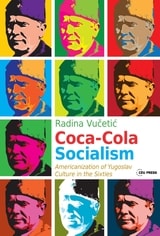
Coca-Cola Socialism
Americanization of Yugoslav Culture in the SixtiesRadina Vucetic
Central European University Press, 2018
This book is about the Americanization of Yugoslav culture and everyday life during the nineteen-sixties. After falling out with the Eastern bloc, Tito turned to the United States for support and inspiration. In the political sphere the distance between the two countries was carefully maintained, yet in the realms of culture and consumption the Yugoslav regime was definitely much more receptive to the American model. For Titoist Yugoslavia this tactic turned out to be beneficial, stabilising the regime internally and providing an image of openness in foreign policy.
Coca-Cola Socialism addresses the link between cultural diplomacy, culture, consumer society and politics. Its main argument is that both culture and everyday life modelled on the American way were a major source of legitimacy for the Yugoslav Communist Party, and a powerful weapon for both USA and Yugoslavia in the Cold War battle for hearts and minds.
Radina Vučetić explores how the Party used American culture in order to promote its own values and what life in this socialist and capitalist hybrid system looked like for ordinary people who lived in a country with communist ideology in a capitalist wrapping. Her book offers a careful reevaluation of the limits of appropriating the American dream and questions both an uncritical celebration of Yugoslavia’s openness and an exaggerated depiction of its authoritarianism.
Pleasures in Socialism
Leisure and Luxury in the Eastern BlocDavid Crowley
Northwestern University Press, 2012
Much has been written about the workings of communist governments in the USSR and the Soviet bloc, yet there is still a great deal to explore regarding their relationship to the everyday lives of the citizens living under them. This third volume builds on the editors’ Style and Socialism and Socialist Spaces, showing how the rise of consumer culture took a unique form in these countries.
Essays from top scholars address topics ranging from fashion and game shows to smoking and camping. The authors of the essays in this collection investigate the ways in which pleasurable activities, like many other facets of daily life, were both a space in which these communist governments tried to insinuate themselves and thereby further expand the reach of their authority,
and also an opportunity for people to assert their individuality.