Results by title
231 books match the query 'Society' and 12 start with a
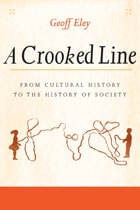
A Crooked Line
From Cultural History to the History of SocietyGeoff Eley
University of Michigan Press, 2005
--Lizabeth Cohen, author of A Consumers' Republic
"A Crooked Line brilliantly captures the most significant shifts in the landscape of historical scholarship that have occurred in the last four decades. Part personal history, part insightful analysis of key methodological and theoretical historiographical tendencies since the late 1960s, always thoughtful and provocative, Eley's book shows us why history matters to him and why it should also matter to us."
--Robert Moeller, University of California, Irvine
"Part genealogy, part diagnosis, part memoir, Eley's account of the histories of social and cultural history is a tour de force."
--Antoinette Burton, Professor of History and Catherine C. and Bruce A. Bastian Professor of Global and Transnational Studies, University of Illinois
"Eley's reflections on the changing landscape of academic history in the last forty years will interest and benefit all students of the discipline. Both a native informant and an analyst in this account, Eley combines the two roles superbly to produce one of most engaging and compelling narratives of the recent history of History."
--Dipesh Chakrabarty, author of Provincializing Europe
Using his own intellectual biography as a narrative device, Geoff Eley tracks the evolution of historical understanding in our time from social history through the so-called "cultural turn," and back again to a broad history of society.
A gifted writer, Eley carefully winnows unique experiences from the universal, and uses the interplay of the two to draw the reader toward an organic understanding of how historical thinking (particularly the work of European historians) has evolved under the influence of new ideas. His work situates history within History, and offers students, scholars, and general readers alike a richly detailed, readable guide to the enduring value of historical ideas.
Geoff Eley is Professor of History at the University of Michigan.
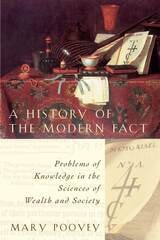
A History of the Modern Fact
Problems of Knowledge in the Sciences of Wealth and SocietyMary Poovey
University of Chicago Press, 1998
Mary Poovey explores these questions in A History of the Modern Fact, ranging across an astonishing array of texts and ideas from the publication of the first British manual on double-entry bookkeeping in 1588 to the institutionalization of statistics in the 1830s. She shows how the production of systematic knowledge from descriptions of observed particulars influenced government, how numerical representation became the privileged vehicle for generating useful facts, and how belief—whether figured as credit, credibility, or credulity—remained essential to the production of knowledge.
Illuminating the epistemological conditions that have made modern social and economic knowledge possible, A History of the Modern Fact provides important contributions to the history of political thought, economics, science, and philosophy, as well as to literary and cultural criticism.
A Telescope on Society
Survey Research and Social Science at the University of Michigan and BeyondJames S. House, F. Thomas Juster, Robert L. Kahn, Howard Schuman, and Eleanor Singer, Editors
University of Michigan Press, 2004
The chapters of this volume illustrate the impact that developments in survey research have had and continue to have on a broad range of social science disciplines and interdisciplinary areas ranging from political behavior and electoral systems to macroeconomics and individual income dynamics, mental and physical health, human development and aging, and racial/ethnic diversity and relationships.
The volume will speak to a wide audience of social science and survey research professionals and students interested in learning more about the broad history of survey-based social science and its contributions to understanding ourselves as social beings. It also seeks to convey how crucial institutional and public support are to the development of social science and survey research, as they have been to development in the natural, biomedical, and life sciences.
The five editors of this book are longtime research professors and colleagues in the Survey Research Center of the Institute for Social Research at the University of Michigan. James S. House is also Professor in the Department of Sociology; F. Thomas Juster is Professor Emeritus in the Department of Economics; Robert L. Kahn is Professor Emeritus in the Department of Psychology and Department of Health Management and Policy; and Howard Schuman is Professor Emeritus in the Department of Sociology; Eleanor Singer is Research Professor in the Survey Research Center, all at the University of Michigan. Professors House (1991-2001), Kahn (1970-76), and Schuman (1982-90) have each served as Director of the Survey Research Center; Professor Juster served (1976-86) as Director of the Institute for Social Research; and Professor Singer served (1999-2002) as Associate Director of the Survey Research Center.
Aging and Society
A Sociology of Age StratificationMatilda White Riley
Russell Sage Foundation, 1972
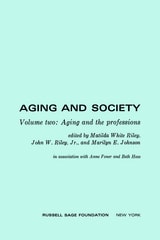
Aging and Society
Aging and the ProfessionsMatilda White Riley
Russell Sage Foundation, 1969
Aging and Society
An Inventory of Research FindingsMatilda White Riley
Russell Sage Foundation, 1968
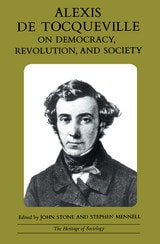
Alexis de Tocqueville on Democracy, Revolution, and Society
Alexis de Tocqueville
University of Chicago Press, 1980

All-American Massacre
The Tragic Role of American Culture and Society in Mass ShootingsEdited by Eric Madfis and Adam Lankford
Temple University Press, 2023
With a specific focus on exploring how American culture, institutions, and social structures influence the circumstances, frequency, and severity of mass shootings in the United States, All-American Massacre advances emerging theoretical perspectives and forges fresh approaches, new research questions, and innovative data and conclusions.
Bringing together pioneering scholars, this groundbreaking compilation of research and analysis identifies the social roots of this insidious threat and prompts new reflections on how we can stop the seemingly endless cycle of horror and death.All-American Massacre helps clarify the unique nature and salience of mass shootings in American life.
Contributors: Melanie Brazzell, Tristan Bridges, Ryan Broll, F. Chris Curran, Sarah E. Daly, Salvatore D’Angelo, James Densley, Tom Diaz, Scott Duxbury, Benjamin W. Fisher, Betsy Friauf, Emma E. Fridel, Celene Fuller, Daniel Gascón, Patrick J. Gauding, Brooke Miller Gialopsos, Simon Gottschalk, Donald P. Haider-Markel, Stephanie Howells, Cheryl Lero Jonson, Mark R. Joslyn, Jessie Klein, Aaron Kupchik, Alison J. Marganski, Melissa M. Moon, Kristen J. Neville, Jaimee Nix, Daniel Okamura, Patrick F. Parnaby, Jillian Peterson, Michael Phillips, Paul Reeping, Jason R. Silva, William A. Stadler, Lindsay Steenberg, Tara Leigh Tober, Jillian J. Turanovic, Abigail Vegter, Stanislav Vysotsky, Lacey N. Wallace and the editors
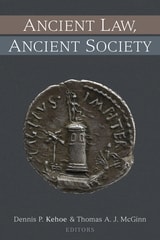
Ancient Law, Ancient Society
Dennis P. Kehoe and Thomas A. J. McGinn, editors
University of Michigan Press, 2017
Essays cover topics such as using collective sanctions to enforce legal norms; the Greek elite’s marriage strategies for amassing financial resources essential for a public career; defenses against murder charges under Athenian criminal law, particularly in cases where the victim put his own life in peril; the interplay between Roman law and provincial institutions in regulating water rights; the Severan-age Greek author Aelian’s notions of justice and their influence on late-classical Roman jurisprudence; Roman jurists’ approach to the contract of mandate in balancing the changing needs of society against respect for upper-class concepts of duty and reciprocity; whether the Roman legal authorities developed the law exclusively to serve the Roman elite’s interests or to meet the needs of the Roman Empire’s broader population as well; and an analysis of the Senatus Consultum Claudianum in the Code of Justinian demonstrating how the late Roman government adapted classical law to address marriage between free women and men classified as coloni bound to their land.
In addition to volume editors Dennis P. Kehoe and Thomas A. J. McGinn, contributors include Adriaan Lanni, Michael Leese, David Phillips, Cynthia Bannon, Lauren Caldwell, Charles Pazdernik, and Clifford Ando.
Anne’s Bohemia
Czech Literature And Society, 1310-1420Alfred Thomas
University of Minnesota Press, 1998
The first book in English on medieval Czech literature.
Anne’s Bohemia is the first general book in English to introduce the little-known riches of medieval Bohemian culture. Alfred Thomas considers the development of Czech literature and society from the election of Count John of Luxembourg as king of Bohemia in 1310 to the year 1420, when the papacy declared a Catholic crusade against the Hussite reformers. This period is of particular relevance to the study of medieval England because of the marriage of Richard II to Anne of Bohemia, the figure around whom this book is focused.
Anne’s Bohemia provides a social context for the most important works of literature written in the Czech language, from the earliest spiritual songs and prayers to the principal Hussite and anti-Hussite tracts of the fifteenth century. The picture that emerges from Thomas’s close readings of these texts is one of a society undergoing momentous political and religious upheavals in which kings, queens, clergy, and heretics all played crucial roles. During the reign of Charles IV (1346-78), the Bohemian Lands became the administrative and cultural center of the Holy Roman Empire and Prague its splendid capital. Comparing and contrasting the situation in Bohemia with the England of Richard II, Anne’s Bohemia charts the growth and decline of the international court culture and the gradual ascendancy of the Hussite reformers in the fifteenth century. Expert but accessibly written, the book offers an engaging overview of medieval Bohemian culture for specialist and nonspecialist alike.ISBN 0-8166-3053-4 Cloth $49.95xxISBN 0-8166-3054-2 Paper $19.95x232 pages 6 black-and-white photos 5 7/8 x 9 AprilMedieval Cultures Series, volume 13Translation inquiries: University of Minnesota Press
Art and Society in a Highland Maya Community
The Altarpiece of Santiago AtitlánBy Allen J. Christenson
University of Texas Press, 2001
Attraction of Opposites
Thought and Society in the Dualistic ModeDavid Maybury-Lewis and Uri Almagor, Editors
University of Michigan Press, 1989