Results by title
10 books match the query 'Soil'
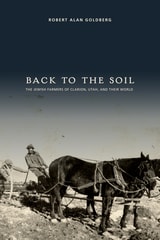
Back to the Soil
The Jewish Farmers of Clarion, Utah, and Their WorldRobert Alan Goldberg
University of Utah Press, 1986
The image of the Jew solely as urbanite may stem from the period of 1880 to 1920, when two million Jews left their homes in Eastern Europe and established themselves in the urban centers of America. Lesser known are the agrarian efforts of Jewish immigrants. In Back to the Soil, Robert Goldberg focuses on the attempt of one such Jewish colony in Clarion, Utah. In 1911, eighty-one families left eastern cities to farm the Clarion tract. Jewish families funded the venture, the governor of Utah en-couraged it, and the Mormon Church financially aided the community. Despite these efforts, Clarion died as an organizational entity in 1916, with the dozen remaining families departing by the mid-1920s.
Goldberg sheds light on the values and ideals of the colonists, the daily rhythm of life, the personalities of the settlers, and the struggle for and eventual collapse of their dream. Of all the attempts to establish a Jewish colony on the land, Clarion was the largest and had the longest existence of any colony west of the Appalachians. The Clarion fragment, lost and forgotten, thus becomes a crucial part of the larger mosaic of Jewish history in the West.
Release of this new paperback edition is timed to coincide with the celebration of the centennial of the founding of the Clarion colony.
Black Studies in Europe
An Anthology of Soil and SeedsNicole Grégoire, Sarah Fila-Bakabadio, and Jacinthe Mazzocchetti (eds.)
Northwestern University Press, 2025
Long absent from research in the humanities and social sciences, Black people in continental Europe have become the focus of a growing body of literature in the past two decades that addresses their unique history and social positioning. Black Studies in Europe: An Anthology of Soil and Seeds brings together essays and case studies by a collective of scholars, writers, and activists to offer a critical overview of the emerging field of Black European studies and a vital reflection on contemporary epistemologies of European Blackness. This collection addresses key questions: What is Blackness from a European standpoint? Which epistemologies and theoretical tools have been used to offer a better understanding of Black experiences in Europe? How is this knowledge being produced and by whom? Can we define a common European conceptual framework for Black studies? Related to this work is an even more urgent enterprise: forging an epistemological distinction between the study of Black people and “Black studies” as an emancipatory project.
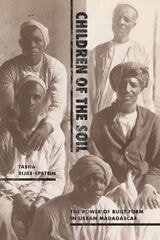
Children of the Soil
The Power of Built Form in Urban MadagascarTasha Rijke-Epstein
Duke University Press, 2023
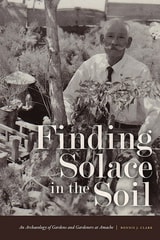
Finding Solace in the Soil
An Archaeology of Gardens and Gardeners at AmacheBonnie J. Clark
University Press of Colorado, 2022
Before incarceration, many at Amache had been farmers, gardeners, or nursery workers. Between 1942 and 1945, they applied their horticultural expertise to the difficult high plains landscape of southeastern Colorado. At Amache they worked to form microclimates, reduce blowing sand, grow better food, and achieve stability and preserve community at a time of dehumanizing dispossession. In this book archaeologist Bonnie J. Clark examines botanical data like seeds, garden-related artifacts, and other material evidence found at Amache, as well as oral histories from survivors and archival data including personal letters and government records, to recount how the prisoners of Amache transformed the harsh military setting of the camp into something resembling a town. She discusses the varieties of gardens found at the site, their place within Japanese and Japanese American horticultural traditions, and innovations brought about by the creative use of limited camp resources.
The gardens were regarded by the incarcerees as a gift to themselves and to each other. And they were also, it turns out, a gift to the future as repositories of generational knowledge where a philosophical stance toward nature was made manifest through innovation and horticultural skill. Framing the gardens and gardeners of Amache within the larger context of the incarceration of Japanese Americans and of recent scholarship on displacement and confinement, Finding Solace in the Soil will be of interest to gardeners, historical archaeologists, landscape archaeologists, cultural anthropologists, and scholars of Japanese American history and horticultural history.

Italian TV Drama and Beyond
Stories from the Soil, Stories from the SeaMilly Buonanno
Intellect Books, 2012
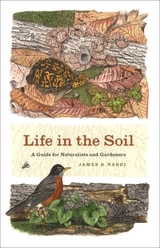
Life in the Soil
A Guide for Naturalists and GardenersJames B. Nardi
University of Chicago Press, 2007
Leonardo da Vinci once mused that “we know more about the movement of celestial bodies than about the soil underfoot,” an observation that is as apt today as it was five hundred years ago. The biological world under our toes is often unexplored and unappreciated, yet it teems with life. In one square meter of earth, there lives trillions of bacteria, millions of nematodes, hundreds of thousands of mites, thousands of insects and worms, and hundreds of snails and slugs. But because of their location and size, many of these creatures are as unfamiliar and bizarre to us as anything found at the bottom of the ocean.
Lavishly illustrated with nearly three hundred color illustrations and masterfully-rendered black and white drawings throughout, Life in the Soil invites naturalists and gardeners alike to dig in and discover the diverse community of creatures living in the dirt below us. Biologist and acclaimed natural history artist James B. Nardibegins with an introduction to soil ecosystems, revealing the unseen labors of underground organisms maintaining the rich fertility of the earth as they recycle nutrients between the living and mineral worlds. He then introduces readers to a dazzling array of creatures: wolf spiders with glowing red eyes, snails with 120 rows of teeth, and 10,000-year-old fungi, among others. Organized by taxon, Life in the Soil covers everything from slime molds and roundworms to woodlice and dung beetles, as well as vertebrates from salamanders to shrews. The book ultimately explores the crucial role of soil ecosystems in conserving the worlds above and below ground.
A unique and illustrative introduction to the many unheralded creatures that inhabit our soils and shape our environment aboveground, Life in the Soil will inform and enrich the naturalist in all of us.
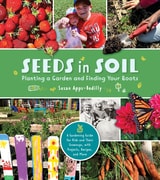
Seeds in Soil
Planting a Garden and Finding Your RootsSusan Apps-Bodilly
Wisconsin Historical Society Press, 2022
natural curiosity about nature. Seeds in Soil includes all the details to start planting and growing, whether working with a whole yard, a community or school garden, or just a balcony.
Chapters feature advice for selecting the seeds and tools to get started; ideas for planning and being creative in the garden; and tips for harvesting, storing, and cooking with fresh produce. Written by a second-grade teacher, the book includes engaging lessons about the science of climate, soil, and pollinators; and connections to history through the stories of First Nations and immigrant gardeners. Told through the author’s family stories and experience, Seeds in Soil will get kids having fun in the garden while digging, planting, growing, and finding their roots.
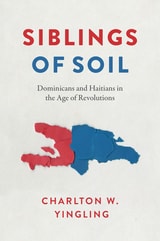
Siblings of Soil
Dominicans and Haitians in the Age of RevolutionsCharlton W. Yingling
University of Texas Press, 2022
2023 Honorable Mention, Isis Duarte Book Prize, Haiti/ Dominican Republic section (LASA)
After revolutionary cooperation between Dominican and Haitian majorities produced independence across Hispaniola, Dominican elites crafted negative myths about this era that contributed to anti-Haitianism.
Despite the island’s long-simmering tensions, Dominicans and Haitians once unified Hispaniola. Based on research from over two dozen archives in multiple countries, Siblings of Soil presents the overlooked history of their shared imperial endings and national beginnings from the 1780s to 1822. Haitian revolutionaries both inspired and aided Dominican antislavery and anti-imperial movements. Ultimately, Santo Domingo's independence from Spain came in 1822 through unification with Haiti, as Dominicans embraced citizenship and emancipation. Their collaboration resulted in one of the most unique and inclusive forms of independence in the Americas.
Elite reactions to this era formed anti-Haitian narratives. Racial ideas permeated the revolution, Vodou, Catholicism, secularism, and even Deism. Some Dominicans reinforced Hispanic and Catholic traditions and cast Haitians as violent heretics who had invaded Dominican society, undermining the innovative, multicultural state. Two centuries later, distortions of their shared past of kinship have enabled generations of anti-Haitian policies, assumptions of irreconcilable differences, and human rights abuses.
Soil and Soul
How Russia’s Minority Communities Create Meaning and IdentityEdited by Yana Hashamova and Gulnaz Sharafutdinova
University of Wisconsin Press, 2027
By landmass, Russia is the world’s largest country, due largely to centuries of military expansion, imperial rule, and colonization. As a result, it contains people of many ethnicities, nationalities, religions, and languages. Yet Russia’s non-Russian, Indigenous, and minority communities have often been marginalized by state policy and underrepresented in scholarship. Soil and Soul explores how these communities sustain distinct forms of identity and belonging not only through discourse or state institutions but also through embodied relations with land, nature, and animals. These local practices complicate and unsettle state-centered narratives of Russian cultural superiority by showing how meaning and identity are created through relationships with the nonhuman world. Drawing on decolonial, anthropological, environmental, sociological, linguistic, and geographic approaches, this volume reframes minority agency as ecosocial practice embedded in local ecologies, everyday life, and postimperial power asymmetries.
Contributors: Megan Dixon, Yana Hashamova, Kristina Kovalskaya, Jesko Schmoller, Gulnaz Sharafutdinova, Laura Siragusa, Zoia Tarasova, Baasanjav Terbish
Writing on the Soil
Land and Landscape in Literature from Eastern and Southern AfricaNg’ang’a Wahu-Muchiri
University of Michigan Press, 2023
Across contiguous nation-states in Eastern Africa, the geographic proximity disguises an ideological complexity. Land has meant something fundamental in the sociocultural history of each country. Those concerns, however, have manifested into varied political events, and the range of struggles over land has spawned a multiplicity of literary interventions. While Kenya and Uganda were both British colonies, Kenya's experience of settler land alienation made for a much more violent response against efforts at political independence. Uganda's relatively calm unyoking from the colonial burden, however, led to a tumultuous post-independence. Tanzania, too, like Kenya and Uganda, resisted British colonial administration—after Germany's defeat in World War 1.
In Writing on the Soil, author Ng’ang’a Wahu-Mũchiriargues that representations of land and landscape perform significant metaphorical labor in African literatures, and this argument evolves across several geographical spaces. Each chapter's analysis is grounded in a particular locale: western Kenya, colonial Tanganyika, post-independence Tanzania, Zimbabwe, Nairobi, Dar es Salaam, Anam Ka'alakol (Lake Turkana), Kampala, and Kitgum in Northern Uganda. Moreover, each section contributes to a deeper understanding of the aesthetic choices that authors make when deploying tropes revolving around land, landscape, and the environment. Mũchiri disentangles the numerous connections between geography and geopolitical space on the one hand, and ideology and cultural analysis on the other. This book embodies a multi-layered argument in the sphere of African critical scholarship, while adding to the growing field of African land rights scholarship—an approach that foregrounds the close reading of Africa’s literary canon.