Results by title
9 books match the query 'Somalia'
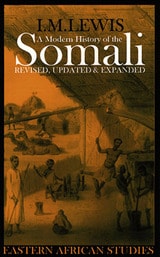
A Modern History of the Somali
Nation and State in the Horn of AfricaI. M. Lewis
Ohio University Press, 2002
This latest edition of A Modern History of the Somali brings I. M. Lewis’s definitive history up to date and shows the amazing continuity of Somali forms of social organization. Lewis’s history portrays the ingeniousness with which the Somali way of life has been adapted to all forms of modernity.
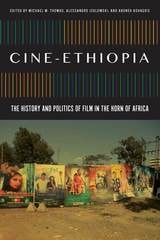
Cine-Ethiopia
The History and Politics of Film in the Horn of AfricaMichael W. Thomas
Michigan State University Press, 2018
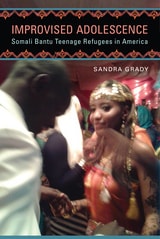
Improvised Adolescence
Somali Bantu Teenage Refugees in AmericaSandra Grady
University of Wisconsin Press, 2015
Improvised Adolescence explores how teenagers from southern Somalia, who spent much of their childhood in East African refugee camps, are adapting to resettlement in the American Midwest. The collapse of the Somali state in 1991, and subsequent chaos in the Horn of Africa, disrupted the lives of these young people educationally, culturally, and developmentally. Folklorist Sandra Grady has intermittently observed the lifeworld of these teens—their homes, their entertainment choices, their interaction with classmates and teachers at school, and their plans for the future—for more than seven years to understand the cultural tools they’ve used in their journey from this disrupted childhood. They negotiate two sets of cultural expectations: in the resettled Somali Bantu community, traditional rites of passage continue to mark the change from child to adult; in the surrounding U.S. culture, an unfamiliar in-between category—“adolescent”—delays adulthood. Offering analysis that is both engaging and theoretically grounded, Grady tracks the emergence in this immigrant community of an improvised adolescence.
Best books for public & secondary school libraries from university presses, American Library Association

Love Songs in Motion
Voicing Intimacy in SomalilandChristina J. Woolner
University of Chicago Press, 2023
At first listen, both music and talk about love are conspicuously absent from Somaliland’s public soundscapes. The lingering effects of war, the contested place of music in Islam, and gendered norms of emotional expression limit opportunities for making music and sharing personal feelings. But while Christina J. Woolner was researching peacebuilding in Somaliland’s capital, Hargeysa, she kept hearing snippets of songs. Almost all of these, she learned, were about love. In these songs, poets, musicians, and singers collaborate to give voice to personal love aspirations and often painful experiences of love-suffering. Once in circulation, the intimate and heartfelt voices of love songs provide rare and deeply therapeutic opportunities for dareen-wadaag (feeling-sharing). In a region of political instability, these songs also work to powerfully unite listeners on the basis of shared vulnerability, transcending social and political divisions and opening space for a different kind of politics.
Taking us from 1950s recordings preserved on dusty cassettes to new releases on YouTube and live performances at Somaliland’s first postwar music venue—where the author herself eventually takes the stage—Woolner offers an account of love songs in motion that reveals the capacity of music to connect people and feelings across time and space, creating new possibilities for relating to oneself and others.
Politics, Language, and Thought
The Somali ExperienceDavid D. Laitin
University of Chicago Press, 1977
Twelve years after independence, a military government was able to settle the acrimonious controversy by announcing that Somali would be the official language and Latin the basic script. It was hoped that this choice would foster political equality and strengthen the national culture. Politics, Language, and Thought is an exploration of how language and politics interrelate in the Somali Republic. Using both historical and experimental evidence, David D. Laitin demonstrates that the choice of an official language may significantly affect the course of a country's political development.
Part I of Laitin's study is an attempt to explain why the parliamentary government was incapable of reaching agreement on a national script and to assess the social and political consequences of the years of nondecision. Laitin shows how the imposition of nonindigenous languages produced inequalities which eroded the country's natural social basis of democracy.
Part 2 attempts to relate language to political thought and political culture. Analyzing interviews and role-playing sessions among Somali bilingual students, Laitin demonstrates that the impact of certain political concepts is quite different when expressed in different languages. He concludes that the implications of choosing a language are far more complex than previously thought, because to change the language of a people is to change the ways they think and act politically.

Somalia - the Untold Story
The War Through the Eyes of Somali WomenEdited by Judith Gardner and Judy El Bushra
Pluto Press, 2004
In this book, Somali women write and talk about the war, their experiences and the unacceptable choices they often faced. They explain clearly, in their own words, the changes, challenges – and sometimes the opportunities – that war brought, and how they coped with them.
Key themes include the slaughter and loss of men, who were the prime target for killings; rape and sexual violence as a weapon of war; changing roles in the family and within the pastoralist economy; women mobilising for peace; and leading social recovery in a war-torn society.
This book is not only an important record of women's experience of war, but also provides researchers and students of gender and conflict with rare first hand accounts highlighting the impact of war on gender relations, and women's struggle for equal political rights in a situation of state collapse.
The Prophet's Camel Bell
A Memoir of SomalilandMargaret Laurence
University of Chicago Press, 1963
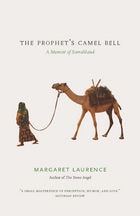
In 1950, as a young bride, Margaret Laurence set out with her engineer husband to what was then Somaliland: a British protectorate in North Africa few Canadians had ever heard of. Her account of this voyage into the desert is full of wit and astonishment. Laurence honestly portrays the difficulty of colonial relationships and the frustration of trying to get along with Somalis who had no reason to trust outsiders. There are moments of surprise and discovery when Laurence exclaims at the beauty of a flock of birds only to discover that they are locusts, or offers medical help to impoverished neighbors only to be confronted with how little she can help them. During her stay, Laurence moves past misunderstanding the Somalis and comes to admire memorable individuals: a storyteller, a poet, a camel-herder. The Prophet’s Camel Bell is both a fascinating account of Somali culture and British colonial characters, and a lyrical description of life in the desert.
The Western Disease
Contesting Autism in the Somali DiasporaClaire Laurier Decoteau
University of Chicago Press, 2021
Because autism is an increasingly common diagnosis, North Americans are familiar with its symptoms and treatments. But what we know and think about autism is shaped by our social relationship to health, disease, and the medical system. In The Western Disease Claire Laurier Decoteau explores the ways that recent immigrants from Somalia to Canada and the US make sense of their children’s diagnosis of autism. Having never heard of autism before migrating to North America, they often determine that it must be a Western disease. Given its apparent absence in Somalia, they view it as Western in nature, caused by environmental and health conditions unique to life in North America.
Following Somali parents as they struggle to make sense of their children's illness and advocate for alternative care, Decoteau unfolds how complex interacting factors of immigration, race, and class affect Somalis’ relationship to the disease. Somalis’ engagement with autism challenges the prevailing presumption among Western doctors that their approach to healing is universal. Decoteau argues that centering an analysis on autism within the Somali diaspora exposes how autism has been defined and institutionalized as a white, middle-class disorder, leading to health disparities based on race, class, age, and ability. The Western Disease asks us to consider the social causes of disease and the role environmental changes and structural inequalities play in health vulnerability.
Understanding the Somalia Conflagration
Identity, Political Islam and PeacebuildingAfyare Abdi Elmi
Pluto Press, 2010
Somalia has been devastated by a US-backed Ethiopian invasion and years of civil war, and it has long been without a central government. Against this background of violence, Somali academic Afyare Abdi Elmi, attempts to explain the multiple dimensions of the conflict and find a peace-building consensus.
Somalia is a failed state and a Muslim state. This combination means the West assumes that it will become a breeding ground for extremism. The country regularly hits the headlines as a piracy hotspot. This combination of internal division and outside interference makes for an intensely hostile landscape. Elmi shows that only by addressing the problem of the statelessness in the country can the long process of peace begin. He highlights clan identities, Islam and other countries in the region as the key elements in any peace-building effort.
This unique account from an author who truly understands Somalia should be required reading for students and academics of international relations and peace / conflict studies.