Results by title
13 books match the query 'Son'
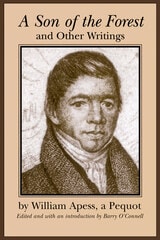
"A Son of the Forest" and Other Writings
William Apess
University of Massachusetts Press, 1997

Father and Son
Kingsley Amis, Martin Amis, and the British Novel since 1950Gavin Keulks
University of Wisconsin Press, 2004
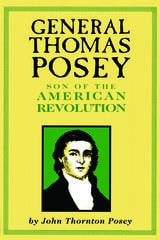
General Thomas Posey
Son of the American RevolutionJohn Thornton Posey
Michigan State University Press, 1992
Revolutionary War general Thomas Posey (1750-1818) lived his life against the backdrop of one of the most dramatic periods in American history. Posey, who played a minor role in the actual War for Independence, went on to participate in the development and foundation of several states in the transappalachian West. His experiences on the late 18th- and early 19th-century American frontier were varied and in a certain sense extraordinary; he served as Indian agent in Illinois Territory; as Lieutenant Governor of Kentucky, as U.S. Senator from Louisiana, and as Governor of Indiana during its transition from territorial status to statehood.
His biographer speculates on the contrasting influences of Thomas's ne'er-do-well father, Captain John Posey, and the family's close friend, General George Washington. Posey's progress is then followed as he raises his own family in the newly formed nation. Of particular interest is an appendix containing a detailed analysis of evidence available to support popular 29th-century speculation that Thomas Posey was, in fact, George Washington's illicit son.

Good-bye, Son and Other Stories
Janet Lewis
Ohio University Press, 1986
Good-bye, Son and Other Stories, Janet Lewis’s only collection of short fiction, was first published in 1946, but remains as quietly haunting today as it was then. Set in small communities of the upper Midwest and northern California in the ’30s and ’40s, these midcentury gems focus on the quiet cycles connecting youth and age, despair and hope, life and death. A mother’s encounters with her deceased son, an aging woman sitting with the new knowledge of her troubled older sister’s death, and a teenager disillusioned by her own mortality are among the characters, mostly women and girls, whom Lewis delivers. Her understated style and knack for unadorned observation embed us with them as they reckon with the disquieting forces—incomprehensible and destructive to some, enlightening to others—that move us from birth, through life, to death. In the process, Lewis has crafted a paean to the living.
Jesus, Son of Mary, in Muslim Thought
S. R. Burge
SBL Press, 2026
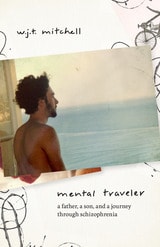
Mental Traveler
A Father, a Son, and a Journey through SchizophreniaW. J. T. Mitchell
University of Chicago Press, 2020
Gabriel Mitchell was diagnosed with schizophrenia at age twenty-one and died by suicide eighteen years later. He left behind a remarkable archive of creative work and a father determined to honor his son’s attempts to conquer his own illness. Before his death, Gabe had been working on a film that would show madness from inside and out, as media stereotype and spectacle, symptom and stigma, malady and minority status, disability and gateway to insight. He was convinced that madness is an extreme form of subjective experience that we all endure at some point in our lives, whether in moments of ecstasy or melancholy, or in the enduring trauma of a broken heart. Gabe’s declared ambition was to transform schizophrenia from a death sentence to a learning experience, and madness from a curse to a critical perspective.
Shot through with love and pain, Mental Traveler shows how Gabe drew his father into his quest for enlightenment within madness. It is a book that will touch anyone struggling to cope with mental illness, and especially for parents and caregivers of those caught in its grasp.
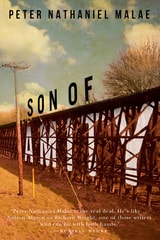
Son of Amity
Peter Nathaniel Malae
Oregon State University Press, 2018
Determined to escape the past, these characters find themselves sharing the same torn-down house, bordering tweaker poverty and bucolic wine country. Violence and penance, family and legacy, recidivism and post-traumatic stress disorder linger with the heavy rain of desperation. At the center of this storm is five-year old Benji, whose wide-eyed energy and openhearted faith could show all of them how to still be saved.
In this unforgettable tale, award-winning author Peter Nathaniel Malae explores the depths of human pain and trauma with genuine cultural authority. Son of Amity is a novel whose voices cry out with truth and vulnerability, never betraying that slight tilt toward hope needed to make the long, hard trek to tomorrow.
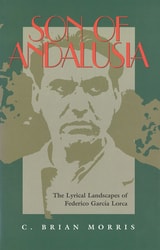
Son of Andalusia
The Lyrical Landscapes of Federico Garcia LorcaC. Brian Morris
Vanderbilt University Press, 1997
Andalusia was the central feature and influence in the life and writings of the twentieth-century author, musician, and artist, Federico Garcia Lorca. Rooted in his native region, which both captivated and shaped him, Lorca maintained that "The better a writer learns how to interpret the landscape, the greater the artist he will be." Blessed with an acute historical sense of a region where the past is both present and enduring, Lorca proved himself sensitive and articulate enough to interpret "the emotion of the landscape" in all of his creative work.
For Lorca, Andalusia was a landscape not only of place but of people. Through exhaustive research and painstaking readings in a wide range of anthologies of Andalusian folk culture and collections of popular verse, author C. Brian Morris reveals how Lorca transformed and veiled real people and real places in his poetry and drama. Exploring subjects ranging from medieval ballads to flower and plant lore, he further investigates the relationship between Lorca and the writings of other Andalusian-born authors, as well as traditional Andalusian poetry and song. Juxtaposing this material with well-chosen quotations from Lorca's works, Morris provides myriad examples of analogy and reminiscence that will inform and enlighten both general readers and Lorca specialists.
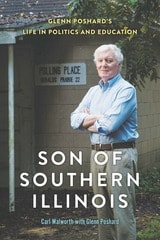
Son of Southern Illinois
Glenn Poshard’s Life in Politics and EducationCarl Walworth with Glenn Poshard
Southern Illinois University Press, 2023
A life of principles, service, and faith
This first biography of Glenn Poshard traces the life of a young man who rose from rural poverty in Southern Illinois to become a United States congressman and president of the Southern Illinois University system. This profound portrait unveils a life and career dedicated to making higher education affordable and improving the quality of life for the community of Southern Illinois.
Beginning with his childhood in a two-room home near Herald, Illinois and the early, tragic loss of his sister, this biography navigates Poshard’s service in the military, his time as a state senator and United States congressman, his run for governor, his years at Southern Illinois University, and the establishment of the Poshard Foundation for Abused Children. Intimacies of his personal life are disclosed, such as his struggles with and treatment for depression, his passion for education, and the lasting bonds he formed with his teachers. His unpopular decision to refuse PAC donations is also highlighted, along with the work that went into sponsoring the Illinois Wilderness Act, and his relationship with civil rights activist John Lewis. Glenn Poshard’s efforts for the Wilderness Act designated Southern Illinois’s famous Garden of the Gods as a National Wilderness Preservation System, which continues to attract visitors from around the world.
Poshard’s path from poverty was riddled with hardship, but his perseverance and family values ultimately allowed for longstanding personal and civic growth. From an admirable work ethic to a steadfast commitment to problem-solving, this biography illuminates the life and accomplishments of an impressive and generous leader.
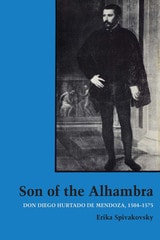
Son of the Alhambra
Don Diego Hurtado de Mendoza, 1504-1575By Erika Spivakovsky
University of Texas Press, 1970
Last of the Spanish Renaissance men, Diego Hurtado de Mendoza (1504–1575) was a master of the humanist disciplines as well as an active diplomat whose correspondence provides insight into the workings of power politics in the first post-Machiavellian decades.
This account of Mendoza's diplomatic career is a living commentary on the mid-sixteenth century, the time of the Spanish Inquisition and the Reformation, with its upheavals in the European balance of power. Mendoza served as ambassador of Charles V to Venice and Rome and as governor of Siena. His political life complements the reign of the Emperor whose ambition was to become a universal monarch.
An interesting contradiction in Mendoza's thought—his humanist theories versus personal ambition—prevented him from successful implemention of tyrannical imperial policies. His role in the government of the Holy Roman Empire shows how the exertion of imperialist power, humanist ethics notwithstanding, inevitably entails corruption, hypocrisy, greed, and imbalance in the one who tries to wield this power.
Gifted to the point of universal genius, Mendoza was perhaps the foremost representative of the splendid but little-known epoch of Spanish humanism, the era between the death of Queen Isabel (1504) and the abdication of her grandson Charles V (1556). Spain's short-lived Renaissance came to an abrupt end with the accession of Philip II and the almost simultaneous onset of the Counter Reformation. To this changed Spain, under monolithic thought control now exacted and enforced by monarch and Inquisition, Mendoza returned to live the last third of his life, mostly in obscurity, and in the last few years in royal disgrace.
Based on primary sources, this first biography of Mendoza in English also examines the relevance of some of Don Diego's disputed literary works to the legend that grew up around him as a spokesman for latent unorthodox opinion.
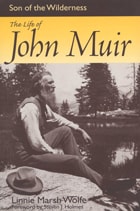
Son of the Wilderness
The Life of John MuirLinnie Marsh Wolfe
University of Wisconsin Press, 2003
Working closely with Muir’s family and with his papers, Wolfe was able to create a full portrait of her subject, not only as America’s firebrand conservationist and founder of the national park system, but also as husband, father, and friend. All readers who have admired Muir’s ruggedly individualistic lifestyle, and those who wish a greater appreciation for the history of environmental preservation in America, will be enthralled and enlightened by this splendid biography.
The story follows Muir from his ancestral home in Scotland, through his early years in the harsh Wisconsin wilderness, to his history-making pilgrimage to California.
This book, originally published in 1945 and based in large part on Wolfe’s personal interviews with people who knew and worked with Muir, is one that could never be written again. It is, and will remain, the standard Muir biography.

Superman and Son
Schoenstein, Ralph
Rutgers University Press, 1995
"To Ralph Schoenstein, his father was the New York version of Superman: 'Not a mild-mannered reporter who put on a cape in a telephone booth, but a commanding editor who could use a telephone booth to get tickets to any sold-out Broadway show.' Father Paul was city editor of Hearst's New York Journal-American, the U.S.'s biggest evening paper through the '40s and '50s. . . . This affectionate memoir evokes a giant of great animal magnetism. . . a filial, funny book that Superman would have loved--and that anyone might admire."--Time Magazine
"Enjoy a sneaking look back at the days when newspapering was a game as well as a trade, when the world paraded through a newspaper's door without security passes, when scoop-hungry city editors not only breathed fire, they inhaled, Schoenstein's gem of a memoir brings it all back in a rush of wit and longing."--Columbia Journalism Review
"Father and son literature goes back to the Bible . . . but I doubt whether there has ever been anything quite like Schoenstein's memoir. Certainly nothing as funny, warm, and poignant all at once."--Los Angeles Times
Publisher's Note: This book was previously titled Citizen Paul: The Story of Father and Son, published in 1978 and out of print for many years. It was an Alternate Selection of the Book of the Month Club.
The Surrendered
Reflections by a Son of Shining PathJosé Carlos Agüero. Edited and Translated by Michael J. Lazzara and Charles F. Walker
Duke University Press, 2021