Results by title
19 books match the query 'Sonnets'

All Things At Once
Sonnets and SongsRoger Armbrust
Parkhurst Brothers, Inc., 2022
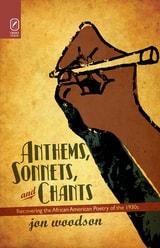
Anthems, Sonnets, and Chants
Recovering the African American Poetry of the 1930sJon Woodson
The Ohio State University Press, 2011
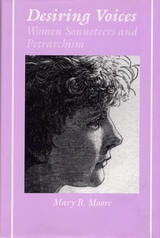
Desiring Voices
Women Sonneteers and PetrarchismMary B. Moore
Southern Illinois University Press, 2000
“How do I love thee? Let me count the ways,” wrote Elizabeth Barrett Browning in her Sonnets from the Portuguese.Desiring Voices: Women Sonneteers and Petrarchism proposes that we attend to the ways that women poets from the sixteenth through the twentieth centuries have both echoed and transformed the literary and erotic conventions that strongly influenced their fates as women, wives, and lovers.
Mary B. Moore analyzes and provides context for love sonnet sequences by Italian, French, English, and American women poets in the light of current knowledge concerning attitudes towards women at the time they wrote. Through close readings of the poems combined with theory and criticism about constructs of women, historical events, and biographical contexts, Moore reveals patterns of revision among women poets that shed further light on the poets themselves, on Petrarchism as a convention, and on ideas about women. She focuses on Petrarchan sonnet sequences by women because the poems serve both as works of art and as documents that illuminate the range and limitations of female roles as erotic subjects (agents of speech, action, knowledge, and desire) as well as their more usual roles as erotic objects.
Combining theory with close reading, Moore enhances the value of many generally neglected poems by women. After a thorough discussion of the Petrarchan sonnet tradition, she analyzes the work of Gaspara Stampa, Louise Labé, Lady Mary Wroth, Charlotte Smith, Elizabeth Barrett Browning, and Edna St. Vincent Millay.
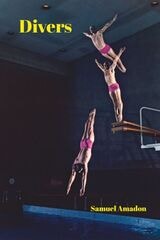
Divers
Samuel Amadon
Omnidawn, 2026
Marking a formal reinvention for the poet, this collection addresses the strangeness of time, blending writers and images from the past with contemporary scenes.
This book-length sequence of turbulent sonnets follows their speaker's impulses and imagination through the seasons of their composition. Written between 2016 and 2022, Divers is a collection shaped by contradiction and marks a new period of lyric experimentation for poet Sam Amadon. These poems are rigorously constrained while also making space for improvisation. They hold to a decasyllabic line while moving in and out of meter. They sing of time, and struggle to understand it. They find words for our moment in the pages of old books. Lines from great writers of the past—including Gerard Manley Hopkins, Thomas Wyatt, and Michael Drayton—echo through Amadon's poems of contemporary menace and wonder. Here we see both the owls lining our fences and the black SUVs rolling down our streets. Out of these conflicts, Amadon’s sonnets step up, lift off, and dive into themselves.

Ghost Smoke
Jonathan Weinert and H. L. Hix
Bridwell Press, 2026
“Every atom belonging to me as good belongs to you,” wrote Walt Whitman. Poets H. L. Hix and Jonathan Weinert adopted Whitman’s declaration as a guiding principle for Ghost Smoke. In this “Song of Themself,” Hix and Weinert merge their voices to create a spirited book-length hybrid poem that meditates on distance, listening, finitude, and different kinds of love. Fabricated of material collected from over two decades of correspondence and collaboration, Ghost Smoke borrows the structure of a crown of sonnets, completing a circuit that seeks to defeat the standard distinctions between question and answer, presence and absence, self and other. Is it possible to find a language that can allow us to become more porous to one another, to listen more deeply to one another and to respond in kind? Can we become each other’s ghosts, open to and inhabited by one another? What happens to us, and what happens between us, if we do?

Harmful Eloquence
Ovid's Amores from Antiquity to ShakespeareM. L. Stapleton
University of Michigan Press, 1996

Homosexual Desire in Shakespeare's England
A Cultural PoeticsBruce R. Smith
University of Chicago Press, 1994
"The best single analysis of the homoerotic element in Renaissance English literature."—Keith Thomas, New York Review of Books
"Smith's lucid and subtle book offer[s] a poetics of homosexual desire. . . . Its scholarship, impressively broad and deftly deployed, aims to further a serious social purpose: the redemptive location of homosexual desire in history and the recuperation for our own time, through an understanding of its discursive embodiments, of that desire's changing imperatives and parameters."—Terence Hawkes, Times Literary Supplement
"The great strength of Bruce Smith's book is that it does not sidestep the complex challenge of engaging in the sexual politics of the present while attending to the resistant discourses and practices of Renaissance England. Homosexual Desire in Shakespeare's England demonstrates how a commitment to the present opens up our understanding of the past."—Peter Stallybrass, Shakespeare Quarterly
"A major contribution to the understanding of homosexuality in Renaissance England and by far the best and most comprehensive account yet offered of the homoeroticism that suffuses Renaissance literature."—Claude J. Summers, Journal of Homosexuality
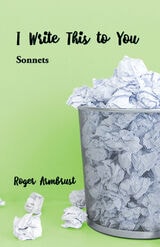
I Write This to You
SonnetsRoger Armbrust
Parkhurst Brothers, Inc., 2022

Mending Torn Pages
SonnetsRoger Armbrust
Parkhurst Brothers, Inc., 2021
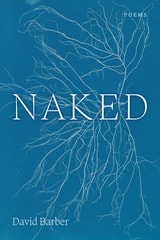
NAKED
PoemsDavid Barber
Northwestern University Press, 2027
A moving and sonically stunning exploration into the body and soul
David Barber’s masterful new book, NAKED, is powered by prolific feats of verbal prowess. With formal dexterity, nerve, and ingenious wordplay, these poems grapple with the serious business of soulmaking. In a spacious collection that enacts changes on the touch-and-go of innocence and experience, these poems are rife with inklings and reckonings in the name of muscle memory and mortal longing. Here, Hollywood meets Babylon in the Garden of Earthly Delights; Odysseus opts for a username; the naked eye goes toe-to-toe with the naked truth; American sonnets & ampersands run wild. NAKED is an all-out lovers’ quarrel over the give-and-take of the spirit and flesh—and Barber is all in.
Poems While We Dream
Sonnets and SongsRoger Armbrust
Parkhurst Brothers, Inc., 2021
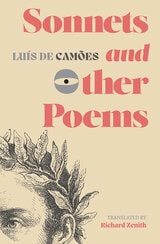
Sonnets and Other Poems
Luis de Camões, Translated by Richard Zenith
Tagus Press, 2009
This revised and updated bilingual edition of Sonnets and Other Poems offers a cross-section of lyric poetry by Portugal's Luís de Camões, author of The Lusiads (1572), the great Renaissance epic memoralizing Vasco da Gama's inaugural voyage to India (1497-99). A selection of forty sonnets is followed by poems using other metrical patterns and rhyme schemes, including terza rima, ottava rima, the sestina, the canzone, and the redondilha, a verse form typical of Portuguese poetry. Richard Zenith's fluid renditions, far from attempting to "update" Camões, closely adhere to the original text, employing modern English but resisting the temptation to expand on the relatively small and simple lexicon of the Portuguese. Along with discussing his method of translation, Zenith's illuminating introduction shows how Camões's life and work were intimately entwined.
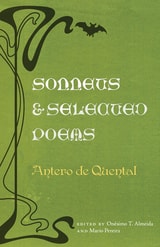
Sonnets and Selected Poems
Antero de Quental, Edited by Onésimo T. Almeida and Mario Pereira
Tagus Press, 2022
Grappling with metaphysical questions of suffering, death, and infinity, Antero de Quental’s sonnets have been widely celebrated by writers and intellectuals around the world, with Fernando Pessoa calling him “one of the greatest poets of the nineteenth century.” Irreverent and nonconformist, Antero became the ideologue and moving spirit behind the group of progressive intellectuals known as the Generation of 1870 who rebelled against tradition and attempted to reverse Portugal’s intellectual stagnation. This is the first bilingual (Portuguese-English) edition of Antero's sonnets and poems, as well as the first to assemble the translations by Aubrey F. G. Bell, Roy Campbell, Richard Garnett, George Monteiro, S. Griswold Morley, Fernando Pessoa, Edgar Prestage, and Richard Zenith in a single volume.

Sonnets of Love and Death
Jean De Sponde
Northwestern University Press, 2001
Sonnets to Orpheus
Rainer Maria Rilke
University of Scranton Press, 2007

Such Is My Love
A Study of Shakespeare's SonnetsJoseph Pequigney
University of Chicago Press, 1985

The Last Quiet Place on Earth
Sonnets in the Time of CoronavirusRoger Armbrust
Parkhurst Brothers, Inc., 2022
The Sonnets of Rainer Maria Rilke
Rainer Maria Rilke
St. Augustine's Press, 2021
In an expanded collection of Rilke’s sonnets, Rick Anthony Furtak not only makes this lyrical masterpiece accessible to the English reader, but he proves himself a master of sorts as well. His introduction that elaborates on Rilke’s marriage of vision and voice, intention and enigma, haunted companionship and abandonment is a stand-alone marvel for the reader. Furtak’s praised translation of Sonnets to Orpheus (University of Chicago Press, 2008) is surpassed in this much broader collection of verse that also includes the original German text. It is Furtak’s great achievement that Rilke resonates with the contemporary reader, who uncertain and searching wants to believe that the vision of existence can mirror much more than his own consciousness. In his feat of rendering Rilke in English, contextualizing the philosophical meanings of verse, and presenting literary romanticism, Furtak provides a formidable contribution to the vindication of true poetic voice.
en el norte / soy del sur
José Felipe Alvergue
Omnidawn, 2026
José Felipe Alvergue’s en el norte/soy del sur, which translates to “in the north I am of the south,” is an exploration into the limits of the American sonnet, one that seeks to establish a stable sense of place, while opening vistas at each turn. Stitching together multiple sonnets into what he calls “sonnet essays,” Alvergue rides their turns—or “voltas”—that are guided by memories and photographs of his family’s migratory history between El Salvador and the United States.
The resulting text is a story of human geography that considers the coordinates of a long, continuous thought about what it means to be “of a place” as a defining characteristic of identity, when one is also “in a place” that sets strict limits on the political and historical potential of im/migrants. A deeply human documentary work that delves into one family’s migration across the hemisphere, en el norte/soy del sur hopes to give shape to the collective and often amorphous history of migration in the face of narratives that peddle spectacularized distillation and essentialism.