Results by title
25 books match the query 'Sound recordings'

A Basic Music Library
Essential Scores and Sound Recordings, Volume 1: Popular MusicAmerican Library Association, 2022
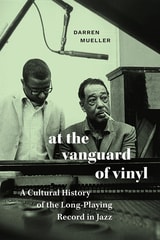
At the Vanguard of Vinyl
A Cultural History of the Long-Playing Record in JazzDarren Mueller
Duke University Press, 2024
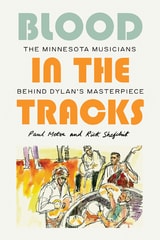
Blood in the Tracks
The Minnesota Musicians behind Dylan's MasterpiecePaul Metsa
University of Minnesota Press, 2023
The story of the Minneapolis musicians who were unexpectedly summoned to re-record half of the songs on Bob Dylan's most acclaimed album
When Bob Dylan recorded Blood on the Tracks in New York in September 1974, it was a great album. But it was not the album now ranked by Rolling Stone as one of the ten best of all time. “When something’s not right, it’s wrong,” as Dylan puts it in “You’re Gonna Make Me Lonesome When You Go”—and something about that original recording led him to a studio in his native Minnesota to re-record five songs, including “Idiot Wind” and “Tangled Up in Blue.” Six Minnesota musicians participated in that two-night recording session at Sound 80, bringing their unique sound to some of Dylan’s best-known songs—only to have their names left off the album and their contribution unacknowledged for more than forty years. This book tells the story of those two nights in Minneapolis, introduces the musicians who gave the album so much of its ultimate form and sound, and describes their decades-long fight for recognition.
Blood in the Tracks takes readers behind the scenes with these “mystery” Minnesota musicians: twenty-one-year-old mandolin virtuoso Peter Ostroushko; drummer Bill Berg and bass player Billy Peterson, the house rhythm section at Sound 80; progressive rock keyboardist Gregg Inhofer; guitarist Chris Weber, who owned The Podium guitar shop in Dinkytown; and Kevin Odegard, whose own career as a singer-songwriter had paralleled Dylan’s until he had to take a job as a railroad brakeman to make ends meet. Through in-depth interviews and assiduous research, Paul Metsa and Rick Shefchik trace the twists of fate that brought these musicians together and then set them on different paths in its wake: their musical experiences leading up to the December 1974 recording session, the divergent careers that followed, and the painstaking work required to finally obtain the official credit that they were due.
A rare look at the making—or remaking—of an all-time great album, and a long overdue recognition of the musicians who made it happen, Blood in the Tracks brings to life a transformative moment in the history of rock and roll, for the first time in its true context and with its complete cast of players.
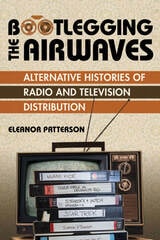
Bootlegging the Airwaves
Alternative Histories of Radio and Television DistributionEleanor Patterson
University of Illinois Press, 2024
Long before internet archives and the anytime, anywhere convenience of streaming, people collected, traded, and shared radio and television content via informal networks that crisscrossed transnational boundaries.
Eleanor Patterson’s fascinating cultural history explores the distribution of radio and TV tapes from the 1960s through the 1980s. Looking at bootlegging against the backdrop of mass media’s formative years, Patterson delves into some of the major subcultures of the era. Old-time radio aficionados felt the impact of inexpensive audio recording equipment and the controversies surrounding programs like Amos ‘n’ Andy. Bootlegging communities devoted to buddy cop TV shows like Starsky and Hutch allowed women to articulate female pleasure and sexuality while Star Trek videos in Australia inspired a grassroots subculture built around community viewings of episodes. Tape trading also had a profound influence on creating an intellectual pro wrestling fandom that aided wrestling’s growth into an international sports entertainment industry.
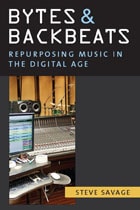
Bytes and Backbeats
Repurposing Music in the Digital AgeSteve Savage
University of Michigan Press, 2013
From Attali's "cold social silence" to Baudrillard's hallucinatory reality, reproduced music has long been the target of critical attack. In Bytes and Backbeats, however, Steve Savage deploys an innovative combination of designed recording projects, ethnographic studies of contemporary music practice, and critical analysis to challenge many of these traditional attitudes about the creation and reception of music. Savage adopts the notion of "repurposing" as central to understanding how every aspect of musical activity, from creation to reception, has been transformed, arguing that the tension within production between a naturalizing "art" and a self-conscious "artifice" reflects and feeds into our evolving notions of creativity, authenticity, and community.
At the core of the book are three original audio projects, drawing from rock & roll, jazz, and traditional African music, through which Savage is able to target areas of contemporary practice that are particularly significant in the cultural evolution of the musical experience. Each audio project includes a studio study providing context for the social and cultural analysis that follows. This work stems from Savage's experience as a professional recording engineer and record producer.
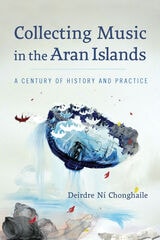
Collecting Music in the Aran Islands
A Century of History and PracticeDeirdre Ní Chonghaile
University of Wisconsin Press, 2022
For more than 150 years, individuals have traveled the countryside with pen, paper, tape recorders, and even video cameras to document versions of songs, music, and stories shared by communities. As technologies and methodologies have advanced, the task of gathering music has been taken up by a much broader group than scholars. The resulting collections created by these various people can be impacted by the individual collectors’ political and social concerns, cultural inclinations, and even simple happenstance, demonstrating a crucial yet underexplored relationship between the music and those preserving it.
Collecting Music in the Aran Islands, a critical historiographical study of the practice of documenting traditional music, is the first to focus on the archipelago off the west coast of Ireland. Deirdre Ní Chonghaile argues for a culturally equitable framework that considers negotiation, collaboration, canonization, and marginalization to fully understand the immensely important process of musical curation. In presenting four substantial, historically valuable collections from the nineteenth and twentieth centuries, she illustrates how understanding the motivations and training (or lack thereof) of individual music collectors significantly informs how we should approach their work and contextualize their place in the folk music canon.

Ethnic Music on Records
A Discography of Ethnic Recordings Produced in the United States, 1893-1942. Vol. 1: Western EuropeRichard K. Spottswood
University of Illinois Press, 1990
Format Friction
Perspectives on the Shellac DiscGavin Williams
University of Chicago Press, 2024
With the rise of the gramophone around 1900, the shellac disc traveled the world and eventually became the dominant sound format in the first half of the twentieth century. Format Friction brings together a set of local encounters with the shellac disc, beginning with its preconditions in South Asian knowledge and labor, to offer a global portrait of this format.
Spun at seventy-eight revolutions per minute, the shellac disc rapidly became an industrial standard even while the gramophone itself remained a novelty. The very basis of this early sound reproduction technology was friction, an elemental materiality of sound shaped through cultural practice. Using friction as a lens, Gavin Williams illuminates the environments plundered, the materials seized, and the ears entangled in the making of a sound format. Bringing together material, political, and music history, Format Friction decenters the story of a beloved medium, and so explores new ways of understanding listening in technological culture more broadly.
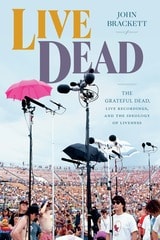
Live Dead
The Grateful Dead, Live Recordings, and the Ideology of LivenessJohn Brackett
Duke University Press, 2023
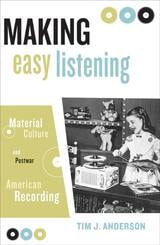
Making Easy Listening
Material Culture and Postwar American RecordingTim Anderson
University of Minnesota Press, 2006
Making Easy Listening presents a social and cultural history of the contentious, diverse, and experimental culture of musical production and enjoyment that aims to understand how recording technologies fit into and influence musicians’, as well as listeners’, lives. With attention to the details of what it means to play a particular record in a distinct cultural context, Anderson connects neglected genres of the musical canon—classical and easy listening music, Broadway musicals, and sound effects records—with the development of sound aesthetics and technical music practices that leave an indelible imprint on individuals. Tracing the countless impacts that this period of innovation exacted on the mass media, Anderson reveals how an examination of this historical era—and recorded music as an object—furthers a deeper understanding of the present-day American music industry.
Tim J. Anderson is assistant professor of communication at Denison University.
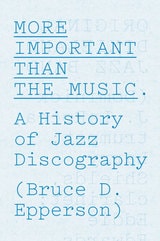
More Important Than the Music
A History of Jazz DiscographyBruce D. Epperson
University of Chicago Press, 2013
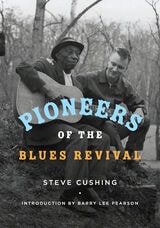
Pioneers of the Blues Revival
Steve Cushing
University of Illinois Press, 2014
Opinionated and territorial, the American, British, and French interviewees provide fascinating first-hand accounts of the era and movement. Experts including Paul Oliver, Gayle Dean Wardlow, Sam Charters, Ray Flerledge, Paul Oliver, Richard K. Spottswood, and Pete Whelan chronicle in their own words their obsessive early efforts at cataloging blues recordings and retrace lifetimes spent loving, finding, collecting, reissuing, and producing records. They and nearly a dozen others recount relationships with blues musicians, including the discoveries of prewar bluesmen Mississippi John Hurt, Son House, Skip James, and Bukka White, and the reintroduction of these musicians and many others to new generations of listeners. The accounts describe fieldwork in the South, renew lively debates, and tell of rehearsals in Muddy Waters's basement and randomly finding Lightning Hopkins's guitar in a pawn shop.
Blues scholar Barry Lee Pearson provides a critical and historical framework for the interviews in an introduction.
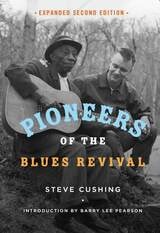
Pioneers of the Blues Revival
Steve Cushing
University of Illinois Press, 2018
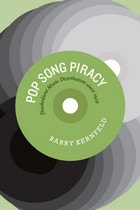
Pop Song Piracy
Disobedient Music Distribution since 1929Barry Kernfeld
University of Chicago Press, 2011
Preserving Our Heritage
Perspectives from Antiquity to the Digital AgeMichele Valerie Cloonan
American Library Association, 2015
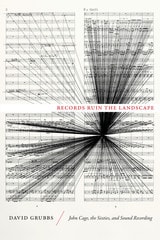
Records Ruin the Landscape
John Cage, the Sixties, and Sound RecordingDavid Grubbs
Duke University Press, 2014
In their day, few of these works circulated in recorded form. By contrast, contemporary listeners can encounter this music not only through a flood of LP and CD releases of archival recordings but also in even greater volume through Internet file sharing and online resources. Present-day listeners are coming to know that era's experimental music through the recorded artifacts of composers and musicians who largely disavowed recordings. In Records Ruin the Landscape, Grubbs surveys a musical landscape marked by altered listening practices.
Sonic Persuasion
Reading Sound in the Recorded AgeGreg Goodale
University of Illinois Press, 2011
The Audible Past
Cultural Origins of Sound ReproductionJonathan Sterne
Duke University Press, 2003
Blending cultural studies and the history of communication technology, Sterne follows modern sound technologies back through a historical labyrinth. Along the way, he encounters capitalists and inventors, musicians and philosophers, embalmers and grave robbers, doctors and patients, deaf children and their teachers, professionals and hobbyists, folklorists and tribal singers. The Audible Past tracks the connections between the history of sound and the defining features of modernity: from developments in medicine, physics, and philosophy to the tumultuous shifts of industrial capitalism, colonialism, urbanization, modern technology, and the rise of a new middle class.
A provocative history of sound, The Audible Past challenges theoretical commonplaces such as the philosophical privilege of the speaking subject, the visual bias in theories of modernity, and static descriptions of nature. It will interest those in cultural studies, media and communication studies, the new musicology, and the history of technology.
The Guide to Classic Recorded Jazz
Samuel F., Jr. Piazza
University of Iowa Press, 1995
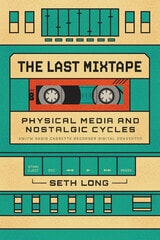
The Last Mixtape
Physical Media and Nostalgic CyclesSeth Long
University of Chicago Press, 2025
Obsolescence makes the heart grow fonder, at least in the case of the mixtape. Not all technologies are so lucky. Some (say, wax cylinders) fade almost completely from cultural memory. A lucky few pass into metaphor: we still “hang up” our smartphones, “cut” film, and “patch” computer code. As digital streaming completes the obsolescence of physical media, what will become of the humble cassette?
In The Last Mixtape, Seth Long offers a microhistory of music curation, anchored by the cassette, from which he explores the meanings of obsolescence, ownership, nostalgia, and the speed of cultural change. A moving meditation on our relationship with music, memory, and curation in the digital century, Long ultimately calls for a return to the media ecology represented by the mixtape: a world in which media is cheap and abundant but tactile and meaningfully engaged.
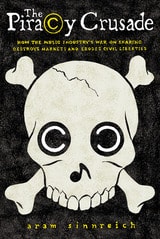
The Piracy Crusade
How the Music Industry's War on Sharing Destroys Markets and Erodes Civil LibertiesAram Sinnreich
University of Massachusetts Press, 2013
In the decade and a half since Napster first emerged, forever changing the face of digital culture, the claim that “internet pirates killed the music industry” has become so ubiquitous that it is treated as common knowledge. Piracy is a scourge on legitimate businesses and hard-working artists, we are told, a “cybercrime” similar to identity fraud or even terrorism.
In The Piracy Crusade, Aram Sinnreich critiques the notion of “piracy” as a myth perpetuated by today's cultural cartels—the handful of companies that dominate the film, software, and especially music industries. As digital networks have permeated our social environment, they have offered vast numbers of people the opportunity to experiment with innovative cultural and entrepreneurial ideas predicated on the belief that information should be shared widely. This has left the media cartels, whose power has historically resided in their ability to restrict the flow of cultural information, with difficult choices: adapt to this new environment, fight the changes tooth and nail, or accept obsolescence. Their decision to fight has resulted in ever stronger copyright laws and the aggressive pursuit of accused infringers.
Yet the most dangerous legacy of this “piracy crusade” is not the damage inflicted on promising start-ups or on well-intentioned civilians caught in the crosshairs of file-sharing litigation. Far more troubling, Sinnreich argues, are the broader implications of copyright laws and global treaties that sacrifice free speech and privacy in the name of combating the phantom of piracy—policies that threaten to undermine the foundations of democratic society.
The Voice in the Headphones
David Grubbs
Duke University Press, 2020
The Voice in the Headphones is an experiment in music writing in the form of a long poem centered on the culture of the recording studio. It describes in intricate, prismatic detail one marathon day in a recording studio during which an unnamed musician struggles to complete a film soundtrack. The book extends the form of Grubbs's previous volume Now that the audience is assembled, sharing its goal of musicalizing the language of writing about music. Mulling the insight that “studio is the absence of pushback”—now that no audience is assembled—The Voice in the Headphones details one musician's strategies for applying the requisite pressure to the proceedings, for making it count. The Voice in the Headphones is both a literary work and a meditation on sound recording, delivered at a moment in which the commercial recording studio shades into oblivion. It draws upon Grubbs's own history of several decades as a recording artist, and its location could be described as every studio in which he has set foot.
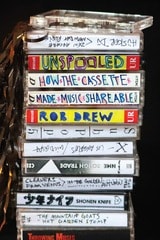
Unspooled
How the Cassette Made Music ShareableRob Drew
Duke University Press, 2024
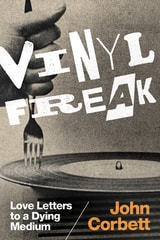
Vinyl Freak
Love Letters to a Dying MediumJohn Corbett
Duke University Press, 2017

Vinyl Theory
Jeffrey R. Di Leo
Lever Press, 2020