Results by title
2 books match the query 'South East Asia'
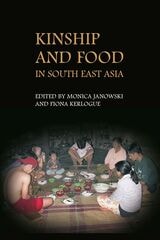
Kinship and Food in South East Asia
Edited by Monica Janowski and Fiona G. Kerlogue
National University of Singapore Press, 2007
Food has an important role in establishing and structuring social and kin relations in Southeast Asian societies. For this reason, there is growing interest within anthropology in understanding how the production, processing and consumption of food is one important basis for the construction of ties of relatedness, so-called ‘kin’ ties. These are often based at least partly on ‘shared substance’. In this respect, a book on Southeast Asia is especially interesting in understanding kinship since the region is generally taken to include a number of distinct types of kin structure. This book offers eleven chapters covering a range of societies in different parts of Southeast Asia. It examines ways in which food is used to think about and bring about ties between generations and within generations – including between the living and the dead – in particular through the feeding relationship. Significant parallels emerge between the societies covered: in the role of rice especially; in gender complementarity in relation to different foods; in the belief that food and drink carry fertility, ‘blessings’ or ‘life force’ from ascending to descending generations; and in the use of the feeding relationship to generate hierarchy. These parallels suggest that there may be underlying similarities in cosmology between these widely varying societies. A significant contribution to the ongoing debate on the nature of kinship in Southeast Asia, this volume will be useful as a textbook for courses within anthropology, including on the anthropology of food and environmental anthropology.
[more]
Prince Charoon et al
South East AsiaAndrew Dalby
Haus Publishing, 2010
Southeast Asia needs to be dealt with as a whole, because, although the one national delegation from the region (Siam) took a minor part, nationalist movements in several Southeast Asian countries reached an early climax - significant though inconclusive - in the years 1919-1920. The planned Peace Conference, Wilson's Fourteen Points, and the victory of Communism in Russia, all contributed to this activity, and in spite of national differences it needs to be seen as a whole. The focus of the book will be on developments around 1919; thus it will bring out for the first time the unexpected significance for South-east Asia of the 1919 milestone. It will also have a biographical bias - taking a special interest in the personalities of major figures in this important period, in order to show the influences and the patterns of thought that underlie their activities at the time of the Peace Conference. Following a brief introduction making the link between world events in 1919 and South-east Asia, the book sets the scene in the region. Succeeding chapters deal with the five countries - Siam, Vietnam, Burma, Indonesia, Philippines - in which the years 1919-21 were of special significance, as well as the impact of the peace conferences in relationships with their neighbours, the growth of international Communism and global politics in later years.
[more]