Results by title
4 books match the query 'Southeast Asian Languages'
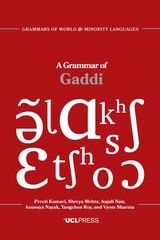
A Grammar of Gaddi
Preeti Kumari, Shreya Mehta, Anjali Nair, Anusuya Nayak, Yangchen Roy, and Vyom Sharma
University College London, 2026
The first comprehensive descriptive grammar of the understudied Indo-Aryan Pahari language, Gaddi.
A Grammar of Gaddi is the first long-form descriptive grammar of the Pahari Indo-Aryan language, Gaddi (also called Bharmauri), spoken by the Gaddi people, a traditionally pastoral community in India. The volume presents a meticulous linguistic analysis of Gaddi, showcasing its phonemic inventory, phonotactics, syllable structure, and its phonological and morpho-phonological processes.
Filipino Tapestry Audio Supplement
To accompany Filipino Tapestry, Tagalog Language through CultureRhodalyne Gallo-Crail and Michael Hawkins
University of Wisconsin Press, 2012
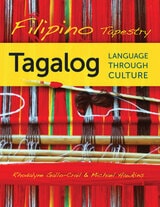
Filipino Tapestry
Tagalog Language through CultureRhodalyne Gallo-Crail
University of Wisconsin Press, 2012
An official language of the Philippines, Filipino is based on Tagalog, with elements of Spanish, English, and Chinese mixed in. The result is a rich, expressive language spoken in the Philippines and throughout the far-reaching Filipino diaspora.
Filipino Tapestry offers an innovative approach to learning language by emphasizing the critical intersection of language and culture. It provides activities and exercises that immerse beginning and intermediate students of Filipino in a variety of authentic situations to simulate an in-country experience. Starting with chapters on such topics as family, friends, and home, it then expands the student’s world in chapters prompting conversation about food, shopping, parties, and pastimes. Its later chapters push learners to discuss city and country life, cultural traditions, religion, history, and politics.
Features include:
• background chapters on phonology, sentence construction, and common expressions
• photos and cultural notes about chapter themes
• grammar, reading, listening, and speaking exercises
• glossaries of words and additional expressions
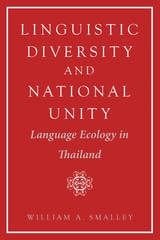
Linguistic Diversity and National Unity
Language Ecology in ThailandWilliam A. Smalley
University of Chicago Press, 1994
Smalley contends that because the people of Thailand perceive their social hierarchy as the normal order, Standard Thai, spoken by members of the higher levels of society, prevails as the uncontested national language. By examining the hierarchy of Thailand's diverse languages and dialects in light of Thai history, education, culture, and religion, Smalley shows how Thailand has been able to keep its many ethnic groups at peace.
Linguistic Diversity and National Unity explores the intricate relationship between language and power and the ways in which social and linguistic rank can be used to perpetuate order.