Results by title

4 books match the query 'Southeastern Europe'

cover of From the Midwife's Bag to the Patient's File: Public Health in Eastern and Southeastern Europe

From the Midwife's Bag to the Patient's File

Public Health in Eastern and Southeastern Europe

Sara Bernasconi

Central European University Press, 2018

This volume offers an analysis of the intertwined relationship between public health and the biopolitical dimensions of state- and nation building in Central, Eastern and Southeastern Europe. It challenges the idea of diverging paths towards modernity of Europe’s western and eastern countries by not only identifying ideas, discourses and practices of “solving” public health issues that were shared among political regimes in the region; it also uncovers the ways in which, since the late nineteenth century, the biopolitical organization of the state both originated from and shaped an emerging common European framework. The broad range of local case studies stretches from Bosnia and Herzegovina, Czechoslovakia, the GDR, Greece and Hungary, to Poland, Serbia, the Soviet Union, and Yugoslavia. Taking a time span that begins in the late nineteenth century and ends in the post-socialist era, the book makes an original contribution to scholarship examining the relationship between public health, medicine, and state- and nation building in Europe’s long twentieth century. Close readings and dense descriptions of local discourses and practices of “public” health help to reflect on the transnational and global entanglements in the sphere of public health. In doing so, this volume facilitates comparisons on the regional, European, and global level.
[more]
cover of Health, Hygiene and Eugenics in Southeastern Europe to 1945

Health, Hygiene and Eugenics in Southeastern Europe to 1945

Christian Promitzer

Central European University Press, 2011

This volume is a collection of chapters that deal with issues of health, hygiene and eugenics in Southeastern Europe to 1945, specifically, in Bosnia-Herzegovina, Bulgaria, Croatia, Greece and Romania. Its major concern is to examine the transfer of medical ideas to society via local, national and international agencies and to show in how far developments in public health, preventive medicine, social hygiene, welfare, gender relations and eugenics followed a regional pattern. This volume provides insights into a region that has to date been marginal to scholarship of the social history of medicine.
[more]
cover of Imagined Empires: Tracing Imperial Nationalism in Eastern and Southeastern Europe

Imagined Empires

Tracing Imperial Nationalism in Eastern and Southeastern Europe

Dimitris Stamatopoulos

Central European University Press, 2021

The Balkans offer classic examples of how empires imagine they can transform themselves into national states (Ottomanism) and how nation-states project themselves into future empires (as with the Greek “Great Idea” and the Serbian “Načertaniye”). By examining the interaction between these two aspirations this volume sheds light on the ideological prerequisites for the emergence of Balkan nationalisms.

With a balance between historical and literary contributions, the focus is on the ideological hybridity of the new national identities and on the effects of “imperial nationalisms” on the emerging Balkan nationalisms. The authors of the twelve essays reveal the relation between empire and nation-state, proceeding from the observation that many of the new nation-states acquired some imperial features and behaved as empires. This original and stimulating approach reveals the imperialistic nature of so-called ethnic or cultural nationalism.
[more]
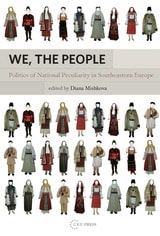
cover of We, the People: Politics of National Peculiarity in Southeastern Europe

We, the People

Politics of National Peculiarity in Southeastern Europe

Diana Mishkova

Central European University Press, 2009

Analyzes the processes of nation-building in nineteenth and early-twentieth-century south-eastern Europe. A product of transnational comparative teamwork, this collection represents a coordinated interpretation based on ten varied academic cultures and traditions.
[more]