Results by title
6 books match the query 'Space in literature'

An Errant Eye
Poetry and Topography in Early Modern FranceTom Conley
University of Minnesota Press, 2010
This tension, Conley demonstrates, cuts through literature and graphic matter of various shapes and forms-hybrid genres that include the comic novel, the emblem-book, the eclogue, sonnets, and the personal essay. An Errant Eye differs from historical treatments of spatial invention through Conley's argument that the topographic sensibility is one in which the ocular faculty, vital to the description of locale, is endowed with tact and touch.
Detailed close readings of Apian, Rabelais, Montaigne, and others empower the reader with a lively sense of the topographical impulse, deriving from Conley's own "errant eye," which is singularly discerning in attentiveness to the ambiguities of charted territory, the contours of woodcut images, and the complex combinations of word and figure in French Renaissance poetry, emblem, and politics.
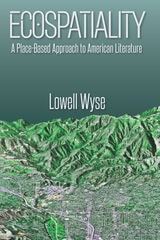
Ecospatiality
A Place-Based Approach to American LiteratureLowell Wyse
University of Iowa Press, 2021
Ecospatiality explores modern and contemporary American prose literature through the lens of place, showing how authors like William Least Heat-Moon, Willa Cather, Richard Wright, and Leslie Marmon Silko represent and reimagine real places in the world and the human-environment relationships therein. Building on the work of scholars in geography, sociology, ecocriticism, and geocriticism, this book articulates the theory of ecospatiality: an understanding of place as simultaneously spatial, ecological, and historical.
In our current historical moment, which is characterized by ongoing ecological collapse and a not-unrelated increase in social disorder, few issues are more urgent than the human relationship with our environments. Whether we characterize this new epoch as the climate change era or the Anthropocene, we can no longer ignore the fact that the places we live are rapidly changing in response to economic and environmental pressures. Rather than thinking of place as a neutral site for social interaction, we should recognize how it underpins and intertwines with human experience.
Fortunately, literature can help us think through how place operates. Lowell Wyse shows that texts can be understood as works of literary cartography. Focusing on works of nonfiction and fiction whose primary settings are on the North American continent, Ecospatiality demonstrates how these narratives rely on realistic literary geography to invoke, and sometimes retell, important aspects of environmental history within particular communities and bioregions.
Flight Lines
A Poetics of Black SpaceElleza Kelley
Duke University Press, 2026
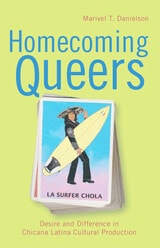
Homecoming Queers
Desire and Difference in Chicana Latina Cultural ProductionDanielson, Marivel T
Rutgers University Press, 2009
Spanning multiple genres and forms, and including scholarly theory alongside performances, films, narratives, and testimonials, Homecoming Queers leads readers along a crucial path toward understanding and overcoming the silences that previously existed across these fields.
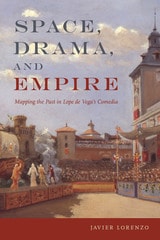
Space, Drama, and Empire
Mapping the Past in Lope de Vega's ComediaJavier Lorenzo
Bucknell University Press, 2023
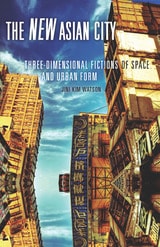
The New Asian City
Three-Dimensional Fictions of Space and Urban FormJini Kim Watson
University of Minnesota Press, 2011
Under Jini Kim Watson’s scrutiny, the Asian Tiger metropolises of Seoul, Taipei, and Singapore reveal a surprising residue of the colonial environment. Drawing on a wide array of literary, filmic, and political works, and juxtaposing close readings of the built environment, Watson demonstrates how processes of migration and construction in the hypergrowth urbanscapes of the Pacific Rim crystallize the psychic and political dramas of their colonized past and globalized present.
Examining how newly constructed spaces—including expressways, high-rises, factory zones, department stores, and government buildings—become figured within fictional and political texts uncovers how massive transformations of citizenries and cities were rationalized, perceived, and fictionalized. Watson shows how literature, film, and poetry have described and challenged contemporary Asian metropolises, especially around the formation of gendered and laboring subjects in these new spaces. She suggests that by embracing the postwar growth-at-any-cost imperative, they have buttressed the nationalist enterprise along neocolonial lines.
The New Asian City provides an innovative approach to how we might better understand the gleaming metropolises of the Pacific Rim. In doing so, it demonstrates how reading cultural production in conjunction with built environments can enrich our knowledge of the lived consequences of rapid economic and urban development.