Results by title
19 books match the query 'Spaces'

Africanfuturism
African Imaginings of Other Times, Spaces, and WorldsKimberly Cleveland
Ohio University Press, 2024

Black Queer Freedom
Spaces of Injury and Paths of DesireGerShun Avilez
University of Illinois Press, 2020

British Atlantic, American Frontier
Spaces of Power in Early Modern British AmericaStephen J. Hornsby
University Press of New England, 2004
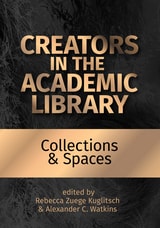
Creators in the Academic Library
Collections and SpacesRebecca Zuege Kuglitsch
Assoc of College & Research Libraries, 2023
In four parts, Creators in the Academic Library: Collections and Spaces explores how academic libraries can build collections, spaces, and communities that serve creators.
- Tailoring Collections for Creators
- Making in the Academic Library
- Creating Experiences in the Library
- Cultivating Creator Communities

Gender in medieval places, spaces and thresholds
Edited by Victoria Blud, Diane Heath, and Einat Klafter
University of London Press, 2019
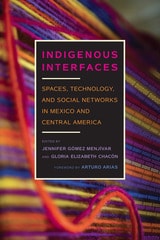
Indigenous Interfaces
Spaces, Technology, and Social Networks in Mexico and Central AmericaEdited by Jennifer Gómez Menjívar and Gloria Elizabeth Chacón; Foreword by Arturo Arias
University of Arizona Press, 2019
Indigenous Interfaces provides the first thorough examination of indigeneity at the interface of cyberspace. Correspondingly, it examines the impact of new media on the struggles for self-determination that Indigenous peoples undergo in Mexico and Central America. The volume’s contributors highlight the fresh approaches that Mesoamerica’s Indigenous peoples have given to new media—from YouTubing Maya rock music to hashtagging in Zapotec. Together, they argue that these cyberspatial activities both maintain tradition and ensure its continuity. Without considering the implications of new technologies, Indigenous Interfaces argues, twenty-first-century indigeneity in Mexico and Central America cannot be successfully documented, evaluated, and comprehended.
Indigenous Interfaces rejects the myth that indigeneity and information technology are incompatible through its compelling analysis of the relationships between Indigenous peoples and new media. The volume illustrates how Indigenous peoples are selectively and strategically choosing to interface with cybertechnology, highlights Indigenous interpretations of new media, and brings to center Indigenous communities who are resetting modes of communication and redirecting the flow of information. It convincingly argues that interfacing with traditional technologies simultaneously with new media gives Indigenous peoples an edge on the claim to autonomous and sovereign ways of being Indigenous in the twenty-first century.
Contributors
Arturo Arias
Debra A. Castillo
Gloria Elizabeth Chacón
Adam W. Coon
Emiliana Cruz
Tajëëw Díaz Robles
Mauricio Espinoza
Alicia Ivonne Estrada
Jennifer Gómez Menjívar
Sue P. Haglund
Brook Danielle Lillehaugen
Paul Joseph López Oro
Rita M. Palacios
Gabriela Spears-Rico
Paul Worley

My Dark Room
Spaces of the Inner Self in Eighteenth-Century EnglandJulie Park
University of Chicago Press, 2023
In what kinds of spaces do we become most aware of the thoughts in our own heads? In My Dark Room, Julie Park explores places of solitude and enclosure that gave eighteenth-century subjects closer access to their inner worlds: grottos, writing closets, landscape follies, and the camera obscura, that beguiling “dark room” inside which the outside world in all its motion and color is projected. The camera obscura and its dreamlike projections within it served as a paradigm for the everyday spaces, whether in built environments or in imaginative writing, that generated the fleeting states of interiority eighteenth-century subjects were compelled to experience and inhabit.
My Dark Room illuminates the spatial and physical dimensions of inner life in the long eighteenth century by synthesizing material analyses of diverse media, from optical devices and landscape architecture to women’s intimate dress, with close readings of literary texts not traditionally considered together, among them Andrew Marvell’s country house poem Upon Appleton House, Margaret Cavendish’s experimental epistolary work Sociable Letters, Alexander Pope’s heroic verse epistle Eloisa to Abelard, and Samuel Richardson’s novel Pamela. Park also analyzes letters and diaries, architectural plans, prints, drawings, paintings, and more, drawing our attention to the lively interactions between spaces and psyches in private environments. Park’s innovative method of “spatial formalism” reveals how physical settings enable psychic interiors to achieve vitality in lives both real and imagined.

Of Spaces and Ideas
The Novels of Jim Crace and Simon MawerPetr Chalupský and Tereza Topolovská
Karolinum Press, 2024
Of Spaces and Ideas provides a deeper insight into the work of two contemporary British novelists, Jim Crace and Simon Mawer, with a particular emphasis on spatial sensibility as one of the defining elements of their poetics. Drawing on a range of literary-theoretical approaches to space, the study analyzes selected novels by the two writers to demonstrate the ways in which they render space and place and, above all, the ways in which their spatial representations allow them to express the key ideas behind their stories, namely those of identity, history, and the relationship between an individual and the environment in which they live.

Pissarro, Neo-Impressionism, and the Spaces of the Avant-Garde
Martha Ward
University of Chicago Press, 1996
Paying particular attention to the participation of Camille Pissarro, the only older artist to join the otherwise youthful movement, Ward sets the neo-impressionists' individual achievements in the context of a generational struggle to redefine the purposes of painting. She describes the conditions of display, distribution, and interpretation that the neo-impressionists challenged, and explains how these artists sought to circulate their own work outside of the prevailing system. Paintings, Ward argues, often anticipate and respond to their own conditions of display and use, and in the case of the neo-impressionists, the artists' relations to market forces and exhibition spaces had a decisive impact on their art.
Ward details the changes in art dealing, and chronicles how these and new freedoms for the press made artistic vanguardism possible while at the same time affecting the content of painting. She also provides a nuanced account of the neo-impressionists' engagements with anarchism, and traces the gradual undermining of any strong correlation between artistic allegiance and political direction in the art world of the 1890s.
Throughout, there are sensitive discussions of such artists as Georges Seurat and Paul Signac, as well as Pissarro. Yet the touchstone of the book is Pissarro's intricate relationship to the various factions of the Paris art world.
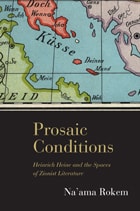
Prosaic Conditions
Heinrich Heine and the Spaces of Zionist LiteratureNa'ama Rokem
Northwestern University Press, 2013
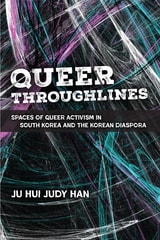
Queer Throughlines
Spaces of Queer Activism in South Korea and the Korean DiasporaJu Hui Judy Han
University of Michigan Press, 2025
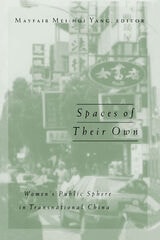
Spaces Of Their Own
Women’s Public Sphere in Transnational ChinaMayfair Mei-Hui Yang
University of Minnesota Press, 1999
An exploration of women’s public expression--in China and beyond.
How are the public and political lives of Chinese women constrained by states and economies? And how have pockets of women’s consciousness come to be produced in and disseminated from this traditionally masculine milieu? The essays in this volume examine the possibilities for a public sphere for Chinese women, one that would emerge from concrete historical situations and local contexts and also cut across the political boundaries separating the Mainland, Taiwan, Hong Kong, and the West.
The challenges of this project are taken up in essays on the legacy of state feminism on the Mainland as contrasted with a grassroots women’s movement in Taiwan; on the role of the capitalist consumer economy in the emerging lesbian movement in Taiwan; and on the increased trafficking of women as brides, prostitutes, and mistresses between the Mainland and wealthy male patrons in Taiwan and Hong Kong. The writers’ examples of masculine domination in the media include the reformulation of Chinese women in Fifth Generation films for a transnational Western male film audience and the portrayal of Mainland women in Taiwanese and Hong Kong media. The contributors also consider male nationalism as it is revealed through both international sports coverage on television and in a Chinese television drama. Other works examine a women’s museum, a telephone hotline in Beijing, the films of Hong Kong filmmaker Ann Hui, the transnational contacts of a Taiwanese feminist organization, the diaspora of Mainland women writers, and the differences between Chinese and Western feminist themes.Contributors: Susan Brownell, U of Missouri; Virginia Cornue; Dai Jinhua, Beijing U; Kathleen Erwin; Elaine Yee Lin Ho, Hong Kong U; Lee Yuan-chen, Tamkang U; Li Xiaojiang, Zhengzhou U and Henan U; Lisa Rofel, U of California, Santa Cruz; Tze-lan Deborah Sang, U of Oregon; Shu-mei Shih, UCLA; Zhang Zhen. ISBN 0-8166-3145-X Cloth $49.95xxISBN 0-8166-3146-8 Paper $19.95x336 pages 9 black-and-white photos 5 7/8 x 9 FebruaryPublic Worlds Series, volume 4Translation inquiries: University of Minnesota Press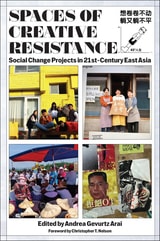
Spaces of Creative Resistance
Social Change Projects in Twenty-First-Century East AsiaAndrea Gevurtz Arai
Rutgers University Press, 2025
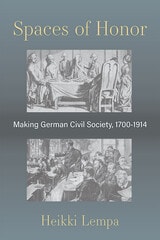
Spaces of Honor
Making German Civil Society, 1700-1914Heikki Lempa
University of Michigan Press, 2021
The common understanding is that honor belongs to a bygone era, whereas civil society belongs to the future and modern society. Heikki Lempa argues that honor was not gone or even in decline between 1700 and 1914, and that civil society was not new but had long roots that stretched into the Middle Ages. In fact, what is peculiar for this era in Germany were the deep connections between practices of honor and civil society. This study focuses on collective actions of honor and finds them, in a series of case studies, at such communal spaces as schools, theaters, lunch and dinner tables, spas, workers’ strikes, and demonstrations. It is in these collective actions that we see civil society in making.
The Spaces of Honor sees civil society not primarily as an idea or an intellectual project but as a set of practices shaped in physical spaces. Around 1700, the declining power of religious authorities allowed German intellectuals to redefine civil society, starting with a new language of honor. Then, in the middle of the eighteenth century, an increasing number of voluntary associations and public spaces turned it into reality. Here, honor provided cohesion. In the nineteenth century, urbanization and industrialization ushered in powerful forces of atomization that civil society attempted to remedy. The remedy came from social and physical spaces that generated a culture of honor and emotional belonging. We find them in voluntary associations, spas, revived guilds, and labor unions. By the end of the nineteenth century, honor was deeply embedded in German civil society.
Spaces, Worlds, and Grammar
Edited by Gilles Fauconnier and Eve Sweetser
University of Chicago Press, 1996
These twelve original papers extend the mental-spaces framework and demonstrate its utility in solving deep problems in linguistics and discourse theory. Investigating the ties between mental constructs, they analyze a wide range of phenomena, including analogical counterfactuals; the metaphor system for conceptualizing the self; abstract change expressions in Japanese; mood in Spanish; deictic expressions; copular sentences in Japanese; conditional constructions; and reference in American Sign Language.
The ground-breaking research presented in this volume will be of interest to linguists and cognitive scientists.
The contributors are Claudia Brugman, Gilles Fauconnier, George Lakoff, Yo Matsumoto, Errapel Mejias-Bikandi, Laura A. Michaelis, Gisela Redeker, Jo Rubba, Shigeru Sakahara, Jose Sanders, Eve Sweetser, and Karen van Hoek.
Technical Territories
Data, Subjects, and Spaces in Infrastructural AsiaLuke Munn
University of Michigan Press, 2023
Territory is shifting. No longer defined by the dotted line of the border or the national footprint of soil, today’s territories are enacted through data infrastructures. From subsea cables to server halls, these infrastructures underpin new forms of governance, shaping subjects and their everyday lives. Technical Territories moves from masked protestors in Hong Kong to asylum-seekers in Christmas Island and sand miners in Singapore, exploring how these territories are both political and visceral, altering the experience of their inhabitants.
Infrastructures have now become geopolitical, strategic investments that advance national visions, extend influence, and trigger trade wars. Yet at the same time, these technologies also challenge sovereignty as a bounded container, enacting a more distributed and decoupled form of governance. Such “technical territories” construct new zones where subjects are assembled, rights are undermined, labor is coordinated, and capital is extracted. The stable line of the border is replaced by more fluid configurations of power. Luke Munn stages an interdisciplinary intervention over six chapters, drawing upon a wide range of literature from technical documents and activist accounts, and bringing insights from media studies, migration studies, political theory, and cultural and social studies to bear on these new sociotechnical conditions.

The New Politics of Visibility
Spaces, Actors, Practices and Technologies in the VisibleEdited by Andrea Mubi Brighenti
Intellect Books, 2022
Not only does visibility matter to politics, but it is an increasingly intrinsic constituent element and a crucial asset of it. Accordingly, the challenge to social science is that of understanding how the new institutional, urban, and technological settings are reshaping the organization of the visible.
Ranging from urban public space to the new media and social media platforms, a team of distinguished scholars and researchers here addresses a vast terrain of inquiry by joining together original theoretical elaboration with careful empirical studies. The result is a thoroughly interdisciplinary endeavor, conducted with passion and insight. The New Politics of Visibility comprises nine original interdisciplinary chapters that analyze topical areas in the newly emerging modes of governance and society. The transformations of urban space and the working of new media form a core concern recurring through many of the essays but is by no means the sole topic, as other essays address the politics of visibility in crucial cultural spheres, including gender relations and professional life.
The Remittance Landscape
Spaces of Migration in Rural Mexico and Urban USASarah Lynn Lopez
University of Chicago Press, 2014
Lopez not only identifies a clear correspondence between the flow of remittances and the recent building boom in rural Mexico but also proposes that this construction boom itself motivates migration and changes social and cultural life for migrants and their families. At the same time, migrants are changing the landscapes of cities in the United States: for example, Chicago and Los Angeles are home to buildings explicitly created as headquarters for Mexican workers from several Mexican states such as Jalisco, Michoacán, and Zacatecas. Through careful ethnographic and architectural analysis, and fieldwork on both sides of the border, Lopez brings migrant hometowns to life and positions them within the larger debates about immigration.
The Spaces of Violence
James R. Giles
University of Alabama Press, 2006
Exploring the landscapes, cultures, and psychological spaces where violence takes root in contemporary American fiction.
The Spaces of Violence is an insightful work of literary criticism in which James R. Giles investigates the complex relationship between violence and space in contemporary American fiction. Through close readings of novels by influential writers including Russell Banks, Cormac McCarthy, Lewis Nordan, Dorothy Allison, Don DeLillo, Denis Johnson, Sherman Alexie, Robert Stone, and Bret Easton Ellis, Giles demonstrates how violence is shaped by the physical, social, and psychological environments in which it occurs.
Drawing on spatial and cultural theory, Giles argues that these novels inhabit a distinctive "fourthspace," a realm existing at the margins of mainstream society where violence permeates everyday life and destabilizes traditional boundaries of identity, community, and morality. Whether set in rural landscapes, urban centers, suburban communities, football stadiums, or transient spaces such as highways and bus stations, the works examined reveal how environments become intertwined with systems of power, alienation, trauma, and destruction.
The book concludes by extending its analysis to representations of violence within family structures, highlighting the far-reaching effects of social and cultural fragmentation. Offering a sophisticated framework for understanding violence in literature, The Spaces of Violence is an important contribution to contemporary literary and cultural studies.