Results by title
93 books match the query 'Special Interest' and 9 start with a
A Hundred Acres of America
The Geography of Jewish American Literary HistoryHoberman, Michael
Rutgers University Press, 2019
Jewish writers have long had a sense of place in the United States, and interpretations of American geography have appeared in Jewish American literature from the colonial era forward. But troublingly, scholarship on Jewish American literary history often limits itself to an immigrant model, situating the Jewish American literary canon firmly and inescapably among the immigrant authors and early environments of the early twentieth century. In A Hundred Acres of America, Michael Hoberman combines literary history and geography to restore Jewish American writers to their roles as critical members of the American literary landscape from the 1850s to the present, and to argue that Jewish history, American literary history, and the inhabitation of American geography are, and always have been, contiguous entities.
A Paddler's Guide to the Delaware River
Kayaking, Canoeing, Rafting, TubingLetcher, Gary
Rutgers University Press, 2012
When Henry Hudson explored the Delaware River in 1609, he dubbed it “one of the finest, best, and pleasantest rivers in the world.” Today, those same qualities make the Delaware one of the most popular rivers for recreational use in the United States. Although in places a near-wilderness, the Delaware is easily accessible to millions of residents. On any summer day there may be thousands of people rushing down its exciting rapids or lazing through its serene eddies.
A Paddler’s Guide to the Delaware River is an indispensable resource for anyone who wants to experience the Delaware River in a kayak, canoe, raft, or tube—or, for that matter, an automobile or an armchair. Reading the book is like travelling down the river with an experienced guide. It charts the non-tidal Delaware 200 miles from Hancock, New York, to Trenton, New Jersey, describing access points, rapids, natural features, villages, historical sites, campgrounds, outfitters, and restaurants. The Delaware comes alive as the author introduces some of the people, places, events, and controversies that have marked the river from earliest times to the present day.
Completely revised, the third edition offers:
- An overview of the river including watershed, history, place names, paddlecraft, safety, and fishing.
- The River Guide: ten sections that can each be paddled in one day (about 20 miles), with a mile-by-mile account of rapids, access, natural features, historic sites, and other features.
- All new maps, with names for virtually every rapid, eddy, and other river feature, plus detailed diagrams for routes through even the most severe rapids.
- Features in the River Guide highlight the people, events, natural history, and communities that define the river experience, such as Tom Quick, the infamous “avenger of the Delaware”; the mysterious migration of eels, the battle over Tocks Island Dam; and many others.
- Appendices of Important Contacts, Outfitters and Campgrounds, River Trip Checklists, and more.
Whether you are a novice out for an afternoon float, a seasoned adventurer on an overnight expedition, or a resident fascinated by the lore of the Delaware Valley, this book is an invaluable guide.
A Photographer’s Guide to Ohio
Ian Adams
Ohio University Press, 2011
A Photographer’s Guide to Ohio, Volume 2
Volume 2Ian Adams
Ohio University Press, 2015
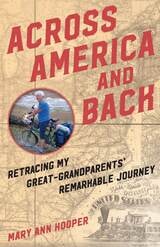
Across America and Back
Retracing My Great-Grandparents' Remarkable JourneyMary Ann Hooper
University of Nevada Press, 2018
Using the common thread of the same train trip across the American landscape, she weaves together the two stories—her great grandparents, Charles and Fannie Crosby’s leisurely Victorian tourist trip described in both their diaries—and her own trip. Mary Ann’s adventurous and determined voice fills the pages with entertaining encounters on the train, escapades on her folding bike, and her reflections on her birth country and her own life story.
During her journey, she discovers the stories of her 1950s childhood reflect a “Wild West” at odds with the West her great-grandparents record in their diaries, leading her to uncover more of the real and meatier history of the American West—going through conquest, rapid settlement, and economic development. As Mary Ann fulfills her quest to understand better why glorified myths were created to describe the Wild West of her childhood, and reflects on the pitfalls of what “progress” is doing to the environment, she is left with a much bigger question: Can we transform our way of doing things quickly enough to stop our much-loved West becoming an uninhabitable desert?
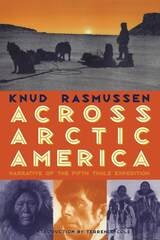
Across Arctic America
Narrative of the Fifth Thule ExpeditionKnud Rasmussen
University of Alaska Press, 1999
It was the people who most captivated the Greenland-born Rasmussen, who had become a virtual adopted son to the Eskimos of the far northern district still known by the name of the trading post he established there, Thule. His first four Thule Expeditions extended the limits of the known world in Greenland solely, but Rasmussen’s Fifth Thule Expedition demonstrated the unity of the Eskimo world from the Atlantic Ocean to the Chukchi Sea, proving the people all shared the same basic language and culture. As historian Terrence Cole notes in his introductory biography, “The intellectual and spiritual life of the people themselves were his primary interest, not simply geographical discovery, and thus even when following the tracks of previous explorers, he found uncharted territory. His basic principle was to first earn the trust of the local people by showing understanding and patience: living with the people and not apart from them, sharing their work and their food….” That was how Rasmussen approached the entire Arctic: he did not live apart from it, skimming over its surface like the fame-seeking polar explorers of the time such as Peary and Cook, but immersed himself in it—so successfully that a Canadian Inuit elder once marveled that he was “the first white man [he had ever seen] who was also an Eskimo.”
Of most significance to readers today, though, is that Rasmussen was also a noted writer. He wanted to share not just the observations he made but the feelings he experienced, and so in Across Arctic America offered what fellow arctic explorer Vilhjalmur Stefansson described as “not only a work of literary charm but also one of the deepest and soundest interpretations” of Eskimo life ever put into a book.
This volume, published in commemoration of the 75th anniversary of the completion of the Fifth Thule Expedition, includes an introduction by Classic Reprint Series editor Terrance Cole and an index.
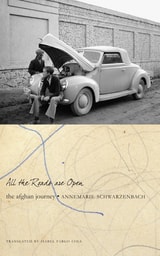
All the Roads Are Open
The Afghan JourneyAnnemarie Schwarzenbach
Seagull Books, 2011

Amusement, Inc.
Disneyland’s Corporate Apparatus and the Making of the Theme ParkRoland Betancourt
Duke University Press, 2027
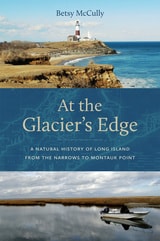
At the Glacier’s Edge
A Natural History of Long Island from the Narrows to Montauk PointBetsy McCully
Rutgers University Press, 2024
Combining science writing, environmental history, and first-hand accounts from a longtime resident, At the Glacier’s Edge offers a unique narrative natural history of Long Island. Betsy McCully tells the story of how the island was formed at the end of the last ice age, how its habitats evolved, and how humans in the last few hundred years have radically altered and degraded its landscape. Yet as she personally recounts the habitat losses and species declines she has witnessed over the past few decades, she describes the vital efforts that environmental activists are making to restore and reclaim this land—from replanting salt marshes, to preserving remaining grasslands and forests, to cleaning up the waters. At the Glacier’s Edge provides an in-depth look at the flora, fauna and geology that make Long Island so special.