Results by title
5 books match the query 'Spell'
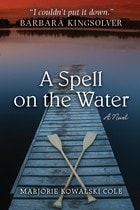
A Spell on the Water
Marjorie Kowalski Cole
University of Michigan Press, 2011
"I couldn't put it down."
---Barbara Kingsolver
In 1955, Mary and Jim Leader have the American dream: careers in medicine; a young and healthy family; and even a vacation home---a shabby resort far from bustling Chicago. But one hot afternoon changes everything. Mary, now a widow, must find a path out of her grief into a future for herself and five small children.
In Michigan to sell the resort, Mary sees seven hawks riding the storm winds over the lake. This place, she thinks, can heal them with its wild beauty, so she moves her family to the northern lakeshore.
But Mary has forgotten what it's like to live in a tiny rural community, where almost everyone has a stake in maintaining the status quo. Secrets are kept at great cost as Mary's children often struggle to raise themselves. A coming-of-age story for each member of the family, this is a novel of quiet heroism and the power of personal freedom.
Praise for Marjorie Kowalski Cole and her previous novel, Correcting the Landscape:
". . . her writing is simple, vivid and gorgeous."
---Eugene Register-Guard
". . . a remarkable new talent. Critics have lined up to praise the book."
---Tucson Citizen
"Cole's style is subtle but engrossing . . . It is quite a debut."
---Booklist
Cover illustration: ©iStockphoto.com/ImagineGolf
Preserving the Spell
Basile's "The Tale of Tales" and Its Afterlife in the Fairy-Tale TraditionArmando Maggi
University of Chicago Press, 2015
If we want to rediscover the power of fairy tales—as Armando Maggi thinks we should—we need to discover a new mythic lens, a new way of approaching and understanding, and thus re-creating, the transformative potential of these stories. In Preserving the Spell, Maggi argues that the first step is to understand the history of the various traditions of oral and written narrative that together created the fairy tales we know today. He begins his exploration with the ur-text of European fairy tales, Giambattista Basile’s The Tale of Tales, then traces its path through later Italian, French, English, and German traditions, with particular emphasis on the Grimm Brothers’ adaptations of the tales, which are included in the first-ever English translation in an appendix. Carrying his story into the twentieth century, Maggi mounts a powerful argument for freeing fairy tales from their bland contemporary forms, and reinvigorating our belief that we still can find new, powerfully transformative ways of telling these stories.
The Spell of Language
Poststructuralism and SpeculationThomas G. Pavel
University of Chicago Press, 2001
In this spirited book, Pavel shows that structuralism's flawed use of linguistic theory has rendered hollow the philosophical core of a whole generation of work in the human sciences.
Under the Spell of Orpheus
The Persistence of a Myth in Twentieth-Century ArtJudith E. Bernstock. Foreword by Peter Selz
Southern Illinois University Press, 1991
This comprehensive view of the Orpheus myth in modern art focuses on an extremely rich artistic symbol and cuts through all the clichés to explore truly significant problems of meaning. The author takes a new approach to the iconography of major modern artists by incorporating psychological and literary analysis, as well as biography.
The three parts of the book explore the ways in which artists have identified with different aspects of the often paradoxical Orpheus myth. The first deals with artists such as Paul Klee, Carl Milles, and Barbara Hepworth. In the second, Max Beckmann, Oskar Kokoschka, and Isamu Noguchi are discussed. Artists examined in the final part include Pablo Picasso, Jacques Lipchitz, Ethel Schwabacher, and Cy Twombly. The author documents her argument with more than sixty illustrations.
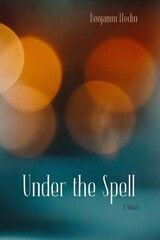
Under the Spell
A NovelBenjamin Hedin
Northwestern University Press, 2021
Unmoored and seeking connection, Sandra also meets Lee, a single mother with a drinking problem, and begins babysitting her daughter. But Sandra can’t stop herself from continuing the correspondence with Ryan, in the process uncovering more about her husband—and Ryan herself. A novel that forces us to question how much of a person, even those closest to us, remains obscure, Under the Spell reveals the astonishing, transformative power of grief. This compelling study in bereavement joins classics such as Don DeLillo’s The Body Artist and Joan Didion’s The Year of Magical Thinking.