Results by title
2 books match the query 'Spencer, Warren F.'
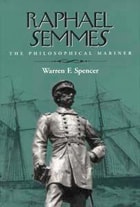
Raphael Semmes
The Philosophical MarinerWarren F. Spencer
University of Alabama Press, 1997
Naval hero for all the South, Raphael Semmes (1809-1877) sailed two famous Confederate raiders. He outfitted CSS Sumter in 1861 and captured 18 Union merchant ships in six months before the raider was blockaded at Gibraltar. Next he took command of CSS Alabama, an English-built raider, and terrorized U.S. merchant vessels on the high seas from August 1862 until the raider was sunk in battle off Cherbourg in June 1864. During that two-year period, he captured more enemy merchant ships than any other cruiser captain in maritime history. He is considered one of the greatest ship's commanders that America has produced.
In this first, full-scale biography that relies on Semmes's private papers, unpublished diaries, and correspondence, Spencer has produced a well-balanced and comprehensive account of the man, as well as the naval officer. The biographer paints a vivid portrait of Semmes—the intellectual, the family man, lawyer, romanticist, nationalist—providing a greater understanding of the man behind the heroic deeds.
Semmes was born in Maryland to a slave-holding family and entered the United States Navy in 1826. In 1849, he moved his family to Mobile, Alabama, to be near the navy base at Pensacola, Florida, and to practice law during leaves. Semmes was an astute student, not only of international and maritime law but also of weather patterns; astronomy; flora and fauna; naval, social, and cultural history; and the classics. His study of constitutional law led him to side with his adopted state in 1861, a move that set the stage for his place in history.
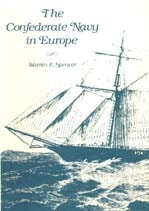
The Confederate Navy in Europe
Warren F. Spencer
University of Alabama Press, 1983
Revealing the global dimensions of the Civil War through the Confederacy's naval campaigns in Europe.
The Civil War was fought not only on American battlefields but also in the shipyards, diplomatic salons, and ports of Europe. In this sweeping history of the Confederate navy’s operations overseas, Warren Spencer traces the South’s ambitious efforts to build, equip, and deploy a naval force across the Atlantic. Drawing on extensive archival research in the United States, Great Britain, and France, the book reveals how Confederate agents, diplomats, and naval officers pursued international support while attempting to challenge Union power on the seas.
More than a military narrative, this study offers a richly detailed examination of the intersection of naval warfare, diplomacy, and international politics. The author synthesizes scattered research and original documentary evidence to provide a comprehensive account of Confederate naval activity in Europe, illuminating the roles of shipbuilders, foreign governments, intelligence networks, and naval leaders. By engaging both published sources and archival records, the book presents fresh interpretations of controversial episodes and demonstrates how events far from American shores shaped the course of the Civil War.
This volume will appeal to readers of Civil War history, naval history, diplomatic history, and international relations. Scholars, students, and history enthusiasts alike will appreciate its careful research, engaging narrative, and global perspective on a conflict too often viewed solely through a domestic lens. Anyone interested in the maritime dimensions of the Civil War or the Confederacy’s quest for recognition abroad will find this book both enlightening and compelling.