Results by title
12 books match the query 'Spirit possession'
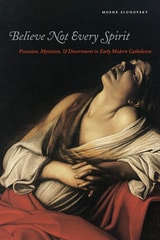
Believe Not Every Spirit
Possession, Mysticism, & Discernment in Early Modern CatholicismMoshe Sluhovsky
University of Chicago Press, 2007
From 1400 through 1700, the number of reports of demonic possessions among European women was extraordinarily high. During the same period, a new type of mysticism—popular with women—emerged that greatly affected the risk of possession and, as a result, the practice of exorcism. Many feared that in moments of rapture, women, who had surrendered their souls to divine love, were not experiencing the work of angels, but rather the ravages of demons in disguise. So how then, asks Moshe Sluhovsky, were practitioners of exorcism to distinguish demonic from divine possessions?
Drawing on unexplored accounts of mystical schools and spiritual techniques, testimonies of the possessed, and exorcism manuals, Believe Not Every Spirit examines how early modern Europeans dealt with this dilemma. The personal experiences of practitioners, Sluhovsky shows, trumped theological knowledge. Worried that this could lead to a rejection of Catholic rituals, the church reshaped the meaning and practices of exorcism, transforming this healing rite into a means of spiritual interrogation. In its efforts to distinguish between good and evil, the church developed important new explanatory frameworks for the relations between body and soul, interiority and exteriority, and the natural and supernatural.
Changing Masters
Spirit Possession and Identity Construction among the Descendants of Slaves in the SudanG.P. Makris
Northwestern University Press, 2000
Makris engages the tumbura devotees of the area of Greater Khartoum in an animated discussion of their understanding of themselves and their world. Using oral histories, songs associated with the various spirits, and accounts of ceremonies he witnessed, he shows tumbura to be a response to victimization first in slavery and later by subordination. It functions as a counterdiscourse challenging the dominant discourse of the ex-slaveholding classes and enables its practitioners to assert a separate, alternative identity. This assertion, embodied in the idiom of possession, is achieved through a continuous reworking of meaning as it is imparted by religion, descent, and historical consciousness.
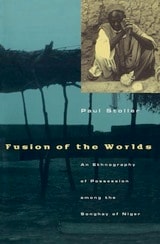
Fusion of the Worlds
An Ethnography of Possession among the Songhay of NigerPaul Stoller
University of Chicago Press, 1989
"Stoller brilliantly recreates the reality of spirit presence; hosts are what they mediate, and spirits become flesh and blood in the 'fusion' with human existence. . . . An excellent demonstration of the benefits of a new genre of ethnographic writing. It expands our understanding of the harsh world of Songhay mediums and sorcerers."—Bruce Kapferer, American Ethnologist
"A vivid story that will appeal to a wide audience. . . . The voices of individual Songhay are evident and forceful throughout the story. . . . Like a painter, [Stoller] is concerned with the rich surface of things, with depicting images, evoking sensations, and enriching perceptions. . . . He has succeeded admirably." —Michael Lambek, American Anthropologist
"Events (ceremonies and life histories) are evoked in cinematic style. . . . [This book is] approachable and absorbing—it is well written, uncluttered by jargon and elegantly structured."—Richard Fardon, Times Higher Education Supplement
"Compelling, insightful, rich in ethnographic detail, and worthy of becoming a classic in the scholarship on Africa."—Aidan Southall, African Studies Review
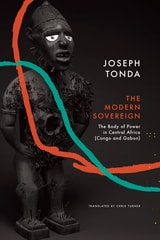
Modern Sovereign
The Body of Power in Central Africa (Congo and Gabon)Joseph Tonda
Seagull Books, 2020
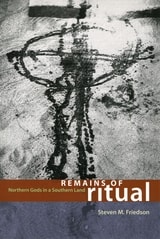
Remains of Ritual
Northern Gods in a Southern LandSteven M. Friedson
University of Chicago Press, 2009
Remains of Ritual, Steven M. Friedson’s second book on musical experience in African ritual, focuses on the Brekete/Gorovodu religion of the Ewe people. Friedson presents a multifaceted understanding of religious practice through a historical and ethnographic study of one of the dominant ritual sites on the southern coast of Ghana: a medicine shrine whose origins lie in the northern region of the country. Each chapter of this fascinating book considers a different aspect of ritual life, demonstrating throughout that none of them can be conceived of separately from their musicality—in the Brekete world, music functions as ritual and ritual as music. Dance and possession, chanted calls to prayer, animal sacrifice, the sounds and movements of wake keeping, the play of the drums all come under Friedson’s careful scrutiny, as does his own position and experience within this ritual-dominated society.
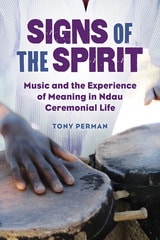
Signs of the Spirit
Music and the Experience of Meaning in Ndau Ceremonial LifeTony Perman
University of Illinois Press, 2020
Perman's encounters with the spirits, the mediums who bring them back, and the accompanying rituals form the heart of his ethnographic account of how the Ndau experience ceremonial musicking. As Perman witnessed other ceremonies, he discovered that music and dancing shape the emotional lives of Ndau individuals by inviting them to experience life's milestones or cope with its misfortunes as a group. Signs of the Spirit explores the historical, spiritual, and social roots of ceremonial action and details how that action influences the Ndau's collective approach to their future. The result is a vivid ethnomusicological journey that delves into the immediacy of musical experience and the forces that transform ceremonial performance into emotions and community.
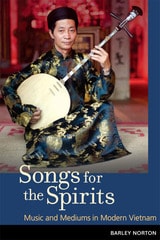
Songs for the Spirits
Music and Mediums in Modern VietnamBarley Norton
University of Illinois Press, 2008
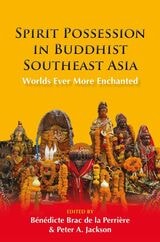
Spirit Possession in Buddhist Southeast Asia
Worlds Ever More EnchantedEdited by Bénédicte Brac de la Perrière and Peter A. Jackson
National University of Singapore Press, 2022
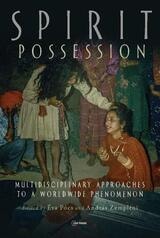
Spirit Possession
Multidisciplinary Approaches to a Worldwide PhenomenonÉva Pócs
Central European University Press, 2022
Possession, a seemingly irrational phenomenon, has posed challenges to generations of scholars rooted in Western notions of body-soul dualism, self and personhood, and a whole set of presuppositions inherited from Christian models of possession that was “good” or “bad.” The authors of the essays in this book present a new and more promising approach. They conceive spirit possession as a form of communication, of expressivity, of culturally defined behavior that should be understood in the context of local, vernacular theories and empiric reflections.
With the aim of reformulating the comparative anthropology of spirit possession, the editors have opened corridors between previously separate areas of research. Together, anthropologists and historians working on several historical periods and in different European, African, South American, and Asian cultural areas attempt to redefine the very concept of possession, freeing it from the Western notion of the self and more clearly delineating it from related matters such as witchcraft, devotion, or mysticism. The book also provides an overview of new research directions, including novel methods of participant observation and approaches to spirit possession as indigenous historiography
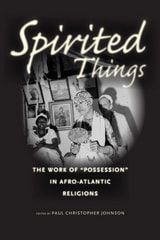
Spirited Things
The Work of "Possession" in Afro-Atlantic ReligionsEdited by Paul Christopher Johnson
University of Chicago Press, 2014
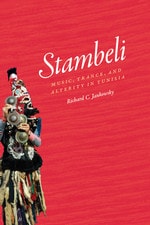
Stambeli
Music, Trance, and Alterity in TunisiaRichard C. Jankowsky
University of Chicago Press, 2010
Part ethnography, part history of the complex relationship between Tunisia’s Arab and sub-Saharan populations, Stambeli will be welcomed by scholars and students of ethnomusicology, anthropology, African studies, and religion.
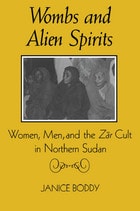
Wombs and Alien Spirits
Women, Men, and the Zar Cult in Northern SudanJanice Boddy
University of Wisconsin Press, 1989
Based on nearly two years of ethnographic fieldwork in a Muslim village in northern Sudan, Wombs and Alien Spirits explores the zâr cult, the most widely practiced traditional healing cult in Africa. Adherents of the cult are usually women with marital or fertility problems, who are possessed by spirits very different from their own proscribed roles as mothers. Through the woman, the spirit makes demands upon her husband and family and makes provocative comments on village issues, such as the increasing influence of formal Islam or encroaching Western economic domination. In accommodating the spirits, the women are able metaphorically to reformulate everyday discourse to portray consciousness of their own subordination.
Janice Boddy examines the moral universe of the village, discussing female circumcision, personhood, kinship, and bodily integrity, then describes the workings of the cult and the effect of possession on the lives of men as well as women. She suggests that spirit possession is a feminist discourse, though a veiled and allegorical one, on women's objectification and subordination. Additionally, the spirit world acts as a foil for village life in the context of rapid historical change and as such provides a focus for cultural resistance that is particularly, though not exclusively, relevant to women.