Results by title
21 books match the query 'Spiritualism'
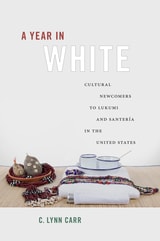
A Year in White
Cultural Newcomers to Lukumi and Santería in the United StatesCarr, C. Lynn
Rutgers University Press, 2016
In her intimate investigation of the “year in white,” Carr draws on fifty-two in-depth interviews with other participants, an online survey of nearly two hundred others, and almost a decade of her own ethnographic fieldwork, gathering stories that allow us to see how cultural newcomers and natives thought, felt, and acted with regard to their initiation. She documents how, during the iyawo year, the ritual slowly transforms the initiate’s identity. For the first three months, for instance, the iyawo may not use a mirror, even to shave, and must eat all meals while seated on a mat on the floor using only a spoon and their own set of dishes. During the entire year, the iyawo loses their name and is simply addressed as “iyawo” by family and friends.
Carr also shows that this year-long religious ritual—which is carried out even as the iyawo goes about daily life—offers new insight into religion in general, suggesting that the sacred is not separable from the profane and indeed that religion shares an ongoing dynamic relationship with the realities of everyday life. Religious expression happens at home, on the streets, at work and school.
Offering insight not only into Santería but also into religion more generally, A Year in White makes an important contribution to our understanding of complex, dynamic religious landscapes in multicultural, pluralist societies and how they inhabit our daily lives.
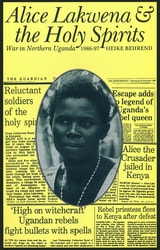
Alice Lakwena and the Holy Spirits
War in Northern Uganda, 1985–97Heike Behrend
Ohio University Press, 1999
In August 1986, Alice Auma, a young Acholi woman in northern Uganda, proclaiming herself under the orders of a Christian spirit named Lakwena, raised an army called the “Holy Spirit Mobile Forces.” With it she waged a war against perceived evil, not only an external enemy represented by the National Resistance Army of the government, but internal enemies in the form of “impure” soldiers, witches, and sorcerers. She came very close to her goal of overthrowing the government but was defeated and fled to Kenya.
This book provides a unique view of Alice’s movement, based on interviews with its members and including their own writings, examining their perceptions of the threat of external and internal evil. It concludes with an account of the successor movements into which Alice’s forces fragmented and which still are active in the civil wars of the Sudan and Uganda.
Consoling Ghosts
Stories of Medicine and Mourning from Southeast Asians in ExileJean M. Langford
University of Minnesota Press, 2013
In conversation with emigrants from Laos and Cambodia, Jean M. Langford repeatedly met with spirits: the wandering souls of the seriously ill, dangerous ghosts of those who died by violence, restless ancestors displaced from their homes. For these emigrants, the dead not only appear in memories, safely ensconced in the past, but also erupt with a physical force into the daily life and dreams of the present.
Inspired by these conversations, Consoling Ghosts is a sustained contemplation of relationships with the dying and the dead. At their heart, as Langford’s work reveals, emigrants’ stories are parables not of cultural difference but rather of life and death. Langford inquires how and why spirits become implicated in remembering and responding to violence, whether the bloody violence of war or the more structural violence of social marginalization and poverty. What is at stake, she asks, when spirits break out of their usual confinement as symbolic figures for history, heritage, or trauma to haunt the corridors of hospitals and funeral homes? Emigrants’ theories and stories of ghosts, Langford suggests, inherently question the metaphorical status of spirits, in the process challenging both contemporary bioethics of dying and dominant styles of mourning. Consoling Ghosts explores the possibilities opened up by a more literal existence of ghosts, from the confrontation of shades of past violence through bodily ritual to rites of mourning that unfold in acts of material care for the dead instead of memorialization.
Ultimately the book invites us to consider alternate ways of facing death, conducting relationships with the dead and dying, and addressing the effects of violence that continue to reverberate in bodies and social worlds.
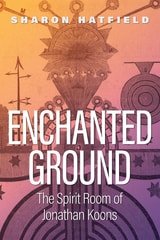
Enchanted Ground
The Spirit Room of Jonathan KoonsSharon Hatfield
Ohio University Press, 2018
In Enchanted Ground, Sharon Hatfield brings to life the true story of a nineteenth-century farmer-turned-medium, Jonathan Koons, one of thousands of mediums throughout the antebellum United States. In the hills outside Athens, Ohio, Koons built a house where it was said the dead spoke to the living, and where ancient spirits communicated the wisdom of the ages. Curious believers, in homespun and in city attire, traveled from as far as New Orleans to a remote Appalachian cabin whose marvels would rival any of P. T. Barnum’s attractions.
Yet Koons’s story is much more than showmanship and sleight of hand. His enterprise, not written about in full until now, embodied the excitement and optimism of citizens breaking free from societal norms. Reform-minded dreamers were drawn to Koons’s seances as his progressive brand of religion displaced the gloomy Calvinism of previous generations. As heirs to the Second Great Awakening, which stretched from New York State to the far reaches of the Northwest Territory, the curious, the faithful, and Koons himself were part of a larger, uniquely American moment that still marks the cultural landscape today.
Folk Practices in North Mexico
Birth Customs, Folk Medicine, and Spiritualism in the Laguna ZoneBy Isabel Kelly
University of Texas Press, 1965
The Mexican folkways described in this monograph, of scientific interest to anthropologists, will fascinate laypeople as well. Isabel Kelly collected these notes in the 1950s, as a diversion when official field work was not feasible, in the vicinity of Torreón and particularly in the nearby village of El Cuije, in northern Mexico. She recounts folk customs and habits, focusing on beliefs and practices related to health and healing and on notions concerning magic. These form, Kelly believes, a core of folk culture which has survived tenaciously in the rural areas and on the outskirts of the cities, among mestizo families of scant education and limited economic resources.
These people are well acquainted with simple, matter-of-fact illnesses which result from natural causes and which respond to treatment by herbal and other home remedies or by modern medicines. But they also recognize the evil eye and the emotional upset known as “fright.” They are thoroughly familiar with the ever-present danger of ailments which are not “natural” and God-sent, but which are deliberately inflicted by an enemy, through the artifice of a sorcerer or a spiritualist. Such “instigated” illnesses may take any form, from a cold in the head to a false pregnancy. If a person suspects that poor health results from such malevolence, he or she spurns Western medicine and looks instead to the witch or to the spiritualist as the only hope of a cure.
El Cuije pays an annual quota from community funds to make available modern health services provided by the government. But community funds are similarly drawn upon to provide “medical” attention for those who repair to the sorcerers. Once a week the village truck takes all presumed witchcraft victims to a nearby town, where they receive clinical treatment from professional sorcerers.
Kelly sees little that is genuinely indigenous in the beliefs and practices described; many of them demonstrably result from infiltration from the Old World in the years following the Spanish Conquest. She considers spiritualistic curing—important in northern Mexico and many other parts of Latin America—in some detail, but the specific outlines of its history in northern Mexico still awaited clarification at the time of her research.
Free Spirits
Spiritualism, Republicanism, and Radicalism in the Civil War EraMark A. Lause
University of Illinois Press, 2016
Ghostly Communion
Cross-Cultural Spiritualism in Nineteenth-Century American LiteratureJohn J. Kucich
Dartmouth College Press, 2015
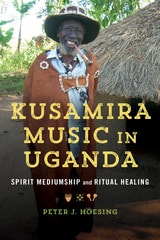
Kusamira Music in Uganda
Spirit Mediumship and Ritual HealingPeter J. Hoesing
University of Illinois Press, 2021
In southern Uganda, ritual healing traditions called kusamira and nswezi rely on music to treat sickness and maintain well-being. Peter J. Hoesing blends ethnomusicological fieldwork with analysis to examine how kusamira and nswezi performance socializes dynamic processes of illness, wellness, and health. People participate in these traditions for reasons that range from preserving ideas to generating strategies that allow them to navigate changing circumstances. Indeed, the performance of kusamira and nswezi reproduces ideas that remain relevant for succeeding generations. Hoesing shows the potential of this social reproduction of well-being to shape development in a region where over 80 percent of the population relies on traditional healers for primary health care.
Comprehensive and vivid with eyewitness detail, Kusamira Music in Uganda offers insight into important healing traditions and the overlaps between expressive culture and healing practices, the human and other-than-human, and Uganda's past and future.
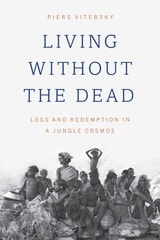
Living without the Dead
Loss and Redemption in a Jungle CosmosPiers Vitebsky
University of Chicago Press, 2017
Today, young Sora are rejecting the worldview of their ancestors and switching their allegiance to warring sects of fundamentalist Christianity or Hinduism. Communion with ancestors is banned as sacred sites are demolished, female shamans are replaced by male priests, and debate with the dead gives way to prayer to gods. For some, this shift means liberation from jungle spirits through literacy, employment, and democratic politics; others despair for fear of being forgotten after death.
How can a society abandon one understanding of reality so suddenly and see the world in a totally different way? Over forty years, anthropologist Piers Vitebsky has shared the lives of shamans, pastors, ancestors, gods, policemen, missionaries, and alphabet worshippers, seeking explanations from social theory, psychoanalysis, and theology. Living without the Dead lays bare today’s crisis of indigenous religions and shows how historical reform can bring new fulfillments—but also new torments and uncertainties.
Vitebsky explores the loss of the Sora tradition as one for greater humanity: just as we have been losing our wildernesses, so we have been losing a diverse range of cultural and spiritual possibilities, tribe by tribe. From the award-winning author of The Reindeer People, this is a heartbreaking story of cultural change and the extinction of an irreplaceable world, even while new religious forms come into being to take its place.
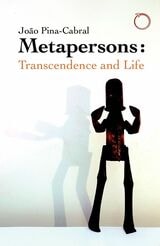
Metapersons
Transcendence and LifeJoão Pina-Cabral
HAU, 2026
Metapersons begins from a simple yet striking observation: across the world, people live in the company of divinities, ancestors, spirits, sacred mountains, or enlivened statues. They pray with intensity, sense the presence of ghosts, and experience forms of coexistence with beings beyond the human. Drawing on fieldwork in Portugal, China, Mozambique, and Brazil, João Pina-Cabral shows how humans continually move beyond their embodied condition through lived relations with such entities.
Revisiting classic anthropological debates—from Durkheim and Mauss on prayer and the sacred to later critiques of religion—this book argues that a “new anthropological synthesis” has emerged in recent decades: one that understands transcendence as a fundamental feature of life itself. In this light, familiar categories such as “superstition” require reconsideration in new terms. Pina-Cabral develops a scalar model of life’s plurality, seeing personhood as the dynamic source of transcendence.
Engaging with contemporary debates across the life sciences, social sciences, and philosophy, Metapersons offers a groundbreaking, person-centered perspective on transcendence, animism, and spirituality. It challenges disciplinary boundaries while providing an innovative framework for rethinking prayer, religion, and the very conditions of human coexistence with the more-than-human world.
Moth and Rust
Mormon Encounters with DeathSteven Carter
Signature Books, 2017
about death: it’s a veil or a mission call to the spirit
world. But our actual encounters with the reality of
death inevitably change us in ways that are difficult
to articulate.
In this collection, Mormon writers wrestle with
mortality and its aftermath. A family sings a hesitant
rendition of Happy Birthday to a grief-stricken
mother who buried her toddler just a few hours earlier;
an agnostic son decides he’s Mormon enough to
arrange a funeral for his believing father.
Some essays use death as a means to understand
faith. One author imagines a world where Heavenly
Mother visits her children in the form of their
female ancestors, appearing to her descendants in
times of grief or pain.
Others address practicalities: how do you protect
your children from death while still allowing them
to experience the world; how do you get through
one more nausea-ridden day of cancer treatment?
Still others delve into death’s questions: does the
overwhelming suffering that occurs in the animal
kingdom have a function in the “plan of happiness”?
Sometimes humorous, sometimes heartbreaking,
always thought-provoking, these personal essays,
poems, and stories may never be heard at a Mormon
funeral. But they probably should be.
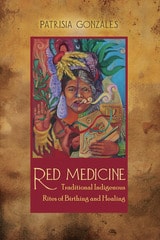
Red Medicine
Traditional Indigenous Rites of Birthing and HealingPatrisia Gonzales
University of Arizona Press, 2012
Patrisia Gonzales addresses "Red Medicine" as a system of healing that includes birthing practices, dreaming, and purification rites to re-establish personal and social equilibrium. The book explores Indigenous medicine across North America, with a special emphasis on how Indigenous knowledge has endured and persisted among peoples with a legacy to Mexico. Gonzales combines her lived experience in Red Medicine as an herbalist and traditional birth attendant with in-depth research into oral traditions, storytelling, and the meanings of symbols to uncover how Indigenous knowledge endures over time. And she shows how this knowledge is now being reclaimed by Chicanos, Mexican Americans and Mexican Indigenous peoples.
For Gonzales, a central guiding force in Red Medicine is the principal of regeneration as it is manifested in Spiderwoman. Dating to Pre-Columbian times, the Mesoamerican Weaver/Spiderwoman—the guardian of birth, medicine, and purification rites such as the Nahua sweat bath—exemplifies the interconnected process of rebalancing that transpires throughout life in mental, spiritual and physical manifestations. Gonzales also explains how dreaming is a form of diagnosing in traditional Indigenous medicine and how Indigenous concepts of the body provide insight into healing various kinds of trauma.
Gonzales links pre-Columbian thought to contemporary healing practices by examining ancient symbols and their relation to current curative knowledges among Indigenous peoples. Red Medicine suggests that Indigenous healing systems can usefully point contemporary people back to ancestral teachings and help them reconnect to the dynamics of the natural world.
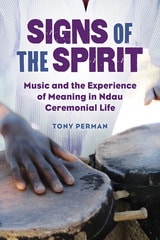
Signs of the Spirit
Music and the Experience of Meaning in Ndau Ceremonial LifeTony Perman
University of Illinois Press, 2020
Perman's encounters with the spirits, the mediums who bring them back, and the accompanying rituals form the heart of his ethnographic account of how the Ndau experience ceremonial musicking. As Perman witnessed other ceremonies, he discovered that music and dancing shape the emotional lives of Ndau individuals by inviting them to experience life's milestones or cope with its misfortunes as a group. Signs of the Spirit explores the historical, spiritual, and social roots of ceremonial action and details how that action influences the Ndau's collective approach to their future. The result is a vivid ethnomusicological journey that delves into the immediacy of musical experience and the forces that transform ceremonial performance into emotions and community.
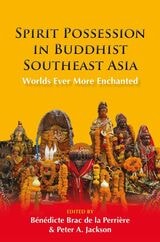
Spirit Possession in Buddhist Southeast Asia
Worlds Ever More EnchantedEdited by Bénédicte Brac de la Perrière and Peter A. Jackson
National University of Singapore Press, 2022
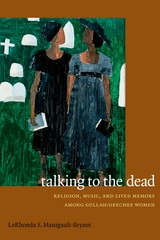
Talking to the Dead
Religion, Music, and Lived Memory among Gullah/Geechee WomenLeRhonda S. Manigault-Bryant
Duke University Press, 2014
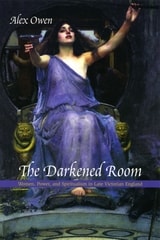
The Darkened Room
Women, Power, and Spiritualism in Late Victorian EnglandAlex Owen
University of Chicago Press, 2004
The hugely popular spiritualist movement, which maintained that women were uniquely qualified to commune with spirits of the dead, offered female mediums a new independence, authority, and potential to undermine conventional class and gender relations in the home and in society.
Using previously unexamined sources and an innovative approach, Alex Owen invokes the Victorian world of darkened séance rooms, theatrical apparitions, and moving episodes of happiness lost and regained. She charts the struggles between spiritualists and the medical and legal establishments over the issue of female mediumship, and provides new insights into the gendered dynamics of Victorian society.
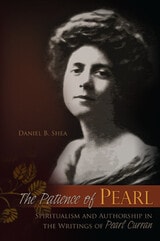
The Patience of Pearl
Spiritualism and Authorship in the Writings of Pearl CurranDaniel B. Shea
University of Missouri Press, 2012
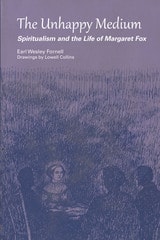
The Unhappy Medium
Spiritualism and the Life of Margaret FoxBy Earl Wesley Fornell; Drawings by Lowell Collins
University of Texas Press, 1964
“Here, Mr. Split-Foot, do as I do!” exclaimed the child, and the spirits obeyed her command. Thus, in 1848, thirteen-year-old Margaret Fox inaugurated the age of spiritualism. Those early spirit manifestations in a humble New York farmhouse were “but the beginning of a grand seance which for the next half century was to see persons returned from the dead walking upon the earth, mingling freely with mortal Americans. Ceremonies were performed which united in wedlock the living and the dead; ghostly schoolboys returned from the land of the spirits to revisit their old schoolhouses, upsetting the dignity of earthly classrooms . . . Drivers of owl horsecars . . . were intrigued by beautiful female spirits who rode their cars at night and promptly vanished if approached for a fare.”
The colorful career of Margaret Fox, the most famous medium of the era and the “fountainhead” of the cult of spiritualism, attracted the attention of the most prominent public figures of the day. For P. T. Barnum, this phenomenon was another novelty to present to the American public. Horace Greeley took a personal interest in Margaret and her sister; he gave the movement extensive publicity. Lincoln often invited Margaret Fox and other mediums to the White House for seances, during which attempts were made to invoke the spirit of the Lincolns’ dead son. Members of Congress, judges, and intellectuals of the day were well acquainted with her and with the spiritualist movement.
The course of this spirit invasion and the many and varied means by which men communicated with dwellers of the other world are the subjects of this volume. With Margaret Fox the spirits spoke by rapping on floor and furniture. With others they communicated by writing on slates, by touching with ghostly hands, by moving furniture (one medium was so popular that his furniture followed him about like a pack of dogs). Some spirits spoke directly through the mouths of entranced mediums. And some were so bold—or so talented—that they were able to materialize in the flesh before properly receptive groups of people—and happy indeed was the devotee who received a warm embrace from a lovely young spirit lady or a handsome ghostly gentleman during such a materialization.
The spirits who thus displayed their interest in this mortal world soon came to have a considerable influence over whole segments of the American population. For some, spiritualism was a comforting means of maintaining contact with loved ones now departed. For others it was a religion, a blessed aid on the road to salvation. For still others it provided practical assistance with more earthly problems. Many found in it intriguing puzzles for scientific investigation. And for the whole country it provided a constant source of excitement, interest, and entertainment.
Written in spritely prose and permeated with a grave humor, this account of nineteenth-century spiritualism will be equally satisfying to the casual reader interested in a good story, and to the scholar seeking serious social history.

Three Spiritualist Novels
Elizabeth Stuart Phelps
University of Illinois Press, 2000
Articulating an alternative to conservative church doctrine, Phelps assured her readers--many of them women bereft of their loved ones by the Civil War--that Spiritualist ideas about the afterlife were not fundamentally at odds with Scripture. Like the protagonist of The Gates Ajar, these readers wanted to believe "something actual, something pleasant" about the world to come, not "glittering generalities" about a "dreadful Heaven" where their loved ones were too busy singing and worshiping to have any thought of those left behind.
All three of the novels collected here--The Gates Ajar (1868), Beyond the Gates (1883), and The Gates Between (1887)--describe heaven as a perfected version of earthly life and the afterlife as a chance to make up for opportunities squandered on Earth. A grieving sister finds consolation in the Spiritualist idea of a continued connection with her beloved brother; a dying woman finds her soulmate in the afterlife; an erring husband makes amends across the line between the living and the dead.
Tremendously popular in Phelps's lifetime, these novels offer a way of reconciling human beings to earthly loss and sorrow, assuring readers of an afterlife both restorative and compensatory. They also provide an intriguing look at a phenomenon that preoccupied nineteenth-century America and continues to fascinate us in the twenty-first century.
Trail Guide for a Crooked Heart
Stories and Reflections for Life's JourneyJim May
Parkhurst Brothers, Inc., 2016
"A brilliant mixture of story, philosophy, humor and wisdom, this book reminds us that---if we are open to story, dreams, imagination, and myth---we can open doors within our soul."
—Jay O’Callahan, author, storyteller, and NPR commentator
A lifetime collection of stories, wise words, assembled musings and quotations about overcoming hurdles, elusive enlightenment, personal evolution, persistence in the face of discouragement, this pastiche is designed to encourage the downhearted, lift up the strivers, and add wings to the heels of spiritual seekers.
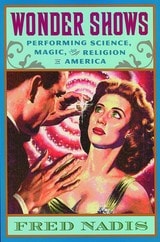
Wonder Shows
Performing Science, Magic, and Religion in AmericaNadis, Fred
Rutgers University Press, 2005
Imagine a stage full of black cats emitting electrical sparks, a man catching bullets with his teeth, or an evangelist jumping on a transformer to shoot bolts of lightning through his fingertips. These and other wild schemes were part of the repertoire of showmen who traveled from city to city, making presentations that blended science with myth and magic.
In Wonder Shows, Fred Nadis offers a colorful history of these traveling magicians, inventors, popular science lecturers, and other presenters of “miracle science” who revealed science and technology to the public in awe-inspiring fashion. The book provides an innovative synthesis of the history of performance with a wider study of culture, science, and religion from the antebellum period to the present.
It features a lively cast of characters, including electrical “wizards” Nikola Tesla and Thomas Alva Edison, vaudeville performers such as Harry Houdini, mind readers, UFO cultists, and practitioners of New Age science. All of these performers developed strategies for invoking cultural authority to back their visions of science and progress. The pseudo-science in their wonder shows helped promote a romantic worldview that called into question the absolute authority of scientific materialism while reaffirming the importance of human spirituality. Nadis argues that the sensation that these entertainers provided became an antidote to the alienation and dehumanization that accompanied the rise of modern America.
Although most recent defenders of science are prone to reject wonder, considering it an ally of ignorance and superstition, Wonder Shows demonstrates that the public’s passion for magic and meaning is still very much alive. Today, sales continue to be made and allegiances won based on illusions that products are unique, singular, and at best, miraculous. Nadis establishes that contemporary showmen, corporate publicists, advertisers, and popular science lecturers are not that unlike the magicians and mesmerists of years ago.