Results by title
8 books match the query 'Splendor'
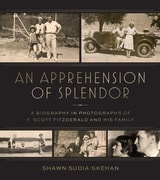
An Apprehension of Splendor
A Biography in Photographs of F. Scott Fitzgerald and His FamilyShawn Sudia-Skehan; Foreword by Jackson R. Bryer; Introduction by Eleanor Lanahan
University of Alabama Press, 2025
A unique collection of Fitzgerald family photographs, many never before published, hand selected by a curator of the Scott and Zelda Fitzgerald Museum.
Enter the Jazz Age glamour of F. Scott and Zelda Fitzgerald and their daughter, Scottie. An Apprehension of Splendor is a rich pictorial biography that illuminates the lives of this brilliant literary family in 344 rare photographs, 180 of which have never been published.
The Fitzgeralds are chiefly known from a small number of iconic, posed images, but the dashing couple and their daughter amassed hundreds of candid snapshots now housed in archives and university library collections throughout North America. These rare photos reveal the full, vivid lives behind the icons—a Buffalo boy cradling a velvety puppy, a jaunty southern gamine in the shade of a loblolly pine laughing at a secret, the stoic gloom of an enlistee in a scratchy woolen uniform, a plot taking shape in the mind of a fledgling writer with bed-tousled hair, an amorous young couple struggling to light a cigarette in the chiaroscuro of a Riviera beach, an unhappy baby tugged through the snow in a laundry basket lashed to a sled, and a myriad of other images that will rekindle fascination with the Fitzgeralds and their time.
With unparalleled access to the family’s personal papers and photographs, Shawn Sudia-Skehan, former director of acquisitions at the Scott and Zelda Fitzgerald Museum, handpicked and annotated this collection of images that brings readers closer to the Fitzgeralds than any other work. Readers of Tender Is the Night, The Beautiful and Damned, and many other works by F. Scott and Zelda will recognize some of the places and experiences that inspired their unforgettable fictions.
A captivating portrait of Jazz Age celebrity, young passion, and artistic ambition, An Apprehension of Splendor returns the perfume to the luminous flower of the Fitzgeralds.

Apparition of Splendor
Marianne Moore Performing Democracy through Celebrity, 1952–1970Elizabeth Gregory
University of Delaware Press, 2021
While the later work of the great Modernist poet Marianne Moore was hugely popular during her final two decades, since her death critics have condemned it as trivial. This book challenges that assessment: with fresh readings of many of the late poems and of the iconic, cross-dressing public persona Moore developed to deliver them, Apparition of Splendor demonstrates that Moore used her late-life celebrity in daring and innovative ways to activate egalitarian principles that had long animated her poetry. Dressed as George Washington in cape and tricorn and writing about accessible topics like sports, TV shows, holidays, love, activism, mortality and celebrity itself, she reached a wide cross-section of Americans, encouraging them to consider what democracy means in their daily lives, particularly around issues of gender, sexuality, racial integration, class, age, and immigration. Moore actively sought out publication in popular venues (like Vogue, The New Yorker, and the Saturday Evening Post, etc.) and wrote on material chosen to directly appeal to the audiences there, influencing younger contemporaries, including poets like Ashbery, O’Hara, and Bishop, and artists like Warhol, Yoko Ono, and Ray Johnson.
Published by the University of Delaware Press. Distributed worldwide by Rutgers University Press.
Dear Terror, Dear Splendor
Melissa Crowe
University of Wisconsin Press, 2019
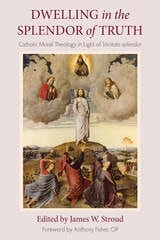
Dwelling in the Splendor of Truth
Catholic Moral Theology in Light of <i>Veritatis splendor</i>James W. Stroud
Catholic University of America Press, 2026

Splendor in the Short Grass
The Grover Lewis ReaderBy Grover Lewis
University of Texas Press, 2005
Honorable Mention, Carr P. Collins Award for Best Book of Nonfiction, 2006
Grover Lewis was one of the defining voices of the New Journalism of the 1960s and 1970s. His wry, acutely observed, fluently written essays for Rolling Stone and the Village Voice set a standard for other writers of the time, including Hunter S. Thompson, Joe Eszterhas, Timothy Ferris, Chet Flippo, and Tim Cahill, who said of Lewis, "He was the best of us." Pioneering the "on location" reportage that has become a fixture of features about moviemaking and live music, Lewis cut through the celebrity hype and captured the real spirit of the counterculture, including its artificiality and surprising banality. Even today, his articles on Woody Guthrie, the Allman Brothers, the Rolling Stones concert at Altamont, directors Sam Peckinpah and John Huston, and the filming of The Last Picture Show and One Flew over the Cuckoo's Nest remain some of the finest writing ever done on popular culture.
To introduce Grover Lewis to a new generation of readers and collect his best work under one cover, this anthology contains articles he wrote for Rolling Stone, Village Voice, Playboy, Texas Monthly, and New West, as well as excerpts from his unfinished novel The Code of the West and his incomplete memoir Goodbye If You Call That Gone and poems from the volume I'll Be There in the Morning If I Live. Jan Reid and W. K. Stratton have selected and arranged the material around themes that preoccupied Lewis throughout his life—movies, music, and loss. The editors' biographical introduction, the foreword by Dave Hickey, and a remembrance by Robert Draper discuss how Lewis's early struggles to escape his working-class, anti-intellectual Texas roots for the world of ideas in books and movies made him a natural proponent of the counterculture that he chronicled so brilliantly. They also pay tribute to Lewis's groundbreaking talent as a stylist, whose unique voice deserves to be more widely known by today's readers.

The Splendor of the Church in Mary
Henri de Lubac, Vatican II, and Marian RessourcementTheresa Marie Chau Nguyen
Catholic University of America Press, 2023

The Utility of Splendor
Ceremony, Social Life, and Architecture at the Court of Bavaria, 1600-1800Samuel John Klingensmith
University of Chicago Press, 1993
Drawing on a broad range of sources, including building documents, correspondence, diaries, and court regulations, Klingensmith investigates the intricacies of Bavarian court practice and shows that Versailles was only one among several influences on German palace planning. Klingensmith offers a cogent, detailed understanding of the relations between architectural spaces and the ceremonial, social, and private life that both required and used them. Handsomely illustrated with photographs and plans, The Utility of Splendor will appeal to anyone interested in how life was lived among the nobility during the last centuries of the old regime.
Samuel John Klingensmith (1949-1986) was assistant professor of art history at Tulane University.

Violence and Splendor
Alphonso Lingis
Northwestern University Press, 2011
“The Sacred” studies the ways death—the death of others and our own death—fascinates and energizes us. It exhibits the glory in violence and sacrilege. The book culminates in “Splendor,” a study of collective performances that create splendor. Concerning itself most immediately with philosophy, psychology, aesthetics, anthropology, and the theory of religion, Violence and Splendor bridges the discourses of continental philosophy and cross-cultural studies. Further drawing insights from both Western and non-Western traditions, it brings such diverse fields as psychology, art and aesthetics, botany, politics, history, zoology, and religious theory into a new and significant dialogue about the nature of humanity.