Results by title
14 books match the query 'Sports Psychology'

Athlete Burnout Questionnaire Manual
Thomas D. Raedeke
FiT Publishing, 2009
This test manual, the fourth in FIT’s Sport and Exercise Psychology Test Clearinghouse, is a succinct and informative resource outlining the conceptual basis of the athlete burnout syndrome and its measurement. The manual delineates the process used in developing the ABQ and provides users with information on the meaning of scores derived from its use.
Comprehensive aspects related to the Athlete Burnout Questionnaire (ABQ) are presented and include:
-
Athlete Burnout Questionnaire and guidelines for administering and scoring
-
Conceptual underpinnings of the ABQ: an overview of the burnout construct, the operational definition used to guide item development, as well as a description of how the preliminary item pool was developed
-
Review of research using a within-network approach to examine the internal structure of the burnout construct based on the ABQ; plus a description of both internal consistency and stability of ABQ scores
-
Discussion of a between-network approach to construct validation by examining the relationship of ABQ scores to theoretically relevant variables stemming from stress, sociological, and motivational perspectives on burnout
-
Basic descriptive statistical information that can help users interpret the meaning of scores derived from the ABQ
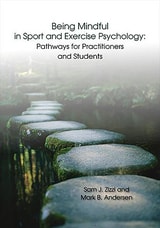
Being Mindful in Sport and Exercise Psychology
Pathways for Practitioners and StudentsSamuel J. Zizzi
FiT Publishing, 2017
Being Mindful in Sport and Exercise Psychology: Pathways for Practitioners and Students is a comprehensive resource of the many facets of mindfulness, which is interwoven with many techniques of applied sport and exercise psychology. The book expands upon the fundamentals of mindfulness theory and practice, reviews evidence of its effectiveness, and features numerous case studies that offer readers a fresh perspective of how mindfulness can be applied in diverse, real-world situations.
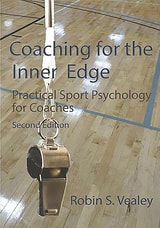
Coaching for the Inner Edge
Practical Sport Psychology for Coaches, Second EditionRobin S. Vealey
FiT Publishing, 2021
Coaches are continually searching for ways to gain the edge over their opponents. They work tirelessly to get their athletes in top physical condition, to develop their physical skills, and to implement successful routines and strategies for their teams. This physical training develops the athlete’s outer edge—the peak physical performance advantage over their opponents. But as most coaches realize, athletes also need an inner edge to perform successfully. This Inner Edge is the advantage that athletes cultivate within themselves by honing their mental skills, by learning to manage their energy in pressure situations and to focus effectively, despite distractions and obstacles.
This much anticipated second edition is a must read for anyone interested in improving sport performance. Dr. Vealey distills and applies the proven methods, updated techniques, and her own experience into a practical, engaging resource for coaches, trainers, and consultants. Drawing from the preeminent research literature of master coaches, innovative sport psychologists, and from her own practical experiences as a college basketball player, coach, sport psychology researcher and consultant, Dr Vealey defines how to develop the Inner Edge in athletes.
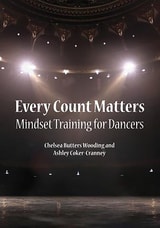
Every Count Matters
Mindset Training for DancersChelsea Butters Wooding
FiT Publishing, 2019
Regardless of physical talent, all dancers face struggles. The outcome depends largely on the dancer’s mindset. Authors Chelsea Butters Wooding and Ashley Coker-Cranney combine their similar backgrounds in dance with their expertise as mental performance consultants to cultivate an adaptive mindset and positive perspective to elevate a dancer’s performance as well as perspective.
Every Count Matters is unique in its appeal and relevance to every dancer, regardless of skill or style. The authors have designed strategies that can be applied at any level, in any setting. This unique approach balances theory and application, provides a foundational knowledge for mindset and mental skills training, as well as specific strategies and tips that can be immediately integrated into the dancer’s daily routine. Each lesson can be applied to new challenges as they arise, and work together to allow the dancer to overcome obstacles to reaching their full potential.
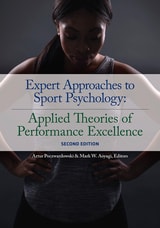
Expert Approaches to Sport Psychology
Applied Theories of Performance Excellence, Second EditionArtur Poczwardowski
FiT Publishing, 2021
Most existing applied sport psychology literature has focused on interventions and techniques. Rather than rework the questions of “what” to do, the second edition of Expert Approaches to Sport Psychology: Applied Theories of Performance Excellence illuminates the questions of “who,” “when,” “why,” and “how.” The answers to these questions reside in the theories that seasoned practitioners have developed about the psychological, emotional, and behavioral skills and conditions that facilitate optimal performance.
Edited by Artur Poczwardowski and Mark W. Aoyagi, the second edition features a diverse collection of 21 distinguished practitioners in the field of sport psychology. Each chapter is an autobiographical and personal perspective on how these preeminent experts developed their authentic and distinctive approaches to the practice of sport psychology with real-life examples and case studies. Their rich cultural and educational backgrounds are reflected in ethnicity, international origin, gender, age, and sociocultural perspectives and experiences.
Expert Approaches to Sport Psychology serves as a master class by those who have helped advance the field—preserving the knowledge and contributions of the founders and intellectual leaders of applied sport psychology, while also presenting the contemporary innovators of the field. The collective wisdom passed on within this book will be immensely beneficial to both those practicing and studying sport psychology.
Foundations of Exercise Psychology
Third EditionBonnie G. Berger
FiT Publishing, 2015
The third edition of Foundations of Exercise Psychology is the most comprehensive textbook of its kind. Robert C. Eklund has joined the writing team of Bonnie G. Berger and Robert S. Weinberg for this edition. The authors expand upon the key concepts and models of the field, focusing on the interrelationships of exercise and psychology. The new edition includes an important new chapter on exercise and cognitive function.

Knocking on Heaven’s Door
Six Minor Leaguers in Search of the Baseball DreamMarty Dobrow
University of Massachusetts Press, 2010
The rich slice of Americana found in minor league baseball presents a contradictory culture. On the one hand, the minors are filled with wholesome, family-friendly entertainment-fluffy mascots, kitschy promotions, and earnest young men signing autographs for wide-eyed Little Leaguers. On the other, they comprise a world of cutthroat competition in which a teammate's failure or injury can be the cause of quiet celebration and 90 percent of all players never play a single inning in the major leagues.
In Knocking on Heaven's Door, award-winning sportswriter Marty Dobrow examines this double-edged culture by chronicling the lives of six minor leaguers—Brad Baker, Doug Clark, Manny Delcarmen, Randy Ruiz, Matt Torra, and Charlie Zink—all struggling to make their way to “The Show.” What links them together, aside from their common goal, is that they are all represented by the same team of agents—Jim and Lisa Masteralexis and their partner Steve McKelvey—whose own aspirations parallel those of the players they represent.
The story begins during spring training in 2005 and ends in the fall of 2008, followed by a brief epilogue that updates each player's fortunes through the 2009 season. Along the way Dobrow offers a revealing, intimate look at life in minor league baseball: the relentless tedium of its itinerant routines and daily rituals; the lure of performance-enhancing drugs as a means of gaining a competitive edge; the role of agents in negotiating each player's failures as well as his successes; and the influence of wives, girlfriends, and family members who have invested in the dream.
Living in the Sweet Spot
Preparing for Performance in Sport and LifeAmy L. Baltzell
FiT Publishing, 2011
Living in the Sweet Spot: Preparing for Performance in Sport and Life inspires readers to prepare for life’s big performances. The author integrates the principles of positive psychology and sport psychology, relating techniques to strengthen daily fulfillment to get the most out of the experience when those big moments take place. The issues performers face when under pressure come to life through examples from top athletes, musicians, and the author's experiences as an Olympian and America's Cup sailor. Every chapter contains practical, effective, reflective exercises that help readers rise to the challenge of performing their best when it counts.
“What I learned in this book is that if you focus on the positives and what actually brings you joy, it will change your perspective, and maybe most importantly, give you more energy. Everyone, not just athletes, can benefit from reading Living in the Sweet Spot—we can learn how to accept ourselves, our endeavors, our sport, or our profession.”
— from the foreword by Phil Simms, Super Bowl XXI MVP

Long Distance Love
A Passion for FootballGrant Farred
Temple University Press, 2008
Farred shows that issues like race, politics, and war are critical to understanding a sport, especially soccer. And he writes beautifully, with candor and lyricism. Long Distance Love does for soccer what C.L.R. James's Beyond a Boundary did for cricket: it provides poetry and politics in equal measure, along with insights on every page.
Practice Development in Sport and Performance Psychology
Jim Taylor
FiT Publishing, 2015
Practice Development in Sport and Performance Psychology is a practical guide with a step-by-step process for establishing and maintaining a consulting practice for today's sport and performance psychology professionals.
Editor Jim Taylor and a talented team of authors provide a foundation of knowledge and skills necessary to establish and maintain a consulting practice and explore the gamut of issues including understanding the progression of professional development, creating a performance model, writing a business plan, using social media, and much more.
Each chapter includes a summary and exercises to review and further explore relevant topics covered in the book.
“This book is both informative and practical. Two particular aspects are especially worth commending because they ground us in the lessons of the past, the current state of our field, and its certain future. First, though often relegated to the latter parts of a book as an afterthought, the chapter on ethics is placed front and center. Ethics should indeed be the starting point of any consulting business. Second, technology is the future of sport and performance psychology consulting. Appropriately located in the latter part of the book, but certainly critical to our work in the 21st century, is a chapter on consulting in the age of electronic and social media. “How do you get to Carnegie Hall?” the old joke goes. Practice, practice, practice.”
–Kate F. Hays, Ph.D., CC-AASP, The Performing Edge
"Deftly organized into three major sections (Designing; Building; Expanding), Practice Development in Sport and Performance Psychology is comprised of ten erudite and informative articles by experts. The result is a seminal work of impressive scholarship and scope, making Practice Development in Sport and Performance Psychology very highly recommended for personal, professional, community, and academic library Sports & Athletics reference collections and supplemental studies reading lists."
–The Sports Shelf, Midwest Book Review
Psychological Bases of Sport Injuries
Fourth EditionAndreas Ivarsson
FiT Publishing, 2020
The fourth edition of Psychological Bases of Sport Injuries brings together a diverse and global collection of expert chapter authors to provide insight into the complex intersection of sport psychology and sport injury research. Presenting both applied and theoretical recommendations, this comprehensive, updated textbook employs current research, case studies, and contributors’ real-life experiences to address an array of important topics including sport injury prevention, psychological factors influencing returning to sport, and ethical concerns when consulting with an injured athlete. New chapters examine contemporary concerns such as psychosocial risk factors for traumatic and overuse injuries, depression and mental health issues following a sport injury, mindfulness in injury rehabilitation, and discusses counseling strategies for each phase of sport injury rehabilitation.
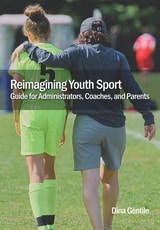
Reimagining Youth Sport
Guide for Administrators, Coaches, and ParentsDina Gentile
FiT Publishing, 2025
Youth sport programs are experiencing numerous challenges in delivering impactful on-the-field/court experiences while navigating the pressures from negative parents, the influence of social media, the significant increase in mental and emotional health concerns and the continual need to win at all costs. The current state of youth sports requires an honest review to decipher tangible methods to enhance the youth sports experience, ensure its positive growth, and create benefits to young participants.
While other textbooks focus on coaching, coaching specific sports, or the psychology of athletes, Reimagining Youth Sport: Guide for Administrators, Coaches, and Parents takes a different approach—tackling the core issues plaguing and sadly ruining the ideals of the sporting experience for young athletes across competitive levels of play for all ages, abilities, and sport types.
Reimagining Youth Sport provides students studying in sport management, coaching, and/or athletic administration with content, tools, and application-based knowledge to become change agents within the youth sport realm. Additionally, this timely text supplies athletic/sport administrators, coaches, and parents with an honest assessment of the state of youth sports coupled with tools/strategies and easy to implement on and off-the-field/court activities to create transformational programs to reimagine youth sport in order to fully deliver on the ideals of the youth sport experience.
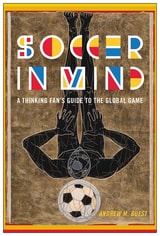
Soccer in Mind
A Thinking Fan's Guide to the Global GameAndrew M. Guest
Rutgers University Press, 2022
This book provides a thinking fan’s guide to the world’s most popular game, proposing a way of engaging soccer that sparks intellectual curiosity and employs critical consciousness. Using stories and data, along with ideas from sociology, psychology, and across the social sciences, it provides readers with new ways of understanding fanaticism, peak performance, talent development, and more. Drawing on concepts ranging from cognitive bias to globalization, it illuminates meanings of the game for players and fans while investigating impacts on our lives and communities. While it considers soccer cultures across the globe, the book also analyzes what makes U.S. soccer culture special, including its embrace of the women’s game.
As a scholar, former minor league player and coach, and fan, Andrew Guest offers a distinctive perspective on soccer in society. Whatever name you call it, and whatever your interest in it, Soccer in Mind will enrich your own view of the one truly global game.
The Psychology of Team Sports
Keith Page Henschen
FiT Publishing, 2003
Every fan knows that individual talent is vital to a team. But sport psychologists understand that the key to success is to incorporate talent into a supportive team unit. The editors of Psychology of Team Sports have assembled a variety of articles to address the psychological issues related to team sport activities, on and off the court or field.
Chapter 1 introduces a three-phase model to cut through the complexities associated with team sports, and chapters 2 through 12 offer theoretical and practical advice. The Psychology of Team Sports explores the discusses the major theoretical concepts related to team sport activities, as well as experiences of sport psychologists who have worked with professionals and national teams.