Results by title
11 books match the query 'Spring'

Born in the Spring
June Carver Roberts
Ohio University Press, 1976
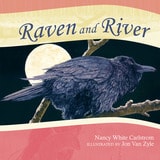
Raven and River
Nancy White Carlstrom
University of Alaska Press, 2011
Raven and River leads young readers on a fantastical journey with a raven across the icy Alaska landscape on the verge of spring. Along the way, the raven’s sonorous cry wakes a cast of sleeping woodland creatures, including a bear, a beaver, a hare, and a squirrel—all of whom join him in imploring the still-frozen river to melt and thereby initiate the change of seasons. Packed with information and featuring vibrant full-color illustrations by Jon Van Zyle, Raven and River brings to life these two important harbingers of Alaska’s spring.
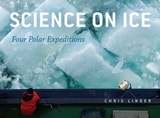
Science on Ice
Four Polar ExpeditionsChris Linder
University of Chicago Press, 2011
An oceanographer and award-winning photographer, Linder chronicles four polar expeditions in this richly illustrated volume: to a teeming colony of Adélie penguins, through the icy waters of the Bering Sea in spring, beneath the pack ice of the eastern Arctic Ocean, and over the lake-studded surface of the Greenland Ice Sheet. Each trip finds Linder teamed up with a prominent science journalist, and together their words and pictures reveal the day-to-day details of how science actually gets done at the poles. Breathtaking images of the stark polar landscape alternate with gritty, close-up shots of scientists working in the field, braving physical danger and brutal conditions, and working with remarkable technology designed to survive the poles—like robotic vehicles that chart undersea mountain ranges—as they gather crucial information about our planet's distant past, and the risks that climate change poses for its future.
The result is a combination travel book and paean to the hard work and dedication that underlies our knowledge of life on earth. Science on Ice takes readers to the farthest reaches of our planet; science has rarely been more exciting—or inspiring.
Spring
Oni Buchanan
University of Illinois Press, 2008
Spring and a Thousand Years (Unabridged)
PoemsJudy Halebsky
University of Arkansas Press, 2020
A translator’s notebook, an almanac, an ecological history, Judy Halebsky’s Spring and a Thousand Years (Unabridged) moves between multiple intersections and sign systems connected in a long glossary poem that serves as the book’s guide to what is lost, erased, or disrupted in transition both from experience to written word and from one language, location, and time period to another.
Writers Li Bai, Matsuo Bashō, Sei Shōnagon, and Du Fu make frequent appearances in centuries ranging from the eighth to the twenty-first, and appear in conversation with Grace Paley, Donald Hall, and Halebsky herself, as the poet explores subjects ranging from work and marriage to environmental destruction. Asking what would happen if these poets—not just their work—appeared in California, the poems slip between different geographies, syntaxes, times, and cultural frameworks.
The role of the literary translator is to bring text from one language into another, working to at once shift and retain the context of the original—from one alphabet to another, one point in time to another. These are poems in homage to translation; they rely on concepts that can bridge time and space, and as a result are as likely to find meaning in donuts or Zumba as they are to find it in the ocean. Spring and a Thousand Years (Unabridged) finds reasons for hope not in how the world should be, but in how it has always been.
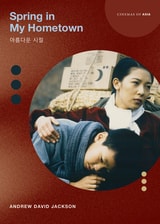
Spring in My Hometown
Andrew David Jackson
Lever Press, 2026
The inaugural volume of the Cinemas of Asia series, this book offers a fresh perspective on South Korean director Lee Kwang-mo’s 1998 film Spring in My Hometown (아름다운 시절). Written and directed by Lee, the intensely personal film tells the story of his grandfather’s relationship with his ten-year-old father during the Korean War. This volume examines the industrial context in which Lee attempted to bring his film into production, the cinematic cycle from which it emerged, and the unique style that captivated festival juries but divided audiences. Jackson’s book offers a rare, historical insight into an important Asian cinematic industry on the verge of commercial transformation at the end of the last century.
Cinemas of Asia is the first series dedicated to the cinemas of South, Southeast, East, Central Asia, and global Asian diasporas. Each volume provides a critical analysis and interpretation of a notable film from Asian cinema and consists of thematic chapters, accessible writing, and screenshots and illustrations. Authors analyze each film from a variety of angles, including film, literary, historical, gender, post-/decolonial studies, and each volume is accessibly written, informative, and appeals to academics, students, cinephiles, and non-experts alike.
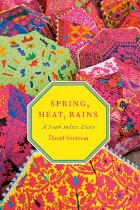
Spring, Heat, Rains
A South Indian DiaryDavid Shulman
University of Chicago Press, 2008
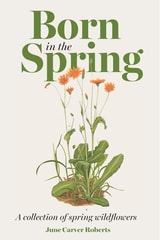
The Born in the Spring
A Collection of Spring WildflowersJune Carver Roberts
Ohio University Press, 2024

The Hounds of Spring
Lucy Cummin
Tupelo Press, 2018
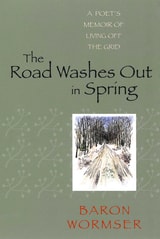
The Road Washes Out in Spring
A Poet’s Memoir of Living Off the GridBaron Wormser
University Press of New England, 2008
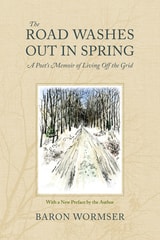
The Road Washes Out in Spring
A Poet’s Memoir of Living Off the GridBaron Wormser
Brandeis University Press, 2023
For nearly twenty-five years, poet Baron Wormser and his family lived in a house in Maine with no electricity or running water. They grew much of their own food, carried water by hand, and read by the light of kerosene lamps. They considered themselves part of the “back to the land” movement, but their choice to live off the grid was neither a statement nor a protest: they simply had built their house too far from the road and could not afford to bring in power lines. Over the years, they settled into a life that centered on what Thoreau would have called “the essential facts.” In this graceful meditation, Wormser similarly spurns ideology in favor of observation, exploration, and reflection. “When we look for one thread of motive,” he writes, “we are, in all likelihood, deceiving ourselves.” His refusal to be satisfied with the obvious explanation, the single thread of motive, makes him a keen and sympathetic observer of his neighbors and community, a perceptive reader of poetry and literature, and an honest and unselfconscious analyst of his own responses to the natural world. The result is a series of candid personal essays on community and isolation, nature, civilization, and poetry. Lovely and rich, The Road Washes Out in Spring is an immersive read. A new preface by the author rounds out this new edition.