Results by title
7 books match the query 'Squire, Peverill'
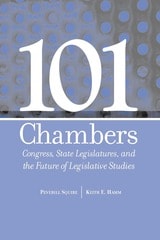
101 CHAMBERS
CONGRESS, STATE LEGISLATURES, & THE FUTURE OF LEGISLATIVE STUDIESPeverill Squire and Keith E. Hamm
The Ohio State University Press, 2005
Although legislative studies is thriving, it suffers from one glaring weakness: a lack of truly comparative, cross-institutional research. Instead, research focuses overwhelmingly on the U.S. Congress. This unfortunate fixation limits the way scholars approach the testing of many compelling theories of legislative organization and behavior, and it ignores the invaluable research possibilities that comparison with the 99 American state legislative chambers offers.
State legislatures are easily compared to Congress: They arise out of the same political culture and history. Their members represent the same parties and face the same voters in the same elections using the same rules. And the functions and roles are the same, with each fully capable of initiating, debating, and passing legislation. None of the methodological problems found when comparing presidential system legislatures with parliamentary system legislatures arise when comparing Congress and the state legislatures.
However, while there are great similarities, there are also important differences that provide scholars leverage for rigorously testing theories. The book compares and contrasts Congress and the state legislatures on histories, fundamental structures, institutional and organizational characteristics, and members. By highlighting the vast array of organizational schemes and behavioral patterns evidenced in state legislatures, the authors demonstrate that the potential for the study of American legislatures, as opposed to the separate efforts of Congressional and state legislative scholars, is too great to leave unexplored.
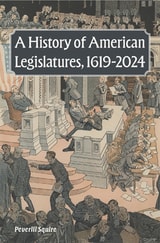
A History of American Legislatures, 1619-2024
Peverill Squire
University of Missouri Press, 2026
What might the members of the first Virginia assembly think if they could visit today’s Virginia House of Delegates? The air-conditioning and diversity of the current membership surely would surprise them, but would the legislative process itself strike them as odd?
In his latest work, Peverill Squire demonstrates that the way the modern legislature goes about its work would seem familiar to visitors from the past. Squire traces a nearly uninterrupted path from that first assembly in Virginia in 1619 to the contemporary Virginia General Assembly, and to the U.S. Congress and the other forty-nine state legislatures.
Each chapter examines discrete topics rather than historical eras, distinguishing the book from other studies of American legislatures. Topics covered include the fundamentals of legislative structure and operation, how qualification standards for legislative service became more inclusive, and how legislative professionalization unfolded at both congressional and state levels.
Though covering more than 400 years, Squire manages to present a comprehensive and accessible history of American legislatures that both scholars and students will find valuable.
Legislatures
Comparative Perspectives on Representative AssembliesGerhard Loewenberg, Peverill Squire, and D. Roderick Kiewiet, Editors
University of Michigan Press, 2002
Consisting of fourteen essays, this volume incorporates major areas of legislative research, including studies of recruitment of legislators and an overview of their careers, the evolution of legislatures, and the electoral systems by which legislatures are chosen. Each contributor reviews the principal research findings and emphasizes those concepts and methods that facilitate comparative research. The book assesses the state of knowledge in regard to U.S., European, Asian, and Latin American legislatures. The introductory chapter by the editors identifies how to comparatively test research findings while taking into account data availability and questions of conceptual equivalence. Each chapter provides an extensive bibliography, making the book an excellent guide to literature on legislative research. The contributors are David T. Canon, John M. Carey, Gary W. Cox, Frantisek Formanek, John R. Hibbing, Ewa Karpowicz, Junko Kato, Sadafumi Kawato, Michael Laver, Gary F. Moncrief, Chan Wook Park, Werner J. Patzelt, Bjorn Erik Rasch, Kenneth A. Shepsle, Steven S. Smith, and Rick K. Wilson.
This book is designed for faculty and graduate students in political science and will also be of interest to members of legislative research staffs in this country and overseas, and to specialists on legislatures in history and law.
Gerhard Loewenberg is University of Iowa Foundation Distinguished Professor of Political Science. D. Roderick Kiewiet is Dean of Graduate Studies and Professor of Political Science, California Institute of Technology, Pasadena. Peverill Squire is Professor of Political Science, University of Iowa.
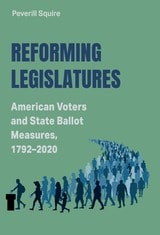
Reforming Legislatures
American Voters and State Ballot Measures, 1792-2020Peverill Squire
University of Missouri Press, 2024
Legislatures are ubiquitous in the American political experience. First created in Virginia in 1619, they have existed continuously ever since. Indeed, they were established in even the most unlikely of places, notably in sparsely populated frontier settlements, and functioned as the focal point of every governing system devised.
Despite the ubiquity of state legislatures, we know remarkably little about how Americans have viewed them as organizations, in terms of their structures, rules, and procedures. But with the rise of modern public opinion surveys in the twentieth century, we now have extensive data on how Americans have gauged legislative performance throughout the many years. That said, the responses to the questions pollsters typically pose reflect partisanship, policy, and personality. Generally, respondents respond favorably to legislatures controlled by their own political party and those in power during good economic times. Incumbent lawmakers get ratings boosts from having personalities, “home styles” that mesh with those of their constituents. These relationships are important indicators of people’s thoughts regarding the current performance of their legislatures and legislators, but they tell us nothing about attitudes toward the institution and its organizational characteristics.
This study offers a unique perspective on what American voters have historically thought about legislatures as organizations and legislators as representatives. Rather than focusing on responses to surveys that ask respondents how they rate the current performance of lawmakers and legislatures, this study leverages the most significant difference between national and state politics: the existence of ballot propositions in the latter. At the national level Americans have never had any say over Congress’s structure, rules, or procedures. In contrast, at the state level they have had ample opportunities over the course of more than two centuries to shape their state legislatures. The data examined here look at how people have voted on more than 1,500 state ballot propositions targeting a wide array of legislative organizational and parliamentary features. By linking the votes on these measures with the public debates preceding them, this study documents not only how American viewed various aspects of their legislatures, but also whether their opinions held constant or shifted over time. The findings reported paint a more nuanced picture of Americans’ attitudes toward legislatures than the prevailing one derived from survey research. When presented with legislative reform measures on which concrete choices were offered and decisions on them had to be made, the analyses presented here reveal that, counter to the conventional wisdom that people loved their representatives but hated the legislature, voters usually took charitable positions toward the institution while harboring skeptical attitudes about lawmakers’ motives and behaviors.
The Evolution of American Legislatures
Colonies, Territories, and States, 1619-2009Peverill Squire
University of Michigan Press, 2014
The institutional development of American legislatures, beginning with the first colonial assembly of 1619, has been marked by continuity as well as change. Peverill Squire draws upon a wealth of primary sources to document this institutional history. Beginning with the ways in which colonial assemblies followed the precedents of British institutions, Squire traces the fundamental ways they evolved to become distinct. He next charts the formation of the first state legislatures and the Constitutional Congress, describes the creation of territorial and new state legislatures, and examines the institutionalization of state legislatures in the nineteenth century and their professionalization since 1900.
With his conclusion, Squire discusses the historical trajectory of American legislatures and suggests how they might further develop over the coming decades. While Squire's approach will appeal to historians, his focus on the evolution of rules, procedures, and standing committee systems, as well as member salaries, legislative sessions, staff, and facilities, will be valuable to political scientists and legislative scholars.
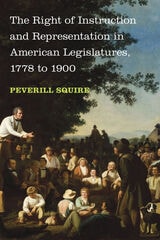
The Right of Instruction and Representation in American Legislatures, 1778 to 1900
Peverill Squire
University of Michigan Press, 2021
The Rise of the Representative
Lawmakers and Constituents in Colonial AmericaPeverill Squire
University of Michigan Press, 2017