Results by title
8 books match the query 'Stability'

Banking on Stability
Japan and the Cross-Pacific Dynamics of International Financial Crisis ManagementSaori N. Katada
University of Michigan Press, 2001
Banking on Stability looks at Japan's willingness to cooperate financially with the United States--its most important trade partner--in cases where such compliance yields an improvement in relations. Katada argues that the Japanese government carefully weighs the benefits arising in international and domestic realms when taking on the role of collective crisis manager and concludes that Japan is no exception in having private gain as a central motivation during international financial crises.
Saori Katada is Assistant Professor, School of International Relations, University of Southern California.
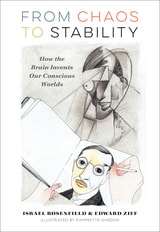
From Chaos to Stability
How the Brain Invents Our Conscious WorldsIsrael Rosenfield
University of Iowa Press, 2024
To make sense of this chaos, the brain must simplify the sensory inputs by creating, or inventing, the colors, sounds, smells, forms, and faces that are perceived in consciousness, which become a proxy for the chaotic world in which we live. The brain’s ability to generalize and categorize these invented perceptions, and to relate them to one another, enables it to form memories, which are not fixed representations of things past, but a dynamic and malleable function of the brain that is relational.
When formation of these worlds breaks down, neurological differences arise. Although the mechanisms that transform sensory chaos into the simplified perceptions experienced in consciousness remain elusive, Rosenfield and Ziff relate what they have learned by means of imaging brain activity and by mapping the neural circuits that comprise memory traces. In addition, the authors offer perspectives for future studies of consciousness.

Justice for Girls?
Stability and Change in the Youth Justice Systems of the United States and CanadaJane B. Sprott and Anthony N. Doob
University of Chicago Press, 2009
For over a century, as women have fought for and won greater freedoms, concern over an epidemic of female criminality, especially among young women, has followed. Fear of this crime wave—despite a persistent lack of evidence of its existence—has played a decisive role in the development of the youth justice systems in the United States and Canada. Justice for Girls? is a comprehensive comparative study of the way these countries have responded to the hysteria over “girl crime” and how it has affected the treatment of both girls and boys.
Tackling a century of historical evidence and crime statistics, Jane B. Sprott and Anthony N. Doob carefully trace the evolution of approaches to the treatment of young offenders. Seeking to keep youths out of adult courts, both countries have built their systems around rehabilitation. But, as Sprott and Doob reveal, the myth of the “girl crime wave” led to a punitive system where young people are dragged into court for minor offenses and girls are punished far more severely than boys. Thorough, timely, and persuasive, Justice for Girls? will be vital to anyone working with troubled youths.

Modelling and Stability of Smart Grids
Marta Molinas
The Institution of Engineering and Technology, 2016

Sliding Mode Control of Vehicle Dynamics
Antonella Ferrara
The Institution of Engineering and Technology, 2017

Stability and Change in Guale Indian Pottery, A.D. 1300-1702
Rebecca Saunders
University of Alabama Press, 2000
Through a comprehensive study of changing pottery attributes, Saunders documents the clash of Spanish and Native American cultures in the 16th-century southeastern United States.
By studying the ceramic traditions of the Guale Indians, Rebecca Saunders provides evidence of change in Native American lifeways from prehistory through European contact and the end of the Mission period. The Guale were among the first southeastern groups to come into contact with Spanish and French colonists, and they adapted various strategies in order to ensure their own social survival. That adaptation is reflected, Saunders shows, in the changing attributes of pottery recovered on archaeological sites on the coasts of Georgia and Florida.
Saunders traces the evolution of Guale pottery from the late prehistoric Irene phase through the Mission period at the three archaeological sites. She uses both technological and stylistic attributes to monitor change, paying particular attention to changes in execution and frequency of the filfot cross—a stylized cross that is a symbol of Guale cosmology. The frequency of this symbol in different ceramic components, according to Saunders, is a measure of change in the worldview of the missionized Guale. Although the symbol abruptly changed after the first Spanish contact, it showed remarkable stability through the Mission period, suggesting that traditional craft training and production remained strong despite high mortality rates and frequent relocation.
Only after 1684, when the Guale were relocated to Amelia Island in present-day Florida, did the use of the cross motif decline, suggesting that the Guale who remained in Spanish territory may have conceived of their place in the cosmos differently from their forebears or their contemporaries who fled to the interior.

Stability of Metals at Elevated Temperatures
Claude L. Clark and Albert E. White
University of Michigan Press, 1928

Variability, Scalability and Stability of Microgrids
S.M. Muyeen
The Institution of Engineering and Technology, 2019