Results by title

5 books match the query 'Stanfield, Peter'
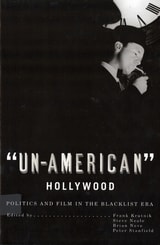
cover of 'Un-American' Hollywood: Politics and Film in the Blacklist Era

'Un-American' Hollywood

Politics and Film in the Blacklist Era

Stanfield, Peter

Rutgers University Press, 2007

The concept of “un-Americanism,” so vital to the HUAC crusade of the 1940s and 1950s, was resoundingly revived in the emotional rhetoric that followed the September 11th terrorist attacks. Today’s political and cultural climate makes it more crucial than ever to come to terms with the consequences of this earlier period of repression and with the contested claims of Americanism that it generated.

            “Un-American” Hollywood  reopens the intense critical debate on the blacklist era and on the aesthetic and political work of the Hollywood Left. In a series of fresh case studies focusing on contexts of production and reception, the contributors offer exciting and original perspectives on the role of progressive politics within a capitalist media industry.

            Original essays scrutinize the work of individual practitioners, such as Robert Rossen, Joseph Losey, Jules Dassin, and Edward Dmytryk, and examine key films, including The Robe, Christ in Concrete, The House I Live In, The Lawless, The Naked City, The Prowler, Body and Soul, and FTA.
[more]
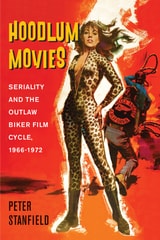
cover of Hoodlum Movies: Seriality and the Outlaw Biker Film Cycle, 1966-1972

Hoodlum Movies

Seriality and the Outlaw Biker Film Cycle, 1966-1972

Stanfield, Peter

Rutgers University Press, 2018
From The Wild Angels in 1966 until its conclusion in 1972, the cycle of outlaw motorcycle films contained forty-odd formulaic examples. All but one were made by independent companies that specialized in producing exploitation movies for drive-ins, neighborhood theaters, and rundown inner city theaters. Despised by critics, but welcomed by exhibitors denied first-run films, these cheaply and quickly produced movies were made to appeal to audiences of mobile youths. The films are repetitive, formulaic, and eminently forgettable, but there is a story to tell about all of the above, and it is one worth hearing. Hoodlum Movies is not only about the films, its focus is on why and how these films were made, who they were made for, and how the cycle developed through the second half of the 1960s and came to a shuddering halt in 1972.   
[more]
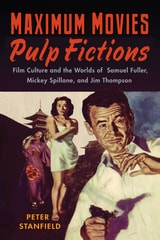
cover of Maximum Movies—Pulp Fictions: Film Culture and the Worlds of Samuel Fuller, Mickey Spillane, and Jim Thompson

Maximum Movies—Pulp Fictions

Film Culture and the Worlds of Samuel Fuller, Mickey Spillane, and Jim Thompson

Stanfield, Peter

Rutgers University Press, 2011
In the words of Richard Maltby . . . "Maximum Movies--Pulp Fictions describes two improbably imbricated worlds and the piece of cultural history their intersections provoked." One of these worlds comprises a clutch of noisy, garish pulp movies--Kiss Me Deadly, Shock Corridor, Fixed Bayonets!, I Walked with a Zombie, The Lineup, Terror in a Texas Town, Ride Lonesome--pumped out for the grind houses at the end of the urban exhibition chain by the studios' B-divisions and fly-by-night independents. The other is occupied by critics, intellectuals, cinephiles, and filmmakers such as Jean-Luc Godard, Manny Farber, and Lawrence Alloway, who championed the cause of these movies and incited the cultural guardians of the day by attacking a rigorously policed canon of tasteful, rarified, and ossified art objects. Against the legitimate, and in defense of the illegitimate, in an insolent and unruly manner, they agitated for the recognition of lurid sensational crime stories, war pictures, fast-paced Westerns, thrillers, and gangster melodramas were claimed as examples of the true, the real, and the authentic in contemporary culture--the foundation upon which modern film studies sits.
[more]
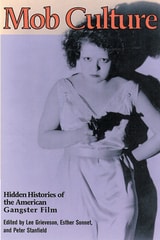
cover of Mob Culture: Hidden Histories of the American Gangster Film

Mob Culture

Hidden Histories of the American Gangster Film

Grieveson, Lee

Rutgers University Press, 2005

Sinister, swaggering, yet often sympathetic, the figure of the gangster has stolen and murdered its way into the hearts of American cinema audiences. Despite the enduring popularity of the gangster film, however, traditional criticism has focused almost entirely on a few canonical movies such as Little Caesar, Public Enemy, and The Godfather trilogy, resulting in a limited and distorted understanding of this diverse and changing genre.

Mob Culture offers a long-awaited, fresh look at the American gangster film, exposing its hidden histories from the Black Hand gangs of the early twentieth century to The Sopranos. Departing from traditional approaches that have typically focused on the "nature" of the gangster, the editors have collected essays that engage the larger question of how the meaning of criminality has changed over time. Grouped into three thematic sections, the essays examine gangster films through the lens of social, gender, and racial/ethnic issues.

Destined to become a classroom favorite, Mob Culture is an indispensable reference for future work in the genre.
[more]
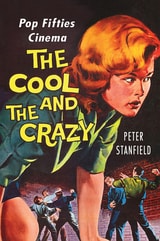
cover of The Cool and the Crazy: Pop Fifties Cinema

The Cool and the Crazy

Pop Fifties Cinema

Stanfield, Peter

Rutgers University Press, 2015

Explosive! Amazing! Terrifying! You won’t believe your eyes! 
 
Such movie taglines were common in the 1950s, as Hollywood churned out a variety of low-budget pictures that were sold on the basis of their sensational content and topicality. While a few of these movies have since become canonized by film fans and critics, a number of the era’s biggest fads have now faded into obscurity. The Cool and the Crazy examines seven of these film cycles, including short-lived trends like boxing movies, war pictures, and social problem films detailing the sordid and violent life of teenagers, as well as uniquely 1950s takes on established genres like the gangster picture.  
 
Peter Stanfield reveals how Hollywood sought to capitalize upon current events, moral panics, and popular fads, making movies that were “ripped from the headlines” on everything from the Korean War to rock and roll. As he offers careful readings of several key films, he also considers the broader historical and commercial contexts in which these films were produced, marketed, and exhibited. In the process, Stanfield uncovers surprising synergies between Hollywood and other arenas of popular culture, like the ways that the fashion trend for blue jeans influenced the 1950s Western. 
 
Delivering sharp critical insights in jazzy, accessible prose, The Cool and the Crazy offers an appreciation of cinema as a “pop” medium, unabashedly derivative, faddish, and ephemeral. By studying these long-burst bubbles of 1950s “pop,” Stanfield reveals something new about what films do and the pleasures they provide.
[more]