Results by title

3 books match the query 'Starvation'
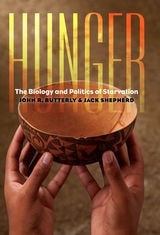
cover of Hunger: The Biology and Politics of Starvation

Hunger

The Biology and Politics of Starvation

John R. Butterly and Jack Shepherd

Dartmouth College Press, 2010
The Universal Declaration of Human Rights, adopted by the United Nations in 1948, recognizes the individual’s right “to a standard of living adequate for the health and wellbeing of himself and his family, including food, clothing, housing, and medical care.” More than sixty years later, despite the rapid advancement of science and technology and the proliferation of humanitarian efforts, inadequate nutrition remains a major health and social problem worldwide. Food insecurity—chronic malnutrition, persistent hunger, even starvation—still afflicts more than one in seven of the world’s people. As Butterly and Shepherd show, hunger is not the result of inadequate resources and technologies; rather, its cause is a lack of political will to ensure that all people have access to the food to which they are entitled—food distributed safely, fairly, and equitably. Using a cross-disciplinary approach rooted in both medicine and social science to address this crucial issue, the authors provide in-depth coverage of the biology of human nutrition; malnutrition and associated health-related factors; political theories of inadequate nutrition and famine; historical-political behaviors that have led to famine in the past; and the current political behaviors that cause hunger and malnutrition to remain a major health problem today.
[more]
cover of So Much Wasted: Hunger, Performance, and the Morbidity of Resistance

So Much Wasted

Hunger, Performance, and the Morbidity of Resistance

Patrick Anderson

Duke University Press, 2010
In So Much Wasted, Patrick Anderson analyzes self-starvation as a significant mode of staging political arguments across the institutional domains of the clinic, the gallery, and the prison. Homing in on those who starve themselves for various reasons and the cultural and political contexts in which they do so, he examines the diagnostic history of anorexia nervosa, fasts staged by artists including Ana Mendieta and Marina Abramović, and a hunger strike initiated by Turkish prisoners. Anderson explores what it means for the clinic, the gallery, and the prison when one performs a refusal to consume as a strategy of negation or resistance, and the ways that self-starvation, as a project of refusal aimed, however unconsciously, toward death, produces violence, suffering, disappearance, and loss differently from other practices. Drawing on the work of Martin Heidegger, Sigmund Freud, Giorgio Agamben, Peggy Phelan, and others, he considers how the subject of self-starvation is refigured in relation to larger institutional and ideological drives, including those of the state. The ontological significance of performance as disappearance constitutes what Anderson calls the “politics of morbidity,” the embodied, interventional embrace of mortality and disappearance not as destructive, but rather as radically productive stagings of subject formations in which subjectivity and objecthood, presence and absence, and life and death are intertwined.
[more]
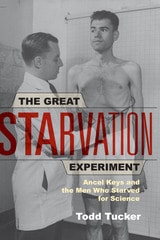
cover of The Great Starvation Experiment: Ancel Keys and the Men Who Starved for Science

The Great Starvation Experiment

Ancel Keys and the Men Who Starved for Science

Todd Tucker

University of Minnesota Press, 2007

“The Great Starvation Experiment is wide-ranging, weaving progress in the war into the day-to-day suffering of the hungry volunteers.” —Saint Paul Pioneer Press

“Fascinating . . .” —Minneapolis Star Tribune

Near the end of World War II, thirty-six conscientious objectors volunteered to be systematically starved for renowned scientist Ancel Keys’s study at the University of Minnesota in the basement of Memorial Stadium. Aimed to benefit relief efforts in war-ravaged Europe and Asia, the study sought the best way to rehabilitate starving citizens. Tucker captures a lost moment in American history—a time when stanch idealism and a deep willingness to sacrifice trumped even basic human needs.

“Tucker provides a fascinating and moving history of the experiment, centering on the lives and experiences of the volunteers and the formidable obstacles they overcame. Tucker tells the story with verve and economy. . . . Keys, his experiment and his 36 starving men form a compelling combination.” —Publishers Weekly

Todd Tucker is the author of several books, including Notre Dame vs. the Klan: How the Fighting Irish Defeated the Ku Klux Klan (2004). He served on the legendary Navy submarine USS Alabama before moving to Valparaiso, Indiana.

[more]