Results by title
63 books match the query 'Statistics' and 8 start with a
A Generation of Change
A Profile of America's Older PopulationJacob S. Siegel
Russell Sage Foundation, 1993
A Generation of Change is an exceptional study of the nation's elderly, a population that has undergone profound changes in the years since World War II. As modern medicine extends the average life span and the baby boom generation begins to approach middle age, the number of older Americans is expected to more than double in the next century. Currently, 75 percent of U.S. health care expenditures go toward the elderly. But as national trends toward early retirement and low birthrate continue, an aging American population could face crises in meeting their financial and physical needs. According to Jacob S. Siegel in A Generation of Change, astute public planning must be informed by an understanding of the demographic, social, and economic characteristics of the older population, as it is today and as it will be in the coming years. Siegel employs census and survey data from 1950 through the mid-1980s to describe a population constantly shifting in its ethnic and gender composition, geographic distribution, marital and living arrangements, health, employment, and economic status. Surprisingly, there is tremendous disparity in the quality of life among the elderly. Although their average poverty rate is below that of the general population, there are dramatic levels of poverty among older women, who are far more likely than men to live alone or in institutions. As the elderly progress from the "young old" to the "aged old"—those over 85—sharp differences emerge as income and employment decrease and degrees of chronic illness increase. In addition, residential location influences the quality of health care and public assistance available to the elderly, an effect that may account for the marked migration of older people to Florida and Arizona. Siegel analyzes the full range of characteristics for this heterogenous population and, through comparisons with other age groups as well as with the elderly of the previous decades, portrays the crucial influence of social and economic conditions over the life course on the quality of later life. With our elderly population growing more numerous and long lived, accurate information about them is increasingly essential. A Generation of Change will serve as a valuable resource for policymakers seeking more effective solutions in critical areas such as housing, long-term health care, and the funding of Social Security and retirement programs. A Volume in the Russell Sage Foundation Census Series
[more]

A History of the Modern Fact
Problems of Knowledge in the Sciences of Wealth and SocietyMary Poovey
University of Chicago Press, 1998
How did the fact become modernity's most favored unit of knowledge? How did description come to seem separable from theory in the precursors of economics and the social sciences?
Mary Poovey explores these questions in A History of the Modern Fact, ranging across an astonishing array of texts and ideas from the publication of the first British manual on double-entry bookkeeping in 1588 to the institutionalization of statistics in the 1830s. She shows how the production of systematic knowledge from descriptions of observed particulars influenced government, how numerical representation became the privileged vehicle for generating useful facts, and how belief—whether figured as credit, credibility, or credulity—remained essential to the production of knowledge.
Illuminating the epistemological conditions that have made modern social and economic knowledge possible, A History of the Modern Fact provides important contributions to the history of political thought, economics, science, and philosophy, as well as to literary and cultural criticism.
[more]
A Matter of Trust
Building Integrity into Data, Statistics and Records to Support the Sustainable Development GoalsEdited by Anne Thurston
University of London Press, 2020
The United Nations Sustainable Development Goals initiative has the potential to set the direction for a future world that works for everyone. Approved by 193 United Nations member countries in September 2016 to help guide global and national development policies through the year 2030, the seventeen goals build on the successes of the Millennium Development Goals, but also include new priority areas, such as climate change, economic inequality, innovation, sustainable consumption, peace, and justice. Assessed against commonly agreed targets and indicators, the goals should facilitate inter-governmental cooperation and the development of regional and even global development strategies. This book explores, through a series of case studies, the substantial challenges for assembling reliable data and statistics to address pressing development challenges, particularly in Africa. By highlighting the enormous potential value of creating and using high quality data, statistics, and records as an interconnected resource and describing how this can be achieved, the book will contribute to defining meaningful and realistic global and national development policies in the critical period to 2030.
[more]
After Ellis Island
Newcomers and Natives in the 1910 CensusSusan Cotts Watkins
Russell Sage Foundation, 1994
After Ellis Island is an unprecedented study of America's foreign-born population at a critical juncture in immigration history. The new century had witnessed a tremendous surge in European immigration, and by 1910 immigrants and their children numbered nearly one third of the U.S. population. The census of that year drew from these newcomers a particularly rich trove of descriptive information, one from which the contributors to After Ellis Island draw to create an unmatched profile of American society in transition. Chapters written especially for this volume explore many aspects of the immigrants' lives, such as where they settled, the jobs they held, how long they remained in school, and whether or not they learned to speak English. More than a demographic catalog, After Ellis Island employs a wide range of comparisons among ethnic groups to probe whether differences in childbirth, child mortality, and education could be traced to cultural or environmental causes. Did differences in schooling levels diminish among groups in the same social and economic circumstances, or did they persist along ethnic lines? Did absorption into mainstream America—measured through duration of U.S. residence, neighborhood mingling, and ability to speak English—blur ethnic differences and increase chances for success? After Ellis Island also shows how immigrants eased the nation's transition from agriculture to manufacturing by providing essential industrial laborers. After Ellis Island offers a major assessment of ethnic diversity in early twentieth century American society. The questions it addresses about assimilation and employment among immigrants in 1910 acquire even greater significance as we observe a renewed surge of foreign arrivals. This volume will be valuable to sociologists and historians of immigration, to demographers and economists, and to all those interested in the relationship of ethnicity to opportunity.
[more]

American Childhood
Risks and RealitiesSchneider, Dona
Rutgers University Press, 1995
What is happening to American youth today? There is a mountain of statistics gathered about our children, but it is often hard to know what the numbers mean. Dona Schneider argues that "sound- bite statistics" on teenage pregnancy or child abuse can mislead us and create bad public policy. But a closer look at those same statistics can give us a window on tomorrow's public health and social problems.
To show how the statistics can both disguise and highlight problems, Schneider alternates a discussion of the numbers with vivid encounters with individual children and adults: the middle-class black high school student's offhand explanation about how to get a gun; a vital statistics bureau worker's astonishment at his own classification as Hispanic; a young woman's pleasure in holding down a job after teachers dismissed her as learning disabled; and a latchkey child's nightmare of coming home from school to an empty house when she was sick.
This book guides us through the morass of numbers bandied about to describe the state of America's children—what the numbers tell us and what they don't—and it offers a call for action. Comprehensive in its treatment of all groups of children and accessible in style, this book is essential for anyone concerned about children in American society.
[more]
American Neighborhoods and Residential Differentiation
Michael J. White
Russell Sage Foundation, 1987
Residential patterns are reflections of social structure; to ask, "who lives in which neighborhoods," is to explore a sorting-out process that is based largely on socioeconomic status, ethnicity, and life cycle characteristics. This benchmark volume uses census data, with its uniquely detailed information on small geographic areas, to bring into focus the familiar yet often vague concept of neighborhood. Michael White examines nearly 6,000 census tracts (approximating neighborhoods) in twenty-one representative metropolitan areas, from Atlanta to Salt Lake City, Newark to San Diego. The availability of statistics spanning several decades and covering a wide range of demographic characteristics (including age, race, occupation, income, and housing quality) makes possible a rich analysis of the evolution and implications of differences among neighborhoods. In this complex mosaic, White finds patterns and traces them over time—showing, for example, how racial segregation has declined modestly while socioeconomic segregation remains constant, and how population diffusion gradually affects neighborhood composition. His assessment of our urban settlement system also illuminates the social forces that shape contemporary city life and the troubling policy issues that plague it. A Volume in the Russell Sage Foundation Census Series
[more]
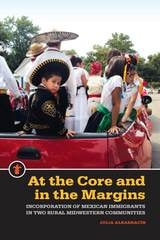
At the Core and in the Margins
Incorporation of Mexican Immigrants in Two Rural Midwestern CommunitiesJulia Albarracín
Michigan State University Press, 2016
Beardstown and Monmouth, Illinois, two rural Midwestern towns, have been transformed by immigration in the last three decades. This book examines how Mexican immigrants who have made these towns their homes have integrated legally, culturally, and institutionally. What accounts for the massive growth in the Mexican immigrant populations in these two small towns, and what does the future hold for them?
Based on 260 surveys and 47 in-depth interviews, this study combines quantitative and qualitative research to explore the level and characteristics of immigrant incorporation in Beardstown and Monmouth. It assesses the advancement of immigrants in the immigration/ residency/citizenship process, the immigrants’ level of cultural integration (via language, their connectedness with other members of society, and their relationships with neighbors), the degree and characteristics of discrimination against immigrants in these two towns, and the extent to which immigrants participate in different social and political activities and trust government institutions.
Immigrants in new destinations are likely to be poorer, to be less educated, and to have weaker English-language skills than immigrants in traditional destinations. Studying how this population negotiates the obstacles to and opportunities for incorporation is crucial.
[more]

Atlas of the Pacific Northwest, 9th Ed
Philip Jackson
Oregon State University Press, 2003
[more]