Results by title

9 books match the query 'Stephen, Lynn'
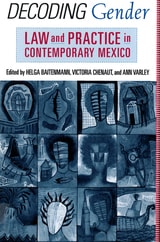
cover of Decoding Gender: Law and Practice in Contemporary Mexico

Decoding Gender

Law and Practice in Contemporary Mexico

Baitenmann, Helga

Rutgers University Press, 2007

Gender discrimination pervades nearly all legal institutions and practices in Latin America. The deeper question is how this shapes broader relations of power. By examining the relationship between law and gender as it manifests itself in the Mexican legal system, the thirteen essays in this volume show how law is produced by, but also perpetuates, unequal power relations. At the same time, however, authors show how law is often malleable and can provide spaces for negotiation and redress. The contributors (including political scientists, sociologists, geographers, anthropologists, and economists) explore these issues-not only in courts, police stations, and prisons, but also in rural organizations, indigenous communities, and families.

By bringing new interdisciplinary perspectives to issues such as the quality of citizenship and the rule of law in present-day Mexico, this book raises important issues for research on the relationship between law and gender more widely.
[more]
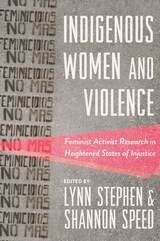
cover of Indigenous Women and Violence: Feminist Activist Research in Heightened States of Injustice

Indigenous Women and Violence

Feminist Activist Research in Heightened States of Injustice

Edited by Lynn Stephen and Shannon Speed

University of Arizona Press, 2021

Indigenous Women and Violence offers an intimate view of how settler colonialism and other structural forms of power and inequality created accumulated violences in the lives of Indigenous women. This volume uncovers how these Indigenous women resist violence in Mexico, Central America, and the United States, centering on the topics of femicide, immigration, human rights violations, the criminal justice system, and Indigenous justice. Taking on the issues of our times, Indigenous Women and Violence calls for the deepening of collaborative ethnographies through community engagement and performing research as an embodied experience. This book brings together settler colonialism, feminist ethnography, collaborative and activist ethnography, emotional communities, and standpoint research to look at the links between structural, extreme, and everyday violences across time and space.

Indigenous Women and Violence is built on engaging case studies that highlight the individual and collective struggles that Indigenous women face from the racial and gendered oppression that structures their lives. Gendered violence has always been a part of the genocidal and assimilationist projects of settler colonialism, and it remains so today. These structures—and the forms of violence inherent to them—are driving criminalization and victimization of Indigenous men and women, leading to escalating levels of assassination, incarceration, or transnational displacement of Indigenous people, and especially Indigenous women.

This volume brings together the potent ethnographic research of eight scholars who have dedicated their careers to illuminating the ways in which Indigenous women have challenged communities, states, legal systems, and social movements to promote gender justice. The chapters in this book are engaged, feminist, collaborative, and activism focused, conveying powerful messages about the resilience and resistance of Indigenous women in the face of violence and systemic oppression.

Contributors: R. Aída Hernández-Castillo, Morna Macleod, Mariana Mora, María Teresa Sierra, Shannon Speed, Lynn Stephen, Margo Tamez, Irma Alicia Velásquez Nimatuj

 
[more]
cover of Security Disarmed: Critical Perspectives on Gender, Race, and Militarization

Security Disarmed

Critical Perspectives on Gender, Race, and Militarization

Morgen, Sandra

Rutgers University Press, 2008

From the history of state terrorism in Latin America, to state- and group-perpetrated plunder and genocide in Africa, to war and armed conflicts in the Middle East, militarization--the heightened role of organized aggression in society--continues to painfully shape the lives of millions of people around the world.

In Security Disarmed, scholars, policy planners, and activists come together to think critically about the human cost of violence and viable alternatives to armed conflict. Arranged in four parts--alternative paradigms of security, cross-national militarization, militarism in the United States, and pedagogical and cultural concerns--the book critically challenges militarization and voices an alternative encompassing vision of human security by analyzing the relationships among gender, race, and militarization. This collection of essays evaluates and resists the worldwide crisis of militarizationùincluding but going beyond American military engagements in the twenty-first century.
[more]
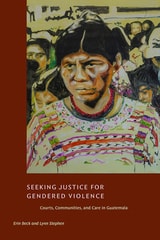
cover of Seeking Justice for Gendered Violence: Courts, Communities, and Care in Guatemala

Seeking Justice for Gendered Violence

Courts, Communities, and Care in Guatemala

Erin Beck and Lynn Stephen

Duke University Press, 2026

Guatemala is one of the first countries in Latin America to codify femicide as a crime and to establish separate victim-centric institutions of justice to address Violence Against Women and Girls (VAWG), including specialized courts and public prosecutors. Despite these pathbreaking legal reforms, Indigenous women in Guatemala face formidable barriers to seeking justice for and escaping the multiple overlapping forms of violence that they confront. Seeking Justice for Gendered Violence dissects the efficacy of VAWG legislative reforms, examining how they both challenge and perpetuate vicious cycles of impunity and gender-based violence on the ground. Drawing on extensive case studies developed over Erin Beck and Lynn Stephen’s ten years of ethnographic research with an Indigenous research team focused on Indigenous communities, activists, public prosecutors, and government officials, Seeking Justice for Gendered Violence investigates how VAWG reforms in Guatemala interact with preexisting societal structures and local communities, exposing the advances and limits of state-driven solutions while illuminating how Indigenous women leverage grassroots knowledge to survive and resist violence, and to support one another in reformed but flawed systems.
[more]
cover of Stories That Make History: Mexico through Elena Poniatowska’s Crónicas

Stories That Make History

Mexico through Elena Poniatowska’s Crónicas

Lynn Stephen

Duke University Press, 2021
From covering the massacre of students at Tlatelolco in 1968 and the 1985 earthquake to the Zapatista rebellion in 1994 and the disappearance of forty-three students in 2014, Elena Poniatowska has been one of the most important chroniclers of Mexican social, cultural, and political life. In Stories That Make History, Lynn Stephen examines Poniatowska's writing, activism, and political participation, using them as a lens through which to understand critical moments in contemporary Mexican history. In her crónicas—narrative journalism written in a literary style featuring firsthand testimonies—Poniatowska told the stories of Mexico's most marginalized people. Throughout, Stephen shows how Poniatowska helped shape Mexican politics and forge a multigenerational political community committed to social justice. In so doing, she presents a biographical and intellectual history of one of Mexico's most cherished writers and a unique history of modern Mexico.
[more]
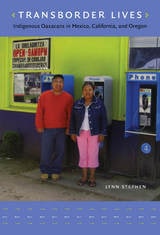
cover of Transborder Lives: Indigenous Oaxacans in Mexico, California, and Oregon

Transborder Lives

Indigenous Oaxacans in Mexico, California, and Oregon

Lynn Stephen

Duke University Press, 2007

Lynn Stephen’s innovative ethnography follows indigenous Mexicans from two towns in the state of Oaxaca—the Mixtec community of San Agustín Atenango and the Zapotec community of Teotitlán del Valle—who periodically leave their homes in Mexico for extended periods of work in California and Oregon. Demonstrating that the line separating Mexico and the United States is only one among the many borders that these migrants repeatedly cross (including national, regional, cultural, ethnic, and class borders and divisions), Stephen advocates an ethnographic framework focused on transborder, rather than transnational, lives. Yet she does not disregard the state: She assesses the impact migration has had on local systems of government in both Mexico and the United States as well as the abilities of states to police and affect transborder communities.

Stephen weaves the personal histories and narratives of indigenous transborder migrants together with explorations of the larger structures that affect their lives. Taking into account U.S. immigration policies and the demands of both commercial agriculture and the service sectors, she chronicles how migrants experience and remember low-wage work in agriculture, landscaping, and childcare and how gender relations in Oaxaca and the United States are reconfigured by migration. She looks at the ways that racial and ethnic hierarchies inherited from the colonial era—hierarchies that debase Mexico’s indigenous groups—are reproduced within heterogeneous Mexican populations in the United States. Stephen provides case studies of four grass-roots organizations in which Mixtec migrants are involved, and she considers specific uses of digital technology by transborder communities. Ultimately Stephen demonstrates that transborder migrants are reshaping notions of territory and politics by developing creative models of governance, education, and economic development as well as ways of maintaining their cultures and languages across geographic distances.
[more]
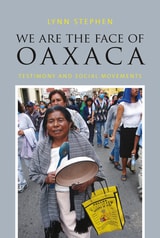
cover of We Are the Face of Oaxaca: Testimony and Social Movements

We Are the Face of Oaxaca

Testimony and Social Movements

Lynn Stephen

Duke University Press, 2013

A massive uprising against the Mexican state of Oaxaca began with the emergence of the Popular Assembly of the Peoples of Oaxaca (APPO) in June 2006. A coalition of more than 300 organizations, APPO disrupted the functions of Oaxaca's government for six months. It began to develop an inclusive and participatory political vision for the state. Testimonials were broadcast on radio and television stations appropriated by APPO, shared at public demonstrations, debated in homes and in the streets, and disseminated around the world via the Internet.

The movement was met with violent repression. Participants were imprisoned, tortured, and even killed. Lynn Stephen emphasizes the crucial role of testimony in human rights work, indigenous cultural history, community and indigenous radio, and women's articulation of their rights to speak and be heard. She also explores transborder support for APPO, particularly among Oaxacan immigrants in Los Angeles. The book is supplemented by a website featuring video testimonials, pictures, documents, and a timeline of key events.
[more]
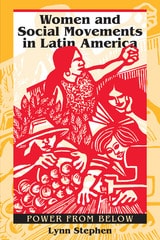
cover of Women and Social Movements in Latin America: Power from Below

Women and Social Movements in Latin America

Power from Below

By Lynn Stephen

University of Texas Press, 1997

Women's grassroots activism in Latin America combines a commitment to basic survival for women and their children with a challenge to women's subordination to men. Women activists insist that issues such as rape, battering, and reproductive control cannot be divorced from women's concerns about housing, food, land, and medical care.

This innovative, comparative study explores six cases of women's grassroots activism in Mexico, El Salvador, Brazil, and Chile. Lynn Stephen communicates the ideas, experiences, and perceptions of women who participate in collective action, while she explains the structural conditions and ideological discourses that set the context within which women act and interpret their experiences. She includes revealing interviews with activists, detailed histories of organizations and movements, and a theoretical discussion of gender, collective identity, and feminist anthropology and methods.
[more]
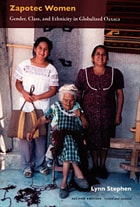
cover of Zapotec Women: Gender, Class, and Ethnicity in Globalized Oaxaca

Zapotec Women

Gender, Class, and Ethnicity in Globalized Oaxaca

Lynn Stephen

Duke University Press, 2005

In this extensively revised and updated second edition of her classic ethnography, Lynn Stephen explores the intersection of gender, class, and indigenous ethnicity in southern Mexico. She provides a detailed study of how the lives of women weavers and merchants in the Zapotec-speaking town of Teotitlán del Valle, Oaxaca, have changed in response to the international demand for Oaxacan textiles. Based on Stephen’s research in Teotitlán during the mid-1980s, in 1990, and between 2001 and 2004, this volume provides a unique view of a Zapotec community balancing a rapidly advancing future in export production with an entrenched past anchored in indigenous culture.

Stephen presents new information about the weaving cooperatives women have formed over the last two decades in an attempt to gain political and cultural rights within their community and standing as independent artisans within the global market. She also addresses the place of Zapotec weaving within Mexican folk art and the significance of increased migration out of Teotitlán. The women weavers and merchants collaborated with Stephen on the research for this book, and their perspectives are key to her analysis of how gender relations have changed within rituals, weaving production and marketing, local politics, and family life. Drawing on the experiences of women in Teotitlán, Stephen considers the prospects for the political, economic, and cultural participation of other indigenous women in Mexico under the policies of economic neoliberalism which have prevailed since the 1990s.

[more]