Results by title
5 books match the query 'Steponaitis, Vincas P.'
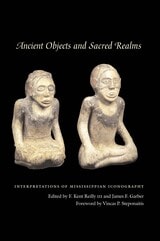
Ancient Objects and Sacred Realms
Interpretations of Mississippian IconographyEdited by F. Kent Reilly, III, and James F. Garber
University of Texas Press, 2006
Between AD 900-1600, the native peoples of the Mississippi River Valley and other areas of the Eastern Woodlands of the United States conceived and executed one of the greatest artistic traditions of the Precolumbian Americas. Created in the media of copper, shell, stone, clay, and wood, and incised or carved with a complex set of symbols and motifs, this seven-hundred-year-old artistic tradition functioned within a multiethnic landscape centered on communities dominated by earthen mounds and plazas. Previous researchers have referred to this material as the Southeastern Ceremonial Complex (SECC).
This groundbreaking volume brings together ten essays by leading anthropologists, archaeologists, and art historians, who analyze the iconography of Mississippian art in order to reconstruct the ritual activities, cosmological vision, and ideology of these ancient precursors to several groups of contemporary Native Americans. Significantly, the authors correlate archaeological, ethnographic, and art historical data that illustrate the stylistic differences within Mississippian art as well as the numerous changes that occur through time. The research also demonstrates the inadequacy of the SECC label, since Mississippian art is not limited to the Southeast and reflects stylistic changes over time among several linked but distinct religious traditions. The term Mississippian Iconographic Interaction Sphere (MIIS) more adequately describes the corpus of this Mississippian art. Most important, the authors illustrate the overarching nature of the ancient Native American religious system, as a creation unique to the native American cultures of the eastern United States.
Archaeology of the Moundville Chiefdom
Edited by Vernon James Knight Jr. and Vincas P. Steponaitis, with a foreword by Chistopher S. Peebles
University of Alabama Press, 2007
Built on a flat terrace overlooking the Black Warrior River in Alabama, the Moundville ceremonial center was at its height a densely occupied town of approximately 1,000 residents, with at least 29 earthen mounds surrounding a central plaza. Today Moundville is not only one of the largest and best-preserved Mississippian sites in the United States but also one of the most intensively studied. This volume brings together nine Moundville specialists who trace the site’s evolution and eventual decline.
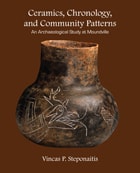
Ceramics, Chronology, and Community Patterns
An Archaeological Study at MoundvilleVincas P. Steponaitis
University of Alabama Press, 2009
Moundville, located on the Black Warrior River in west-central Alabama, is one of the best known and most intensively studied archaeological sites in North America. Yet, in spite of all these investigations, many aspects of the site's internal chronology remained unknown until the original 1983 publication of this volume. The author embarked on a detailed study of Moundville ceramics housed in museums and collections, and hammered out a new chronology for Moundville.This volume is a clearly written description of the analytical procedures employed on these ceramic samples and the new chronology this study revealed. Using the refined techniques outlined in this volume, it was possible for the author to trace changes in community patterns, which in turn shed light on Moundville's internal development and its place among North America's ancient cultures.
Forging Southeastern Identities
Social Archaeology, Ethnohistory, and Folklore of the Mississippian to Early Historic SouthGregory A. Waselkov
University of Alabama Press, 2017
Forging Southeastern Identities explores the many ways archaeologists and ethnohistorians define and trace the origins of Native Americans’ collective social identity.
Forging Southeastern Identities: Social Archaeology and Ethnohistory of the Mississippian to Early Historic South, a groundbreaking collection of ten essays, covers a broad expanse of time—from the ninth to the nineteenth centuries—and focuses on a common theme of identity. These essays represent the various methods used by esteemed scholars today to study how Native Americans in the distant past created new social identities when old ideas of the self were challenged by changes in circumstance or by historical contingencies.
Archaeologists, anthropologists, and folklorists working in the Southeast have always recognized the region’s social diversity; indeed, the central purpose of these disciplines is to study peoples overlooked by the mainstream. Yet the ability to define and trace the origins of a collective social identity—the means by which individuals or groups align themselves, always in contrast to others—has proven to be an elusive goal. Here, editors Gregory A. Waselkov and Marvin T. Smith champion the relational identification and categorical identification processes, taken from sociological theory, as effective analytical tools.
Taking up the challenge, the contributors have deployed an eclectic range of approaches to establish and inform an overarching theme of identity. Some investigate shell gorgets, textiles, shell trade, infrastructure, specific sites, or plant usage. Others focus on the edges of the Mississippian world or examine colonial encounters between Europeans and native peoples. A final chapter considers the adaptive malleability of historical legend in the telling and hearing of slave narratives.
The Archaeology of Arcuate Communities
Spatial Patterning and Settlement in the Eastern WoodlandsEdited by Martin Menz, Analise Hollingshead, and Haley Messer
University of Alabama Press, 2024
A comparative archaeological synthesis examining the spatial, social, and ceremonial logics underpinning circular community formations across the Eastern Woodlands from 10,000 BC to the sixteenth century.
The Archaeology of Arcuate Communities is an edited collection of ten essays that illuminate how Indigenous communities of the Eastern Woodlands, from 10,000 BC to the 1550s, are analyzed and interpreted by archaeologists today. Volume editors Martin Menz, Analise Hollingshead, and Haley Messer define the persistent circular or “arcuate” pattern of Native settlements in this region as a spatial manifestation of community activities that reinforced group identity alongside plazas, mounds, and other architectural features.
The varied case studies in this volume focus on specific communities, how they evolved, and the types of archaeological data that have been used to assess them. Part I, “Defining the Domestic Unit in Arcuate Communities,” reveals social distinctions between households and household clusters in arcuate communities, how they differ in terms of stylistic patterns and exchange, and how they combined to form distinct social groups at different scales within a broader community. Part II, “Organizing Principles of Arcuate Communities,” broadens the scope to identify the organizing principles of entire arcuate communities, such as the central role of plazas in structuring their development, how the distribution of households and central features within communities was contested and reorganized, and the importance of mounds in both delineating arcuate communities and marking their position on the landscape. Part III, “Comparison and Change in Arcuate Communities,” comprises case studies that examine changes in the organization of arcuate communities over time. Rounding out the volume is a concluding chapter that assesses how and why communities around the world formed in circular patterns.
A valuable resource for archaeologists, this collection will also be of interest to those seeking to learn about Native North American settlement, ceremony, and community organization.