Results by title
7 books match the query 'Stevedores'
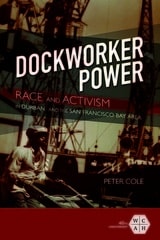
Dockworker Power
Race and Activism in Durban and the San Francisco Bay AreaPeter Cole
University of Illinois Press, 2018
Philip Taft Labor History Book Award, Labor and Working-Class History Association (LAWCHA) and the Cornell ILR School, 2019
A Black Perspectives Best Black History Book of 2018
Dockworkers have power. Often missed in commentary on today's globalizing economy, workers in the world's ports can harness their role, at a strategic choke point, to promote their labor rights and social justice causes. Peter Cole brings such overlooked experiences to light in an eye-opening comparative study of Durban, South Africa, and the San Francisco Bay Area, California. Path-breaking research reveals how unions effected lasting change in some of the most far-reaching struggles of modern times. First, dockworkers in each city drew on longstanding radical traditions to promote racial equality. Second, they persevered when a new technology--container ships--sent a shockwave of layoffs through the industry. Finally, their commitment to black internationalism and leftist politics sparked transnational work stoppages to protest apartheid and authoritarianism. Dockworker Power not only brings to light surprising parallels in the experiences of dockers half a world away from each other. It also offers a new perspective on how workers can change their conditions and world.
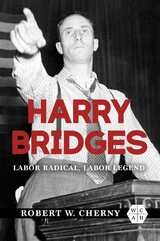
Harry Bridges
Labor Radical, Labor LegendRobert W. Cherny
University of Illinois Press, 2023
- Winner of a Silver Medal from the Independent Publisher Book Awards
- Won Honorable Mention for 2023 ILHA Book of the Year (International Labor History Association)
The iconic leader of one of America’s most powerful unions, Harry Bridges put an indelible stamp on the twentieth century labor movement. Robert Cherny’s monumental biography tells the life story of the figure who built the International Longshore and Warehouse Union (ILWU) into a labor powerhouse that still represents almost 30,000 workers.
An Australian immigrant, Bridges worked the Pacific Coast docks. His militant unionism placed him at the center of the 1934 West Coast Waterfront Strike and spurred him to expand his organizing activities to warehouse laborers and Hawaiian sugar and pineapple workers. Cherny examines the overall effectiveness of Bridges as a union leader and the decisions and traits that made him effective. Cherny also details the price paid by Bridges as the US government repeatedly prosecuted him for his left-wing politics.
Drawing on personal interviews with Bridges and years of exhaustive research, Harry Bridges places an extraordinary individual and the ILWU within the epic history of twentieth-century labor radicalism.

Waterfront Workers of New Orleans
Race, Class, and Politics, 1863-1923Eric Arnesen
University of Illinois Press, 1991
Winner of the John H. Dunning Prize in United States History
During the nineteenth century, American and foreign travelers often found New Orleans a delightful, exotic stop on their journeys. Few failed to marvel at the riverfront, the center of the city's economic activity. But historical memory overlooks the immigrants and Black migrants who served in the riverfront's army of laborers and provided the essential human power that kept the cotton, sugar, and other goods flowing. Eric Arnesen examines the diverse group of 10,000 to 15,000 cotton screwmen, longshoremen, cotton and round freight teamsters, cotton yardmen, railroad freight handlers, and Mississippi River roustabouts that formed the backbone of the Crescent City's trade and economic life.
Waterfront Workers
New Perspectives on Race and ClassEdited by Calvin Winslow
University of Illinois Press, 1998
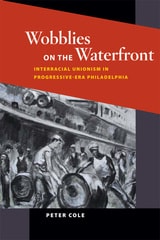
Wobblies on the Waterfront
Interracial Unionism in Progressive-Era PhiladelphiaPeter Cole
University of Illinois Press, 2007
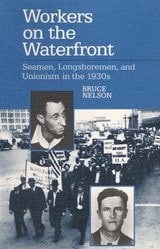
Workers on the Waterfront
Seamen, Longshoremen, and Unionism in the 1930sBruce Nelson
University of Illinois Press, 1988
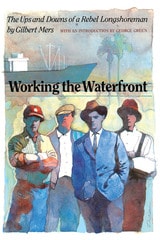
Working the Waterfront
The Ups and Downs of a Rebel LongshoremanBy Gilbert Mers
University of Texas Press, 1988
"Somebody said, 'History is written by the winners. The losers have nothing to say.' This book is by one of the losers, a bit player, not the star of the drama." So begins Gilbert Mers in these personal recollections of forty-two years on the Texas waterfront as longshoreman and radical union activist. But far from having "nothing to say," Mers reveals himself as a thoughtful philosopher of democratic ideals and eloquent agitator for union reform. He challenges the conventional wisdom that the leader is more valuable than the led. He contends that long tenure in positions of power dulls the union officer's working-class instincts. Always one to row against the current, Mers believes the union exists for the benefit of its members!
This is primary material of the best kind, vivid and evocative, and Mers, in his eighties at the time of writing the book, is an unusually vigorous and articulate spokesman for a democratic and humane unionism.
Whether he is describing the sweaty, dangerous and back-breaking work of loading cotton bales into the hold of an outbound ship or the gut-gripping tension of a face-to-face encounter with Texas Rangers bent on "law and order," Mers writes with the voice and conscience of the rank-and-file worker. He paints the waterfront world as it was, and perhaps still is—full of danger, humor, dignity in demoralizing circumstances, frustration, struggle, and sometimes hope—and tells his story with such wry humanity that even those who disagree with his destination will enjoy the ride.