Results by title
10 books match the query 'Stigma'

Feelings at the Margins
Dealing with Violence, Stigma and Isolation in IndonesiaEdited by Birgitt Röttger-Rössler and Thomas Stodulka
Campus Verlag, 2014
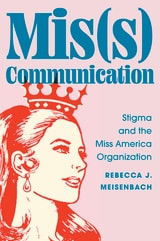
Mis(s) Communication
Stigma and the Miss America OrganizationRebecca J. Meisenbach
Rutgers University Press, 2026
Mis(s) Communication: Stigma and the Miss America Organization explores the one-hundred-year history of the Miss America Organization (MAO) as a site of stigma management. Through five years of ethnographic, archival, and interview-based research, Rebecca J. Meisenbach shows how pageant participation is both valorized and stigmatized—making MAO a key lens for studying stigma as a dynamic, power-laden communication process. The book examines stigma across individual, organizational, and societal levels, focusing on moments like Rule Seven, which once barred nonwhite participants, and the 1968 protest by the New York Radical Women alongside the first Miss Black America pageant. Meisenbach also investigates how contestants navigate stigma tied to intelligence, body image, and the sexualization of women. She analyzes MAO’s 2018 elimination of the swimsuit competition as a stigma management move and its recent shift to a for-profit model under Miss America Opportunity. The book ultimately argues for understanding stigma as communicative and deeply intersectional.
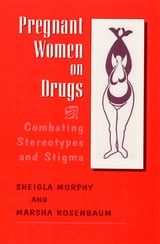
Pregnant Women on Drugs
Combating Stereotypes and StigmaRosenbaum, Marsha
Rutgers University Press, 1998
Sociologists Murphy and Rosenbaum interviewed over 120 women who had children while using drugs. Their interviews reveal how the women became addicted, how they may or may not have modified their behavior to protect their children, and how they have dealt with having children and losing them as a result of their addiction. Not all the women interviewed were from abusive or poor families; there is extensive information on how the study population was selected. Also included are suggestions on how to deal with the problem, including women-centered drug treatment and training programs to help women learn trades as well as parenting skills. Though the interviews are enlightening, readers may wish for more answers to the question of how to deal with the root problem and less about the problems drug-addicted mothers face. For academic libraries, especially those with women's studies and sociology collections.?Danna C. Bell-Russel, Natl. Equal Justice Lib., Washington, DC
Review
A powerful refuation of the media-hype stereotypes of pregnant drug users as selfish and unfeeling, Pregnant Women on Drugs shows the extent to which many drug-using women develop the motivation to achieve their dual goals of improving their children's health and maintaining maternal custody. -- Steven R. Kandall, M.D., F.A.A.P., and author Substance and Shadow: Women and Addiction in the United States
Research-based but intensely personal. . . You will be touched by the poignant descriptions about the real lives of pregnant women on drugs. . . Pertinent reading for researchers, clinicians, and all Americans. -- Loretta P. Finnegan, M.D., researcher and perinatal addiction specialist
Touching and informative. . . Drug-addicted women who have either been ignored or reviled are finally given voice to tell their own stories. Their sad, true, and quintessentially human experiences provide persuasive arguments for compassion and supportive approaches to the problems of substance abuse and pregnancy. -- Lynn Paltrow, civil liberties and reproductive freedom attorney
Sex Offenders, Stigma, and Social Control
Rickard, Diana
Rutgers University Press, 2016
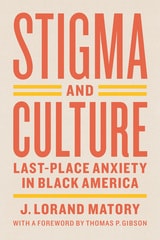
Stigma and Culture
Last-Place Anxiety in Black AmericaJ. Lorand Matory
University of Chicago Press, 2015
Matory describes the competitive process that hierarchically structures their self-definition as ethnic groups and the similar process by which middle-class African Americans seek distinction from their impoverished compatriots. Drawing on research at universities such as Howard, Harvard, and Duke and among their alumni networks, he details how university life—while facilitating individual upward mobility, touting human equality, and regaling cultural diversity—also perpetuates the cultural standards that historically justified the dominance of some groups over others. Combining his ethnographic findings with classic theoretical insights from Frantz Fanon, Fredrik Barth, Erving Goffman, Pierre Bourdieu and others—alongside stories from his own life in academia—Matory sketches the university as an institution that, particularly through the anthropological vocabulary of culture, encourages the stigmatized to stratify their own.
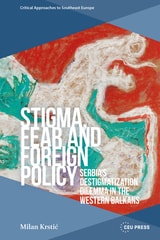
Stigma, Fear and Foreign Policy
Serbia’s Destigmatization Dilemma in the Western BalkansMilan Krstic
Central European University Press, 2026
The central argument is that Serbia’s decision-makers grappled with a “destigmatization dilemma,” perceiving that actions aimed at facilitating Serbia’s destigmatization within international society could simultaneously undermine its security in regional relations with former adversaries. This produced a dillema between prioritizing destigmatization or security concerns. Through an examination of Serbia’s relations with Croatia and Bosnia and Herzegovina, the book explores how decision-makers navigated this dilemma, focusing on two key perceptions: the level of threat posed by the former adversary, and the perceived importance of the bilateral relationship for its destigmatization goals.
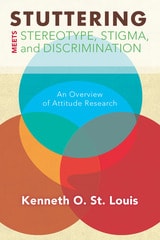
Stuttering Meets Sterotype, Stigma, and Discrimination
An Overview of Attitude ResearchKenneth O. St. Louis
West Virginia University Press, 2015
Stuttering Meets Stereotype, Stigma, and Discrimination: An Overview of Attitude Research is the only reference work to date devoted entirely to the topic of stuttering attitudes. It features comprehensive review chapters by St. Louis, Boyle and Blood, Gabel, Langevin, and Abdalla; an annotated bibliography by Hughes; and experimental studies by other seasoned and new researchers. The book leads the reader through a maze of research efforts, emerging with a clear understanding of the important issues involved and ideas of where to go next. Importantly, the evidence base for stuttering attitude research extends beyond research in this fluency disorder to such areas as mental illness, obesity, and race. Thus, although of interest primarily to those who work, interact, or otherwise deal with stuttering, the book has potential for increasing understanding, ameliorating negative attitudes, and informing research on any of a host of other stigmatized conditions.
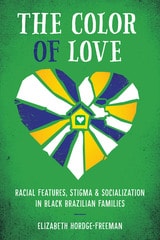
The Color of Love
Racial Features, Stigma, and Socialization in Black Brazilian FamiliesBy Elizabeth Hordge-Freeman
University of Texas Press, 2015
Winner, Section on the Sociology of Emotions Outstanding Recent Contribution (Book) Award, American Sociological Association, 2016
Charles Horton Cooley Award for Recent Book, Society for the Study of Symbolic Interaction, 2017
Best Publication Award, Section on Body and Embodiment, American Sociological Association (ASA), 2018
The Color Of Love reveals the power of racial hierarchies to infiltrate our most intimate relationships. Delving far deeper than previous sociologists have into the black Brazilian experience, Elizabeth Hordge-Freeman examines the relationship between racialization and the emotional life of a family. Based on interviews and a sixteen-month ethnography of ten working-class Brazilian families, this provocative work sheds light on how families simultaneously resist and reproduce racial hierarchies. Examining race and gender, Hordge-Freeman illustrates the privileges of whiteness by revealing how those with “blacker” features often experience material and emotional hardships. From parental ties, to sibling interactions, to extended family and romantic relationships, the chapters chart new territory by revealing the connection between proximity to whiteness and the distribution of affection within families.
Hordge-Freeman also explores how black Brazilian families, particularly mothers, rely on diverse strategies that reproduce, negotiate, and resist racism. She frames efforts to modify racial features as sometimes reflecting internalized racism, and at other times as responding to material and emotional considerations. Contextualizing their strategies within broader narratives of the African diaspora, she examines how Salvador’s inhabitants perceive the history of the slave trade itself in a city that is referred to as the “blackest” in Brazil. She argues that racial hierarchies may orchestrate family relationships in ways that reflect and reproduce racial inequality, but black Brazilian families actively negotiate these hierarchies to assert their citizenship and humanity.
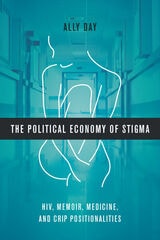
The Political Economy of Stigma
HIV, Memoir, Medicine, and Crip PositionalitiesAlly Day
The Ohio State University Press, 2021
In The Political Economy of Stigma, Ally Day offers a compelling critique of neoliberal medical practices in the US by coupling an analysis of HIV memoir with a critical examination of narrative medicine practice. Using insights from feminist disability studies and crip theory, Day argues that stories of illness and disability—such as HIV memoirs—operate within a political economy of stigma, which she defines as the formal and informal circulation of personal illness and disability narratives that benefits some while hindering others. On the one hand, this system decreases access to appropriate medical care for those with chronic conditions by producing narratives of personal illness that frame one’s relationship to structural inequality as a result of personal failure. On the other hand, the political economy of stigma rewards those who procure such narratives and circulate them for public consumption.
The political economy of stigma is theorized from three primary research sites: a reading group with women living with HIV, a reading group with AIDS service workers, and participant observation research and critical close reading of practices in narrative medicine. Ultimately, it is the women living with HIV who provide an alternative way to understand disability and illness narratives, a practice of differential reading that can challenge stigmatizing tropes and reconceptualize the creation, reception, and circulation of patient memoir.

The Workless
Stigma, Unpaid Labour and the Myth of Economic InactivityJames Morrison
Intellect Books, 2026
A critical analysis of historical and contemporary discourses around worklessness, economic inactivity, and the factors that contribute to people withdrawing from the conventional labor market.
How do we define and respond to worklessness? This book combines analysis of media and political narratives around worklessness and factors that limit individuals’ capacity for conventional paid work—from disability and long-term illness to caring responsibilities—with interviews that shed light on the lived experience of so-called economic inactivity.
In dissecting popular portrayals of “the workless” in the present and tracing the historical evolution of discourses around “inactivity”—especially work-limiting disability—James Morrison draws heavily on sociological theories of stigma and symbolic annihilation. Conceptualising the contemporary narrative about the UK's supposed crisis in economic inactivity as the latest in a continuum of periodic moral panics about worklessness, he argues that neoliberal definitions of work and worklessness are too narrow, as they deny—and render invisible—the importance of various forms of unpaid labor performed by many people classified as “inactive,” notably informal caregiving and volunteering.