Results by title
9 books match the query 'Stigma (Social psychology)'

Feelings at the Margins
Dealing with Violence, Stigma and Isolation in IndonesiaEdited by Birgitt Röttger-Rössler and Thomas Stodulka
Campus Verlag, 2014
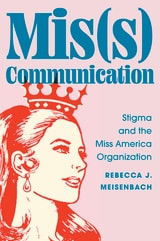
Mis(s) Communication
Stigma and the Miss America OrganizationRebecca J. Meisenbach
Rutgers University Press, 2026
Mis(s) Communication: Stigma and the Miss America Organization explores the one-hundred-year history of the Miss America Organization (MAO) as a site of stigma management. Through five years of ethnographic, archival, and interview-based research, Rebecca J. Meisenbach shows how pageant participation is both valorized and stigmatized—making MAO a key lens for studying stigma as a dynamic, power-laden communication process. The book examines stigma across individual, organizational, and societal levels, focusing on moments like Rule Seven, which once barred nonwhite participants, and the 1968 protest by the New York Radical Women alongside the first Miss Black America pageant. Meisenbach also investigates how contestants navigate stigma tied to intelligence, body image, and the sexualization of women. She analyzes MAO’s 2018 elimination of the swimsuit competition as a stigma management move and its recent shift to a for-profit model under Miss America Opportunity. The book ultimately argues for understanding stigma as communicative and deeply intersectional.
Sex Offenders, Stigma, and Social Control
Rickard, Diana
Rutgers University Press, 2016
Speech and Song at the Margins of Global Health
Zulu Tradition, HIV Stigma, and AIDS Activism in South AfricaSteven P. Black
Rutgers University Press, 2019
Sticking Stigma
Performance, Affect, and the Movement of Social NormsDani Snyder-Young
Vanderbilt University Press, 2026
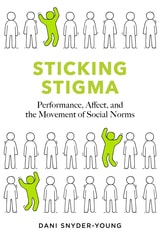
Applied theater projects have been used to reduce the stigma related to many health conditions including bipolar disorder, HIV, suicide bereavement, mental illness, autism, and substance use disorder. Beyond this applied theater tradition, theater and performance studies tend not to use the framework or language of stigma very often. Stigma is a more commonly used framework in social science fields such as health and sociology. However, theater and performance regularly attends to the material and affective violence of stigma power: oppression, dispossession, abjection, objectification, expulsion. Snyder-Young examines a set of activist performance projects attempting to use the force of stigma to redistribute and recenter social power.
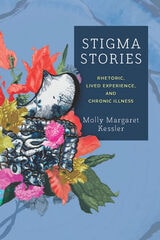
Stigma Stories
Rhetoric, Lived Experience, and Chronic IllnessMolly Margaret Kessler
The Ohio State University Press, 2022
Engaging interdisciplinary conversations from the rhetoric of health and medicine, disability studies, narrative medicine, and sociology, Kessler takes an innovative look at how stigma functions on individual, interpersonal, and societal levels. In doing so, Kessler reveals how stories and lived experiences have much to teach us not only about how stigma functions but also about how it can be dismantled.
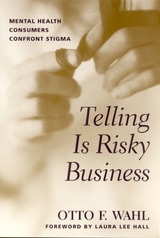
Telling is Risky Business
Mental Health Consumers Confront StigmaWahl, Otto F
Rutgers University Press, 1999
Individuals with a mental illnesses—such as schizophrenia, bipolar disorder, and depression—have a double burden, Otto Wahl writes. Not only must they cope with disabling disorders, but they also must contend with the negative attitudes of the public toward those disorders. To truly understand the full extent of this stigma, we need to hear from the consumers (the term used in this book for people with mental illness) themselves. Telling is Risky Business is the first book to examine what these people have to say about their own experiences of stigma.
The center of Wahl’s research was a nationwide survey in which mental health consumers across the United States were asked, both through questionnaires and interviews, to tell about their experiences of stigma and discrimination. The research comes to life as many of the over 1,300 respondents’ acute observations are reported directly, in their own words.
Telling is Risky Business vividly covers topics such as isolation, rejection, discouragement, and discrimination. Consumers also offer perceptive observations of how our society depicts people with mental illness. The book ends with suggestions for strategies and coping; an invaluable section on resources available for fighting stigma guarantees its place on many bookshelves. As Laura Lee Hall writes, “This book will likely open your eyes to a topic that you probably did not understand.”
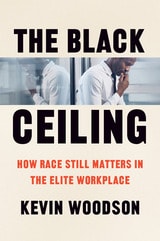
The Black Ceiling
How Race Still Matters in the Elite WorkplaceKevin Woodson
University of Chicago Press, 2023
America’s elite law firms, investment banks, and management consulting firms are known for grueling hours, low odds of promotion, and personnel practices that push out any employees who don’t advance. While most people who begin their careers in these institutions leave within several years, work there is especially difficult for Black professionals, who exit more quickly and receive far fewer promotions than their White counterparts, hitting a “Black ceiling.”
Sociologist and law professor Kevin Woodson knows firsthand what life at a top law firm feels like as a Black man. Examining the experiences of more than one hundred Black professionals at prestigious firms, Woodson discovers that their biggest obstacle in the workplace isn’t explicit bias but racial discomfort, or the unease Black employees feel in workplaces that are steeped in Whiteness. He identifies two types of racial discomfort: social alienation, the isolation stemming from the cultural exclusion Black professionals experience in White spaces, and stigma anxiety, the trepidation they feel over the risk of discriminatory treatment. While racial discomfort is caused by America’s segregated social structures, it can exist even in the absence of racial discrimination, which highlights the inadequacy of the unconscious bias training now prevalent in corporate workplaces. Firms must do more than prevent discrimination, Woodson explains, outlining the steps that firms and Black professionals can take to ease racial discomfort.
Offering a new perspective on a pressing social issue, The Black Ceiling is a vital resource for leaders at preeminent firms, Black professionals and students, managers within mostly White organizations, and anyone committed to cultivating diverse workplaces.
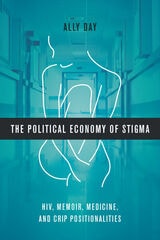
The Political Economy of Stigma
HIV, Memoir, Medicine, and Crip PositionalitiesAlly Day
The Ohio State University Press, 2021
In The Political Economy of Stigma, Ally Day offers a compelling critique of neoliberal medical practices in the US by coupling an analysis of HIV memoir with a critical examination of narrative medicine practice. Using insights from feminist disability studies and crip theory, Day argues that stories of illness and disability—such as HIV memoirs—operate within a political economy of stigma, which she defines as the formal and informal circulation of personal illness and disability narratives that benefits some while hindering others. On the one hand, this system decreases access to appropriate medical care for those with chronic conditions by producing narratives of personal illness that frame one’s relationship to structural inequality as a result of personal failure. On the other hand, the political economy of stigma rewards those who procure such narratives and circulate them for public consumption.
The political economy of stigma is theorized from three primary research sites: a reading group with women living with HIV, a reading group with AIDS service workers, and participant observation research and critical close reading of practices in narrative medicine. Ultimately, it is the women living with HIV who provide an alternative way to understand disability and illness narratives, a practice of differential reading that can challenge stigmatizing tropes and reconceptualize the creation, reception, and circulation of patient memoir.