Results by title
3 books match the query 'Stone, Ian Finlay'
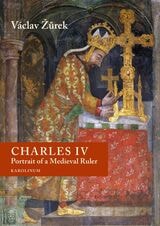
Charles IV
Portrait of a Medieval RulerVáclav Žurek
Karolinum Press, 2023
A critical examination of the life and legacy of Charles IV.
Charles IV, King of Bohemia and Holy Roman Emperor, has been called “one of the most learned and diplomatically skillful sovereigns” of the fourteenth century. Having moved the seat of the Holy Roman Empire to Prague and founding the first university in Central Europe, Charles IV is a towering figure in Czech history and a crucial character in the story of medieval Europe.
Recent research, especially in art history, has tended to present Charles IV in a purely positive, unblemished light: viewing him and his imperial court as the engine behind a flourishing of culture in the region. This book views Charles IV through a more critical lens, examining the careful construction that went into the way he presented himself and the characteristic manifestations of Charles’ execution of royal power. The first part of the book offers a chronological description of Charles’ life within the broader context of the times and the House of Luxembourg. The second part provides a close look into Charles IV’s style of rule while focusing on phenomena that reveal his personal conception of power and how it was wielded.
[more]
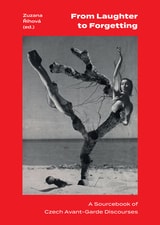
From Laughter to Forgetting
A Sourcebook of Czech Avant-Garde DiscoursesEdited by Zuzana Ríhová
Karolinum Press, 2023
A comprehensive reader on the Czech literary avant-garde.
In recent years a prominent trend in the study of European modernism and the avant-garde has been increased attention to texts and traditions that have long stood in the shadow of the French, German, and British traditions that dominate the canon. Yet this more expansive view of European modernism and the avant-garde has been hindered by the limited range of texts available outside the original languages. This book addresses that problem by offering a wide-ranging selection of literary, theoretical, and documentary sources from one of the most dynamic and original European avant-garde traditions: that of the first Czechoslovak Republic and of the Bohemian lands. The Czech avant-garde is in many respects the ideal “alternative” avant-garde to present in detail to a wider readership: it tracks Central European developments and was often influential internationally while being deeply embedded in particular cultural dynamics that produced original forms. This volume returns interwar Czech avant-garde writings to their place as a firmly embedded component of the European avant-garde.
In recent years a prominent trend in the study of European modernism and the avant-garde has been increased attention to texts and traditions that have long stood in the shadow of the French, German, and British traditions that dominate the canon. Yet this more expansive view of European modernism and the avant-garde has been hindered by the limited range of texts available outside the original languages. This book addresses that problem by offering a wide-ranging selection of literary, theoretical, and documentary sources from one of the most dynamic and original European avant-garde traditions: that of the first Czechoslovak Republic and of the Bohemian lands. The Czech avant-garde is in many respects the ideal “alternative” avant-garde to present in detail to a wider readership: it tracks Central European developments and was often influential internationally while being deeply embedded in particular cultural dynamics that produced original forms. This volume returns interwar Czech avant-garde writings to their place as a firmly embedded component of the European avant-garde.
[more]
Seven Letters to Melin
Essays on the Soul, Science, Art and MortalityJosef Šafarík
Karolinum Press, 2020
Josef Šafařík’s Seven Letters to Melin is an exploration of man’s alienation from nature—and from himself—in the modern technological age. Conceived as a series of letters to Melin, an engineer who believes in the value of science and technical progress, the book grows skeptical of such endeavors, while also examining mankind’s search for meaning in life. To help uncover this meaning, Šafařík posits a dichotomy between spectator and participant. The role of participant is played by Robert, an artist who has committed suicide. The spectator, embodied by the scientist Melin, views the world from a distance and searches for explanations, while the artist-participant creates the world through his own active engagement.
Through these exchanges, Šafařík argues for the primacy of artistic creativity over scientific explanation, of truth over accuracy, of internal moral agency over an externally imposed social morality, and of personal religious belief over organized church-going. Šafařík is neither anti-scientific nor anti-rational; however, he argues that science has limited power, and he rejects the idea of science that denies meaning and value to what cannot be measured or calculated.
Šafařík’s critiques of technology, the wage economy, and increased professionalization make him an important precursor to the philosophy of deep ecology. This book was also a major influence on the Czech president Václav Havel; in this new translation it will find a fresh cohort of readers interested in what makes us human.
[more]