Results by title
6 books match the query 'Storytelling in literature'
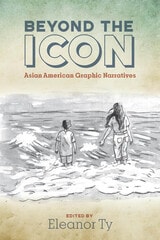
Beyond the Icon
Asian American Graphic NarrativesEdited by Eleanor Ty
The Ohio State University Press, 2022
While most US-based comics studies anthologies tend to neglect race, Beyond the Icon brings it to the foreground through an analysis of the vibrant and growing body of graphic narratives by Asian North American creators in the twenty-first century. By demonstrating how the forms and styles of the comics genre help depict Asian Americans as nuanced individuals in ways that words alone may not, Beyond the Icon makes the case for comics as a crucial artistic form in Asian American cultural production––one used to counter misrepresentations and myths, rewrite official history, and de-exoticize the Asian American experience.
An interdisciplinary team of contributors offers exciting new readings of key texts, including Ms. Marvel, George Takei’s They Called Us Enemy, Thi Bui’s The Best We Could Do, Gene Luen Yang and Sonny Liew’s The Shadow Hero, works by Adrian Tomine and Jillian Tamaki, and more, to uncover the ways in which Asian American comics authors employ graphic narratives to provide full and complex depictions of Asian diasporic subjects and intervene in the wider North American consciousness. Beyond the Icon initiates vital conversations between Asian American studies, ethnic studies, and comics.
Contributors:
Monica Chiu, Shilpa Davé, Melinda Luisa de Jesús, Lan Dong, Jin Lee, erin Khuê Ninh, Stella Oh, Jeanette Roan, Eleanor Ty

Charlotte Bronte and the Storyteller's Audience
Carol Bock
University of Iowa Press, 1992
Contemporary American Indian Literatures and the Oral Tradition
Susan Berry Brill de Ramírez
University of Arizona Press, 1999
. To demonstrate this point, she explores literary works both by established Native writers such as Sherman Alexie, N. Scott Momaday, Leslie Marmon Silko, and Luci Tapahonso and by less-well-known writers such as Anna Lee Walters, Della Frank, Lee Maracle, and Louis Owens. Through her literary engagements with many poems, novels, and short stories, she demonstrates a new way to read and understand the diverse body of American Indian literatures. Brill de Ramírez's conversive approach interweaves two interconnected processes: co-creating the stories by participating in them as listener-readers and recognizing orally informed elements in the stories such as verbal minimalism and episodic narrative structures.
Because this methodology is rooted in American Indian oral storytelling traditions, Native voices from these literary works are able to more directly inform the scholarly process than is the case in more textually based critical strategies. Through this innovative approach, Brill de Ramírez shows that literature is not a static text but an interactive and potentially transforming conversation between listener-readers, storyteller-writers, and the story characters as well. Her book furthers the discussion of how to read American Indian and other orally informed literatures with greater sensitivity to their respective cultural traditions and shows that the immediacy of the relationship between teller, story, and listener can also be experienced in the relationships between writers, literary works, and their listener-readers.
Experiencing Visual Storyworlds
Focalization in ComicsSilke Horstkotte and Nancy Pedri
The Ohio State University Press, 2022
Tracing Southern Storytelling in Black and White
Sarah Gilbreath Ford
University of Alabama Press, 2014
Exploring the shared storytelling traditions that shaped Southern literature across racial lines.
Tracing Southern Storytelling in Black and White is a study of the historical use of oral storytelling by southern writers in written works. In each chapter, Sarah Gilbreath Ford pairs a white and an African American writer to highlight points of confluence in black and white southern oral traditions. She argues that the connections between white and African American southern writers run deeper than critics have yet explored, and she uses textual comparisons to examine the racial mixing of oral culture.
On porches, in kitchens, and on the pages of their work, black and white southerners exchanged not just stories but strategies for telling stories. As a boy, Joel Chandler Harris listened to the stories of African American slaves, and he devised a framework to turn the oral stories into written ones. Harris’s use of the frame structure influenced how Charles Chesnutt recorded oral stories, but it led Alice Walker to complain that her heritage had been stolen. Mark Twain listened to African American storytellers as a child. His use of oral dialects then impacts how Ralph Ellison and William Faulkner employ oral storytelling and how Toni Morrison later writes in response to Faulkner. The interactions are not linear, not a chain of influence, but a network of interactions, borrowings, and revisions.
Ford’s pairings lead to new readings that reveal how the writers employ similar strategies in their narratives, due in part to shared historical context. While Zora Neale Hurston and William Faulkner, for example, use oral storytelling in the 1930s to examine the fear of racial mixing, Ellen Douglas and Ernest Gaines use it in the 1970s to build bridges between the races. Exploring the cultural crossing that occurs in the use of oral storytelling, Ford offers a different view of this common strategy in southern narrative and a new perspective on how culture is shared.
We-Narratives
Collective Storytelling in Contemporary FictionNatalya Bekhta
The Ohio State University Press, 2020
Natalya Bekhta’s We-Narratives: Collective Storytelling in Contemporary Fiction analyzes a storytelling form shaped by the pronoun “we,” probing the tensions between individuality and collectivity in more recent narratives in English. Despite a growing interest in collective characters and the we-form in narratology and beyond, narrative theory has not yet done justice to the plural voice in fiction. In fact, the formulation of a poetics of collective expression needs clear theoretical conventions and a reassessment of established concepts in order to approach plural voices and agents on their own terms. We-Narratives addresses this demand by distinguishing between indicative and performative uses of the first-person plural pronoun in fiction and by identifying formal and rhetorical possibilities of stories told by group narrators.
What does it mean for a multitude to speak as one? How can a truly collective narrative voice be achieved or lost? What are its aesthetic and political repercussions? In order to tackle these questions, Bekhta reads a range of contemporary novels and short stories by Jeffrey Eugenides, Joshua Ferris, Toby Litt, Zakes Mda, Joyce Carol Oates, and Julie Otsuka. She also focuses on narrative innovation by Margaret Atwood, William Faulkner, and Susan Sontag. These narratives feature group protagonists and narrators and therefore offer insight into collective narrative discourse and focalization, construction of communal knowledge and unreliability. We-narrative, taken as a distinct storytelling form, illuminates fiction’s expressive potential and nuances models of narrative analysis.