Results by title
5 books match the query 'Strike'
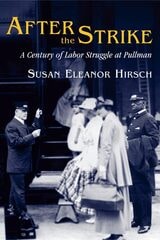
After the Strike
A Century of Labor Struggle at PullmanSusan Eleanor Hirsch
University of Illinois Press, 2003
The 1894 Pullman strike and the rise of the Brotherhood of Sleeping Car Porters played major roles in the century-long development of union organizing and labor-management relations in the Pullman Company. Susan Eleanor Hirsch connects the stories of Pullman car builders and porters to answer critical questions like: what created job segregation by race and gender? What role did such segregation play in shaping the labor movement?
Hirsch illuminates the relationship between labor organizing and the racial and sexual discrimination practiced by both employers and unions. Because the Pullman Company ran the sleeping-car service for American railroads and was a major manufacturer of railcars, its workers were involved in virtually every wave of union organizing from the 1890s to the 1940s.
In exploring the years of struggle by the men and women of the Pullman Company, After the Strike reveals the factors that determined the limited success and narrow vision of most American unions.
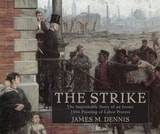
Robert Koehler’s The Strike
The Improbable Story of an Iconic 1886 Painting of Labor ProtestJames M. Dennis
University of Wisconsin Press, 2011
Every work of art has a story behind it. In 1886 the German American artist Robert Koehler painted a dramatic wide-angle depiction of an imagined confrontation between factory workers and their employer. He called this oil painting The Strike. It has had a long and tumultuous international history as a symbol of class struggle and the cause of workers’ rights. First exhibited just days before the tragic Chicago Haymarket riot, The Strike became an inspiration for the labor movement. In the midst of the campaign for an eight-hour workday, it gained international attention at expositions in Paris, Munich, and the 1893 Chicago World’s Fair. Though the painting fell into obscurity for decades in the early twentieth century, The Strike lived on in wood-engraved reproductions in labor publications. Its purchase, restoration, and exhibition by New Left activist Lee Baxandall in the early 1970s launched it to international fame once more, and collectors and galleries around the world scrambled to acquire it. It is now housed in the Deutsches Historisches Museum in Berlin, Germany.
Strike From the Sky
The History of Battlefield Air Attack, 1910-1945Richard P. Hallion, foreword by R. A. Mason
University of Alabama Press, 2010
The definitive history of how air power transformed the battlefield between two world wars.
Strike from the Sky: The History of Battlefield Air Attack, 1910–1945 is a comprehensive examination of the emergence and evolution of battlefield aviation during the first half of the twentieth century. Written by renowned aviation historian Richard P. Hallion, the book traces the development of air-ground warfare from the earliest military use of aircraft in combat through the decisive campaigns of World War II. Combining operational history with analysis of doctrine, technology, and leadership, Hallion reveals how battlefield air attack became a critical element of modern military strategy.
The study explores major conflicts including the First World War, the Spanish Civil War, colonial campaigns, and the global battles of World War II. Hallion examines the evolution of close air support, air interdiction, reconnaissance, command and control systems, and the aircraft that carried out these missions. He also analyzes how military organizations adapted to the challenges of integrating air and ground forces, creating doctrines that continue to influence military operations today.
Strike from the Sky demonstrates how advances in aviation transformed the battlefield and altered the conduct of war. It remains an essential resource for understanding the origins of modern air power and the technological and strategic innovations that reshaped twentieth-century combat.

Strike!
Mary Heaton Vorse
University of Illinois Press, 1991
The story is told by Mary Heaton Vorse, the leading labor reporter of the period, who had covered major strikes since 1912. This novel was the first of six inspired by the Gastonia strike. Critics hailed it as the best.
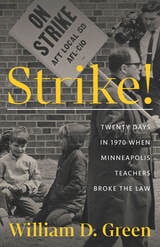
Strike!
Twenty Days in 1970 When Minneapolis Teachers Broke the LawWilliam D. Green
University of Minnesota Press, 2022
When viewed from our turbulent times, the Minneapolis of fifty years ago might seem serene, but Minneapolis schoolteachers of the day remember it quite differently. It was, author William D. Green said of their recollections, as if they’d been through war. This book recreates twenty days in April 1970 when a then-illegal strike by Minneapolis’s public school teachers marked a singular moment of cultural upheaval—and forever changed the city’s politics, labor law, educational climate, and the right to collective bargaining.
Since the inception of public education in Minnesota, teachers were expected to pursue their vocation out of civic spirit, with low wages, no benefits, and no job security. Strike! describes the history and circumstances leading to the teachers’ extraordinary action, which pitted the progressive and conservative teachers’ unions against each other—and both against the all-powerful school district, a hostile governor and state legislature, and a draconian Minnesota law. Capturing the intense emotions and heated rivalries of the strike, Green profiles the many actors involved, the personal and professional stakes, and the issues of politics, law, and the business of education.
Informed by interviews, firsthand accounts, news reports, and written records, Strike! brings to life a pivotal moment not just for Minneapolis’s teachers but for the city itself, whose government, school system, and culture would, in a complex but inexorable way, change course for good.