Results by title

8 books match the query 'Strings'
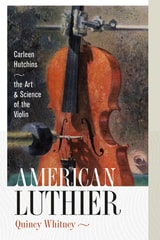
cover of American Luthier: Carleen Hutchins—the Art and Science of the Violin

American Luthier

Carleen Hutchins—the Art and Science of the Violin

Quincy Whitney

University Press of New England, 2016

From the time of Stradivari, the mysterious craft of violinmaking has been a closely guarded, lucrative, and entirely masculine preserve. In the 1950s Carleen Maley Hutchins was a grade school science teacher, amateur trumpet player, and New Jersey housewife. When musical friends asked her to trade a trumpet for a $75 viola, she decided to try making one, thus setting in motion a surprising career. A self-taught genius who went head to head with a closed and ancient guild, Hutchins carved nearly 500 stringed instruments over the course of half a century and collaborated on more than 100 experiments in violin acoustics. In answer to a challenge from a composer, she built the first violin octet—a family of eight violins ranging in size from an eleven-inch treble to a seven-foot contrabass, and in register across the gamut of the piano keyboard. She wrote more than 100 technical papers—including two benchmark Scientific American cover articles—founded an international society devoted to violin acoustics, and became the only American and the only woman to be honored in Cremona, Italy, the birthplace of Stradivari. Hutchins died in 2009 at the age of ninety-eight. The most innovative violinmaker of the modern age, she set out to explore two worlds she knew virtually nothing about—violins and acoustical physics. American Luthier chronicles the life of this unsung woman who altered everything in a world that had changed little in three centuries.
[more]
cover of Fiddling for Norway: Revival and Identity

Fiddling for Norway

Revival and Identity

Chris Goertzen

University of Chicago Press, 1997

Fiddling for Norway is an engrossing portrait of a fiddle-based folk revival in Norway, one that in many ways parallels contemporary folk institutions and festivals throughout the world, including American fiddling. It is a detailed case study in the politics of culture, the causes and purposes of folk revivals, and the cultivation of music to define identity.

The book begins with an investigation of the people and events important to Norwegian folk fiddling, tracing the history of Norwegian folk music and the growth and diversification of the folk music revival. The narrative takes us to fiddle clubs, concerts and competitions on the local, regional, and national levels, and shows how conflicting emphases—local vs. national identity, tradition vs. aesthetic qualities—continue to transform Norwegian folk music. Goertzen utilizes a large anthology of meticulously transcribed tunes to illustrate personal and regional repertoires, aspects of performance practice, melodic gesture and form, and tune relationships. Ethnomusicologists and readers who fiddle will enjoy both the music and the stories it tells.
[more]
cover of For the Love of It: Amateuring and Its Rivals

For the Love of It

Amateuring and Its Rivals

Wayne C. Booth

University of Chicago Press, 1999

For the Love of It is a story not only of one intimate struggle between a man and his cello, but also of the larger struggle between a society obsessed with success and individuals who choose challenging hobbies that yield no payoff except the love of it.

"If, in truth, Booth is an amateur player now in his fifth decade of amateuring, he is certainly not an amateur thinker about music and culture. . . . Would that all of us who think and teach and care about music could be so practical and profound at the same time."—Peter Kountz, New York Times Book Review

"[T]his book serves as a running commentary on the nature and depth of this love, and all the connections it has formed in his life. . . . The music, he concludes, has become part of him, and that is worth the price."—Clea Simon, Boston Globe

"The book will be read with delight by every well-meaning amateur who has ever struggled. . . . Even general readers will come away with a valuable lesson for living: Never mind the outcome of a possibly vain pursuit; in the passion that is expended lies the glory."—John von Rhein, Chicago Tribune

"Hooray for amateurs! And huzzahs to Wayne Booth for honoring them as they deserve. For the Love of It celebrates amateurism with genial philosophizing and pointed cultural criticism, as well as with personal reminiscences and self-effacing wit."—James Sloan Allen, USA Today

"Wayne Booth, the prominent American literary critic, has written the only sustained study of the interior experience of musical amateurism in recent years, For the Love of It. [It] succeeds as a meditation on the tension between the centrality of music in Booth's life, both inner and social, and its marginality. . . . It causes the reader to acknowledge the heterogeneity of the pleasures involved in making music; the satisfaction in playing well, the pride one takes in learning a difficult piece or passage or technique, the buzz in one's fingertips and the sense of completeness with the bow when the turn is done just right, the pleasure of playing with others, the comfort of a shared society, the joy of not just hearing, but making, the music, the wonder at the notes lingering in the air."—Times Literary Supplement
[more]
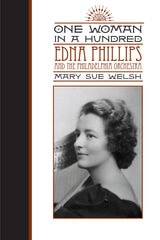
cover of One Woman in a Hundred: Edna Phillips and the Philadelphia Orchestra

One Woman in a Hundred

Edna Phillips and the Philadelphia Orchestra

Mary Sue Welsh

University of Illinois Press, 2013
Gifted harpist Edna Phillips (1907–2003) joined the Philadelphia Orchestra in 1930, becoming not only that ensemble's first female member but also the first woman to hold a principal position in a major American orchestra. Plucked from the Curtis Institute of Music in the midst of her studies, Phillips was only twenty-three years old when Leopold Stokowski, one of the twentieth century's most innovative and controversial conductors, named her principal harpist. This candid, colorful account traces Phillips's journey through the competitive realm of Philadelphia's virtuoso players, where she survived--and thrived--thanks to her undeniable talent, determination, and lively humor.
 
Drawing on extensive interviews with Phillips, her family, and colleagues as well as archival sources, One Woman in a Hundred chronicles the training, aspirations, setbacks, and successes of this pioneering woman musician. Mary Sue Welsh recounts numerous insider stories of rehearsal and performance with Stokowski and other renowned conductors of the period such as Arturo Toscanini, Fritz Reiner, Otto Klemperer, Sir Thomas Beecham, and Eugene Ormandy. She also depicts Phillips's interactions with fellow performers, the orchestra management, and her teacher, the wily and brilliant Carlos Salzedo. Blessed with a nimble wit, Phillips navigated a plethora of challenges, ranging from false conductors' cues to the advances of the debonair Stokowski and others. She remained with the orchestra through some of its most exciting years from 1930 to 1946 and was instrumental in fostering harp performance, commissioning many significant contributions to the literature.
 
This portrait of Phillips's exceptional tenure with the Philadelphia Orchestra also reveals the behind-the-scenes life of a famous orchestra during a period in which Rachmaninoff declared it "the finest orchestra the world has ever heard." Through Phillips's perceptive eyes, readers will watch as Stokowski melds his musicians into a marvelously flexible ensemble; world-class performers reach great heights and make embarrassing flubs; Greta Garbo comes to Philadelphia to observe her lover Leopold Stokowski at work; and the orchestra encounters the novel experience of recording for Walt Disney's Fantasia. A colorful glimpse into a world-class orchestra at the height of its glory, One Woman in a Hundred tells the fascinating story of one woman brave enough and strong enough to overcome historic barriers and pursue her dreams.

[more]
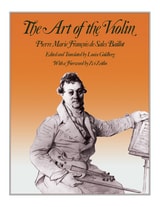
cover of The Art of the Violin

The Art of the Violin

Pierre Marie Francois de Sales Baillot

Northwestern University Press, 1991
Never before available in English, this classic work is a major contribution to the art and technique of violin playing and an important document in the history of performance practice. A contemporary of Kreutzer and Rode, Pierre Marie Francois de Sales Baillot provides in his treatise many insights into the style of nineteenth-century fingering, bowing, ornamentation, and expressiveness that are not apparent from the directions and markings found in scores of that time. Such information will be invaluable for performers interested in understanding the intentions of composers such as Viotti, Haydn, Mozart, Beethoven, and Mendelssohn.
 
This complete, unabridged translation, which includes an extensive introduction by the translator, Louise Goldberg, and a foreword by Zvi Zeitlin, will be indispensable for musicologists, performers, and lovers of eighteenth- and nineteenth-century classical music.
[more]
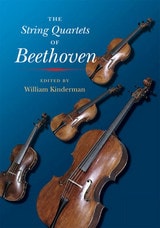
cover of The String Quartets of Beethoven

The String Quartets of Beethoven

Edited by William Kinderman

University of Illinois Press, 2020
"We do not understand music--it understands us." This aphorism by Theodor W. Adorno expresses the quandary and the fascination many listeners have felt in approaching Beethoven's late quartets. No group of compositions occupies a more central position in chamber music, yet the meaning of these works continues to stimulate debate. William Kinderman's The String Quartets of Beethoven stands as the most detailed and comprehensive exploration of the subject. It collects new work by leading international scholars who draw on a variety of historical sources and analytical approaches to offer fresh insights into the aesthetics of the quartets, probing expressive and structural features that have hitherto received little attention. This volume also includes an appendix with updated information on the chronology and sources of the quartets and a detailed bibliography.
[more]
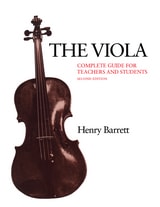
cover of The Viola: Complete Guide for Teachers and Students

The Viola

Complete Guide for Teachers and Students

Betsy Mason Barrett

University of Alabama Press, 1996

The second edition is extensively expanded in its graded lists of studies and solos

This book, in its encyclopedic catalog of viola literature in print, and (perhaps most important) in its treatment of the musical and pedagogical aspects of teaching the viola. A work already unique has been augmented in all its major aspects. The excerpts that follow are from reviews of the out-of-print first edition.
[more]
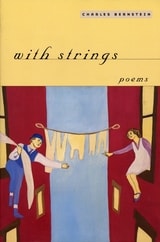
cover of With Strings

With Strings

Charles Bernstein

University of Chicago Press, 2001

A companion to the critically acclaimed My Way, his 1999 montage of essays, conversations, and poems, With Strings catapults Charles Bernstein into the future of American poetry. A compilation of sixty-nine poems in various forms and styles, dating mostly from the 1990s, With Strings is his most buoyant collection to date. With its fractured nursery rhymes, distressed mottoes, runcible riddles, and inscrutable sayings, Bernstein takes us on a poetic trip that swerves from the comic to the political, from the whimsical to the elegiac. The whole presents a densely sounded echo chamber in which a range of themes, moods, and perceptions extend and reverberate.

Charles Bernstein is perhaps best known as one of the founders of the L=A=N=G=U=A=G=E poetry movement of the 1970s. He remains one of America's liveliest advocates and practitioners of radically inventive poetry. The title of his new collection, With Strings, suggests the lush arrangement of a musical work as well as the unacknowledged implications of our everyday agreements. Just as language binds us together with its associated meanings, With Strings bounces against the ties that rend us apart as they fasten us together. From his samplings of everyday life, to his demented yet sonorous iambic beats, Bernstein has once again created a poetry of our time, for our time, and by our time.

[more]